

Introduction
When it comes to serious liver diseases, many patients and families face a difficult question: Should the patient undergo HPB surgery or a liver transplant? The answer is not always straightforward. Doctors carefully evaluate several factors before deciding which treatment option offers the best chance of recovery and long-term health.
The liver is one of the most important organs in the body, performing hundreds of functions that keep us alive and healthy. When liver diseases, tumors, or injuries affect its function, specialized treatment becomes essential. This is where HPB (Hepato-Pancreato-Biliary) surgery and liver transplantation come into the picture.
Think of the liver like the engine of a car. If one part of the engine is damaged, mechanics may repair or replace that specific component. However, if the entire engine is severely damaged, replacing the whole engine may be the only solution. Similarly, doctors decide whether to repair the liver through HPB surgery or replace it through a liver transplant based on the extent of damage.
Discover how doctors choose between HPB surgery and liver transplant based on liver function, disease severity, and patient health. Expert insights from the best liver transplant surgeon in india.
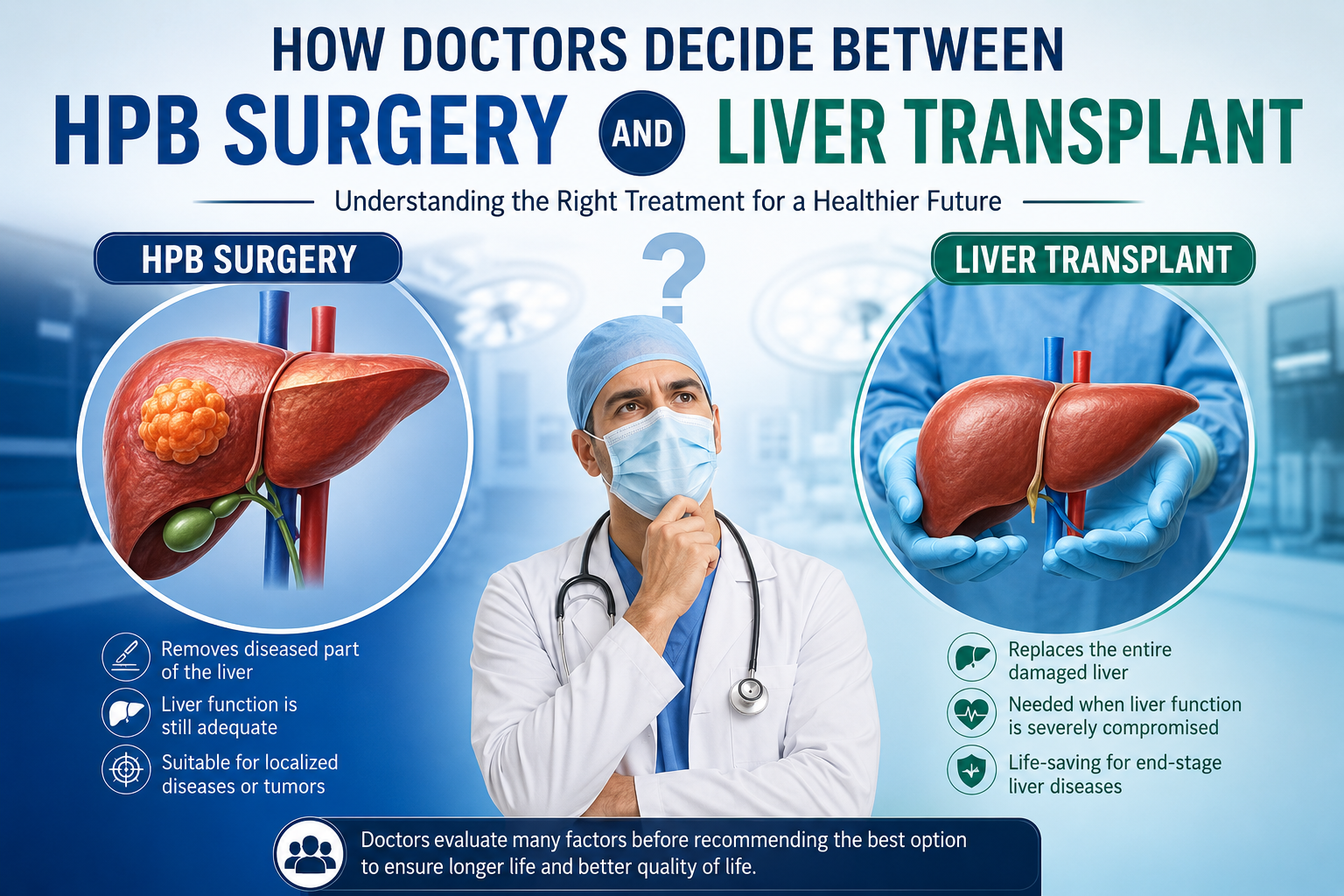
1. What Is HPB Surgery?
HPB surgery stands for Hepato-Pancreato-Biliary surgery, a specialized branch of surgery that focuses on diseases affecting the liver, pancreas, gallbladder, and bile ducts.
The main objective in HPB procedure is to eliminate the affected tissue and preserve as much organ function that is healthy as is feasible. The most common HPB procedures comprise:
- Removal of a liver tumor (hepatectomy)
- Gallbladder surgery
- Bile duct reconstruction
- Pancreatic surgery
- Treatment of abscesses and liver cysts
HPB surgery is typically advised when the liver is functioning normally despite the existence of a disease.
2. What Is a Liver Transplant?
The procedure of a liver transplant is an operation in which an uninjured liver from the donor replaces the damaged or diseased liver.
Transplants are generally contemplated as a sign that the liver has lost the ability to function properly and can’t recover through surgery or medication on its own.
There are two major types:
- Living donor liver transplant
- Donor liver transplants from deceased donors
A liver transplant gives people a chance to live the future when their own liver is no longer able to meet the body’s requirements.
3. Understanding the Difference Between HPB Surgery and Liver Transplant
The main difference lies in the method of treatment.
| HPB Surgery | Liver Transplant |
|---|---|
| Get rid of diseased portions of the liver | Replacing the entire liver |
| Preserves healthy liver tissue | It is a completely new liver |
| Acceptable if liver function remains sufficient | It is necessary when the function of the liver is severely impaired |
| A shorter recovery is common in many cases. | Needs ongoing monitoring and medication |
Doctors evaluate whether keeping the patient’s liver is feasible before deciding to consider a transplant.
4. Conditions treated with HPB Surgery
Many biliary and liver disorders can be effectively treated by HPB surgery.
Liver Tumors
Many malignant and benign liver tumors can be eliminated surgically, if they’re localized.
Gallbladder Diseases
Gallbladder cancers, as well as gallstones, often require surgery.
Bile Duct Disorders
Bile ducts that are damaged or blocked are usually repaired using HPB procedures that are specialized. HPB methods.
Liver Cysts
Large cysts that are symptomatic can be removed while protecting the healthy tissue of your liver.
When the signs are discovered in the early stages, HPB surgery can provide outstanding results.
5. Conditions That Require Liver Transplant
Certain liver diseases can progress to the point that surgery alone will not be able to help restore function.
End-Stage Liver Disease
This happens when liver damage hinders normal function.
Liver Cirrhosis
Advanced cirrhosis due to the liver diseases hepatitis and alcohol-related as well as fatty or liver-related diseases might need a transplant.
Acute Liver Failure
A sudden and serious liver failure could be life-threatening in a matter of days.
Certain Liver Cancers
Some patients with cancer of the liver meet certain criteria for which transplantation provides better long-term outcomes than surgery.
6. How Doctors Evaluate Liver Function
Before they recommend treatment, doctors evaluate the extent to which the liver is functioning.
Blood Tests
Tests evaluate:
- Bilirubin levels
- Liver enzymes
- Albumin levels
- Clotting causes
MELD Score
The Model for End-Stage Liver Disease (MELD) score can help determine the severity of liver disease.
More MELD scores typically suggest a greater need for transplant.
Child-Pugh Classification
This method helps doctors assess the liver’s reserve and anticipate the outcomes of surgeries.
These tests guide the treatment process and aid in determining the safety of surgery.
7. The Role of Imaging and Diagnostic Tests
Advanced imaging plays a key role in the planning of treatment.
CT Scan
The site provides detailed information on liver anatomy and tumors.
MRI
It provides superior imaging of liver lesions and bile ducts.
Ultrasound
Most often, it is the first instrument for diagnosing.
Biopsy
In selected cases, tissue samples help confirm diagnosis.
These tests help doctors identify the extent of disease and determine which is the best treatment plan.
8. Liver Tumors: Surgery or Transplant?
The most prevalent instances where doctors have to choose between HPB surgery or a liver transplantation is the case of liver cancer.
When Surgery Is Chosen
HPB surgery could be preferred for the following reasons:
- The tumor is located.
- Liver function is excellent.
- There aren’t multiple tumors.
- The patient is healthy enough to undergo surgery.
When Transplant Is Chosen
A liver transplant is a possibility for the following reasons:
- The patient is suffering from liver cancer as well as cirrhosis.
- Multiple tumors may be present in the criteria for transplant.
- The remaining liver will not be functioning properly following surgery.
Each patient is different and treatment strategies are customized to meet the needs of the specific patient.
9. Importance of Patient’s Overall Health
Doctors do not only focus on the liver.
They also look at:
- Heart health
- Kidney function
- Lung function
- Status of diabetes
- Condition of nutrition
- Physical fitness and age
A patient could have a technically removable tumor, however when their overall health is poor, surgery may have serious risks.
A thorough evaluation will ensure the most secure as well as most efficient treatment option.
10. When HPB Surgery Is Preferred
Doctors usually opt for HPB surgery for the following reasons:
Healthy Liver Reserve Exists
The remaining liver cells can be regenerated and function properly.
Disease Is Localized
A specific part that is the liver’s affected.
No Advanced Cirrhosis
Patients with no severe scarring to the liver generally do better with surgery.
Lower Surgical Complexity
If the situation is suitable, HPB surgery avoids the requirement for long-term anti-rejection medication.
For a majority of patients, conserving their liver’s natural function is the best option.
11. When Liver Transplant Becomes Necessary
There are instances when keeping the liver is not feasible.
Severe Cirrhosis
Scarring that is extensive leaves a little tissue.
Repeated Liver Failure Episodes
Frequent complications indicate irreversible damage.
Portal Hypertension
A high level of pressure in the liver blood vessels could cause serious bleeding.
Poor Quality of Life
Insistent symptoms like fatigue and jaundice, as well as fluid accumulation and confusion can indicate the need for transplantation.
In these situations replacing the liver typically will yield the most long-term benefits.
12. Risks and Benefits of Both Procedures
Benefits of HPB Surgery
- Protects the patient’s liver
- Eliminates the need for lifelong immunosuppressive medication
- It is effective for treating localized diseases.
- The possibility of a shorter hospitalization
Risks of HPB Surgery
- Bleeding
- Infection
- Insufficiency in the liver
- Tumor recurrence
Benefits of Liver Transplant
- Replacing the liver that is diseased completely
- Treats liver failure as well as certain cancers
- Improves long-term survival
Risks of Liver Transplant
- Organ rejection
- Infections
- Medication side effects
- It is essential to maintain a lifelong monitoring
Doctors take care to weigh these elements prior to making recommendations.
13. Recovery After HPB Surgery vs Liver Transplant
Recovery is different between the two processes.
After HPB Surgery
Patients usually:
- In the hospital for a few days
- Resume activities slowly
- Regular follow-up imaging is required.
After Liver Transplant
Recovery is a process that involves:
- Longer hospitalization
- Strict medication schedules
- Regular monitoring for rejection
- Lifelong specialist care
The two procedures both require dedication as well as continuous medical surveillance.
14. Choosing the Right Specialist
The most crucial choices that patients make is choosing a reputable specialist.
Complex liver diseases require multidisciplinary expertise that includes:
- HPB surgeons
- Transplant surgeons
- Hepatologists
- Oncologists
- Radiologists
- Critical care specialists
If you are looking for the most effective liver transplant specialist in India patients must take into account:
- Experiential surgical experience
- Reliability of the transplants
- Hospital infrastructure
- Access to advanced liver health
- Success rates and patient outcomes
A team of professionals with experience can greatly enhance the effectiveness of treatment and improve recovery.
15. Future Outlook for Liver Disease Patients
Medical advancements continue to improve the results for as well HPB procedure and transplantation of the liver.
Modern technology, for example:
- Robotic liver surgery
- Minimally surgical procedures that are not invasive
- Improved imaging techniques
- Better transplant procedures
- More effective anti-rejection drugs
They are helping patients recover faster and lead more healthy lives.
Nowadays, a variety of liver disorders which were once thought to be untreatable can be successfully treated by timely diagnosis and expert treatment.
Conclusion
The choice whether to choose the HPB procedure and a liver transplantation is a complicated process that requires careful assessment of the patient’s health and the function of their liver overall health, as well as the long-term outlook. While HPB surgery focuses on conserving and repair of the liver, transplantation is a life-saving option in cases where liver damage is irreparable.
Doctors utilize modern diagnostic instruments, laboratory tests, imaging studies and multidisciplinary knowledge to determine the most effective method of treatment. For certain patients, a specific surgical procedure might be sufficient however, others could prefer a total liver transplant.
The most important factor to ensure the most effective outcome is prompt diagnosis, expert evaluation and treatment provided by skilled experts. When contemplating HPB surgery or seeking advice from the top liver transplant surgeons in India seeking prompt medical guidance can make a huge impact on recovery and the living quality.
FAQs
1. What is the most significant distinction in HPB surgery and a liver transplant?
HPB surgery is a procedure to remove or repair parts of the liver that are diseased A liver transplant substitutes for the injured liver by a new, healthy donor liver.
2. Can cancer of the liver be treated by HPB operation instead of transplant?
Yes. In the event that tumors are in a localized area and liver function is normal, HPB surgery may be the best treatment option.
3. What can doctors tell when a patient is in need of an organ transplant?
The doctors evaluate the liver’s function, imaging results MELD score, symptoms and general health to determine if transplantation is required.
4. Is HPB surgery more secure than a liver transplant?
Both procedures carry risks as well as advantages. HPB surgery is typically more straightforward, but the most safe option will depend on the specifics of the patient’s condition.
5. Where can I find the top surgeon for liver transplants in india?
Choose specialists who have vast experience with transplants, high rate of success, modern hospitals as well as a multidisciplinary liver treatment team.