
Biliary Atresia in Children Early Symptoms, Diagnosis, and the Role of Liver Transplant

Biliary Atresia in Children: Early Symptoms, Diagnosis, and the Role of Liver Transplant


Introduction

Biliary atresia is a condition that affects children, usually newborns, when the bile ducts outside the liver are damaged or completely absent. If left untreated, bile will accumulate in the liver and cause chronic damage.

We understand that as a parent, receiving a diagnosis for your child is frightening. However, with the right diagnosis and treatment, your child can make a full recovery. So, what are the signs and symptoms of biliary atresia, how is it diagnosed, and when is a liver transplant necessary? We will go over each of these questions in detail.

Biliary atresia is a condition characterized by the blockage or absence of the bile ducts outside the liver. Bile is a fluid that is produced by the liver and aids in the digestion of fats. It does so by turning fats into smaller components that can be absorbed by the intestine. The bile is produced by the liver and is then transported to the intestine through the bile ducts.

If the bile ducts are damaged or blocked, then the bile cannot be transported and will start to accumulate in the liver. This will cause inflammation and scarring of the liver which will be irreversible and will damage the liver permanently.

Think of bile ducts like small drainage pipes. If drainage pipes get blocked, fluid will build up. The same thing happens if bile ducts get blocked. Bile builds up and can eventually damage the liver.

Biliary atresia treatment requires early diagnosis and expert care. Learn about symptoms, diagnosis, liver transplant options, and treatment from Dr. Neerav Goyal, the best liver transplant surgeon in India.

Biliary atresia gets recognized in newborns and infants 6 months and under. It is a condition that requires an immediate evaluation and treatment.

2. Why Does Biliary Atresia Occur in Babies?

The exact reason for biliary atresia is still unknown. It is believed that abnormalities in the development of bile ducts, certain immune system activities, and even some infections can be contributing factors.

It is important to know that biliary atresia is not the result of something a parent did while pregnant. The diagnosis is often parents’ first experience with the medical field, and they usually feel a strong sense of guilt and self-blame. In the great majority of cases, there is no answer.

It is not a hereditary disease in the great majority of cases, and researchers are studying genetic and environmental factors that may be related to its onset.

Because the cause is unknown, doctors are primarily concerned with early detection in order to prevent further liver damage.

3. Early Symptoms of Biliary Atresia

These symptoms must be recognized as quickly as possible. Many of these symptoms can resemble common problems with newborns, so both the parents and the medical personnel taking care of the newborns must be diligent.

Persistent Yellow Skin or Eyes

Jaundice is common in the first few days of a baby’s life, but if jaundice does not go away or gets worse, then it requires further evaluation.

Babies with biliary atresia have persistent yellow skin and eyes because bilirubin builds up in the blood. Bilirubin is a substance that is normally filtered and excreted by the bile.

Pale, Grey, or Clay-Colored Stools

This is one of the important warning signs.

Bile is normally secreted in the intestine and helps to give stool its brown or yellow color. When bile is not secreted into the intestine, then stools can be very pale, gray, white, or clay-colored.

Parents should not take pale stools in a young baby as normal.

Dark Urine

Babies with biliary atresia have dark urine because certain forms of bilirubin are filtered in the kidneys and end up in the urine.

Poor Weight Gain

When the liver is affected, some babies have poor weight gain because they also have poor feeding. When there are multiple symptoms of prolonged jaundice and pale stools, then poor weight gain warrants further evaluation.

Enlarged Liver or Abdomen

When bile builds up, then the liver becomes enlarged and inflamed. Parents may notice an enlarged abdomen, but usually a doctor will notice it during an examination.

Simple advice: any persistent jaundice plus pale stools equals an urgent need for medical help.

4. The Importance of Early Diagnosis

There is a big emphasis on early diagnosis for biliary atresia.

As bile continues to build up in the liver, it can cause more damage and irreversible scarring. It is possible that if treatment is started early enough, the liver function can be preserved and a transplant can be avoided.

Parents should not think that their child’s jaundice is just “normal newborn jaundice” that will go away on its own.

There are many potential causes of jaundice, and a pediatrician will evaluate the child for those causes. If the child’s case is not improving and it is suspected that the issue may be with the flow of bile, the child will then be referred to a pediatric gastroenterologist, hepatologist, or a liver specialist.

The medical team can implement a wider variety of treatment options if the diagnosis is made earlier. This is especially true if there is not significant irreversible damage to the liver.

5. How Is It Diagnosed?

There is no test that will definitely diagnose biliary atresia. Doctors will look at the child’s symptoms and examine the child, then order blood work and possibly imaging. Some may even use a surgical method to evaluate the child.

Other Imaging Tests

In some cases, doctors order specific imaging tests to evaluate the flow of bile and the anatomy of the liver and bile ducts.

Liver Biopsy

In some cases, a small tissue sample from the liver is removed and viewed under a microscope to help assess the degree and type of injury to the liver and help with the diagnosis.

Cholangiography

This test helps evaluate the bile ducts and is often performed during surgery when biliary atresia is suspected. If the test confirms the diagnosis of biliary atresia, then the surgical team will perform the necessary treatment during the same surgery.

6. Kasai Procedure for Biliary Atresia

The Kasai portoenterostomy is the first line of surgical treatment for biliary atresia.

During this procedure, the bile duct structures are removed or resected and a direct pathway is created between the liver and the intestine to allow for the drainage of bile from the liver.

The goal is to allow bile to flow from the liver to the intestine and to decrease the amount of bile that is trapped in the liver.

The success of the Kasai procedure can be impacted by how old the child is when the procedure is performed and the level of injury and scarring of the liver.

Parents need to understand that the Kasai procedure is not a permanent cure. Some children can develop progressive liver disease despite a successful Kasai procedure and bile drainage.

A child can require long-term monitoring even if the first procedure improves the condition.

7. When Is Liver Transplant Needed?

Liver transplantation may be necessary when biliary atresia causes more advanced or irreversible liver disease.

Some children may develop extensive scarring of the liver, known as cirrhosis. Others may develop complications despite treatment.

A transplant may be considered when the liver becomes enlarged and function is impaired to the extent that it cannot perform its basic functions, or when complications become life-threatening.

Reasons for transplantation may include:

  • Progressive liver failure
  • Advanced cirrhosis
  • Severe portal hypertension
  • Repeat complications of liver disease
  • Poor growth and nutrition
  • Fluid retention
  • Bleeding due to portal hypertension
  • Other signs of deterioration of liver function

The decision is individualized. The child’s overall health, liver function, complications, growth, and nutrition must be taken into consideration along with other medical issues.

8. Living Donor Liver Transplant in Children

Living donor liver transplantation is an important option for children with advanced liver disease.

In a living donor transplant, a portion of the healthy adult donor’s liver is transplanted into the child. The adult donor’s liver and the child’s liver both grow back to full size.

For a child, a living donor may be advantageous because transplantation can be timed based on the child’s medical needs rather than waiting for an appropriate organ from a deceased donor.

However, a potential donor must go through a thorough evaluation which includes a number of medical and psychological tests to ensure that donation is safe and appropriate.

Both the donor and the child need specialized care before, during, and after the transplant process.

9. What Happens Before a Liver Transplant?

A pediatric liver transplant is a lengthy and complicated procedure, so the preparation is understandably thorough.

The child undergoes a series of tests that may include:

  • Blood tests
  • Imaging studies
  • Assessment of liver function
  • Nutritional evaluation
  • Heart and lung assessment, if necessary
  • Infection screening
  • Assessment of kidney function
  • Evaluation for transplant-related complications

The transplant team also determines if the child is fit to undergo the surgical procedure.

For a living donor transplant, the potential donor undergoes a similar assessment to determine the anatomy and health of the liver, and the donor’s overall health and suitability for the procedure.

At this stage, many parents have questions. How risky is the surgery? How long will the recovery be? What medications will the child need to take after the surgery?

A good transplant center will take the time to explain each step in detail so that parents can make informed decisions.

10. Recovery After Pediatric Liver Transplant

Recovery after a liver transplant is a long and drawn-out process that begins immediately after surgery. The child is closely monitored in a specialized intensive care unit, and the transplant team assesses liver function, checks blood flow and vital signs, and looks for signs of complications.

Once the child is stable, the team slowly reintroduces normal activities, starting with regular meals and gradually increasing mobility.

Of all the activities and procedures that will be a part of your child’s new normal, taking immunosuppressant medications will probably be the most difficult to understand and accept. These medications will help prevent the child’s liver from being attacked and rejected by the body.

Parents must closely follow the prescribed medication schedule. Failure to do so can potentially cause the liver transplant to be rejected.

Blood tests and regular appointments are equally important. Doctors use the blood tests to assess the new liver and adjust the medications accordingly.

11. Long-Term Care After Transplant

A liver transplant saves a patient’s life, but it is only the first step in a lifetime of managing liver health.

Children will need to be closely monitored for the rest of their life. The transplant team will assess:

  • Liver function
  • Medication levels
  • Growth and development
  • Kidney function
  • Nutrition
  • Blood pressure
  • Infections
  • Rejection
  • Other side effects of the medication

The healthcare team will also manage the child’s liver health for as long as they live and grow, and will offer guidance on things such as school, physical activity, nutrition, vaccinations, and other aspects of daily life.

With good follow-up care and adherence to the medications, children can go back to their normal, active lifestyle after the transplant.

12. Choosing the Right Liver Transplant Team

Families must make many important decisions for their child, and choosing a pediatric liver transplant center is one of the most difficult.

While choosing the best liver transplant surgeon in India, parents must look beyond advertisements and titles. Work experience in pediatric liver disease and transplantation is more valuable than experience in adult liver transplants because of the large anatomical, nutritional, and medical differences between children and adults.

When speaking with transplant centers, you might ask:

  • Are there members of your team with pediatric liver transplantation experience?
  • How many pediatric liver transplants do you perform on average?
  • Do you perform living donor transplants?
  • Do you have a dedicated pediatric intensive care unit?
  • Do you have pediatric transplant specialists and hepatologists?
  • What kind of support does the team provide pre and post-transplant?
  • How do you manage potential complications?
  • What kind of care do you provide to help manage potential complications once the child is discharged?
  • What kind of support does the team provide once the child is discharged?

A team that is able to provide all of these supports can make a significant difference.

When looking for a transplant team, the focus should be on a team that is experienced in pediatric liver transplantation and has the necessary supports, team members that provide transparent communication and comprehensive care once the child is discharged.

Early diagnosis of biliary atresia does not mean your baby has biliary atresia. It means that we are considering biliary atresia as one of the possibilities and ruling it out.

13. When to Seek Medical Help?

Biliary atresia is a serious condition that requires early recognition and diagnosis to help alleviate the condition. A child can benefit from early surgical intervention and specialized care. The Kasai procedure is used to restore bile flow in children, and a liver transplant is used if a child requires it to save their life if they develop terminal liver disease.

The best thing a parent can do is act quickly and not panic. If your child has any of the following: persistent jaundice, pale or grey/clay-colored stools, and/or dark urine, then you should have your child immediately evaluated by a pediatric healthcare practitioner. A pediatric liver transplant team that has a lot of experience is best if your child requires a liver transplant. They will be able to provide the most comprehensive care throughout the transplant process.

14. Summary

Biliary atresia is a serious condition that requires early recognition, diagnosis, and treatment. Understanding the warning signs, including persistent jaundice, pale or clay-colored stools, and dark urine, can help parents seek medical attention promptly.

Early treatment may improve outcomes and, in some children, help delay or avoid liver transplantation. When advanced liver disease develops, liver transplantation can provide a lifesaving treatment option.

15. FAQs

1. What is the first warning sign of biliary atresia in babies?

Persistent jaundice is one of the main warning signs of biliary atresia. Pale or clay/gray-colored stools and dark urine are other symptoms that require an immediate need for medical evaluation.

2. Can biliary atresia be cured without a liver transplant?

The Kasai procedure can cure biliary atresia in some children and postpone or avoid a liver transplantation. Some children will still develop terminal liver disease and require a liver transplantation.

3. What age do medical professionals typically assign for a liver transplant for a child with biliary atresia?

It is difficult to assign a specific age for liver transplantation for biliary atresia. Many factors contribute to the decision, such as the severity of the child’s liver disease, the presence of complications, the child’s growth and nutrition, and the child’s response to treatment.

4. Can a parent donate a portion of their liver to a child with biliary atresia?

Yes, in appropriate cases, other adults, including parents, can be considered living liver donors. Prior to donating, the potential donor undergoes a thorough medical evaluation to ensure donation poses no risk to the donor.

5. What criteria should I use to identify the best liver transplant surgeon in India for my child?

The best liver transplant surgeons in India for children have performed many transplant surgeries, work in a transplant team with a wide range of specialties, have a pediatric intensive care unit, have the ability to perform a living donor transplant when necessary, and provide long-term care and follow-up services for the children they treat. It is important that you speak with the transplant team about your child’s case directly in order to make an informed decision.

Liver Diseases & Liver Transplant in India Complete Guide

Liver Diseases & Liver Transplant in India | Complete Guide

Introduction

Liver disease is becoming increasingly common in India due to unhealthy lifestyles, viral infections, chronic illnesses, and inherited conditions. While many liver diseases can be managed with medications and healthy lifestyle changes, some progress to end-stage liver disease, where a liver transplant becomes the only life-saving treatment.

The encouraging news is that India has become one of the world’s leading destinations for advanced liver care. Modern hospitals, experienced transplant teams, and cutting-edge technology have made liver transplantation safer and more successful than ever before. Thousands of patients undergo successful liver transplants in India every year.

If you or someone you love has been diagnosed with liver disease, learning about the condition is the first step toward recovery. The liver is the largest internal organ and performs hundreds of vital functions. When it becomes damaged, it affects almost every system in the body. Early diagnosis and timely treatment can prevent serious complications and improve long-term health

Learn about liver diseases, symptoms, diagnosis, treatment, and liver transplantation in India. Discover expert care from the best liver transplant surgeon in India for better health outcomes and recovery.


1. Understanding the Liver

The liver is one of the body’s hardest-working organs. It performs more than 500 essential functions that keep you healthy every day.

Some of its most important functions include:

  • Producing bile to help digest fats
  • Filtering toxins from the bloodstream
  • Producing proteins that help blood clot
  • Supporting the immune system
  • Storing vitamins and nutrients
  • Regulating blood sugar and metabolism

Without a healthy liver, the body cannot function properly.


2. What Are Liver Diseases?

Liver diseases are conditions that damage the liver and interfere with its normal function. Some liver diseases are temporary and reversible, while others become chronic and may eventually lead to liver failure.

The earlier liver disease is diagnosed, the better the chances of successful treatment.

Some of the most common liver diseases include:

  • Fatty Liver Disease
  • Hepatitis (A, B, C, D, and E)
  • Liver Cirrhosis
  • Liver Cancer
  • Alcohol-Related Liver Disease
  • Autoimmune Liver Disease
  • Genetic Liver Disorders
  • Acute Liver Failure

Fatty Liver Disease

Fatty liver disease develops when excess fat builds up inside the liver.

There are two main types:

  • Alcoholic Fatty Liver Disease (AFLD)
  • Non-Alcoholic Fatty Liver Disease (NAFLD/MASLD)

If detected early, fatty liver disease can often be reversed through weight loss, regular exercise, and a healthy diet.


Hepatitis

Hepatitis is inflammation of the liver caused mainly by viral infections.

The five major types are:

  • Hepatitis A
  • Hepatitis B
  • Hepatitis C
  • Hepatitis D
  • Hepatitis E

Some forms clear up on their own, while others become chronic and require long-term medical treatment.


Liver Cirrhosis

Cirrhosis develops when healthy liver tissue is gradually replaced by scar tissue.

Common causes include:

  • Chronic hepatitis
  • Fatty liver disease
  • Long-term alcohol consumption
  • Autoimmune liver disorders

Advanced cirrhosis may eventually require a liver transplant.


Liver Cancer

Primary liver cancer usually develops in people with chronic hepatitis B, hepatitis C, or liver cirrhosis.

Early diagnosis provides more treatment options and improves survival.


Acute Liver Failure

Acute liver failure develops suddenly and requires emergency medical care.

Possible causes include:

  • Drug overdose
  • Severe hepatitis
  • Viral infections
  • Poisoning
  • Severe autoimmune diseases

3. Causes and Risk Factors

Many factors can increase the risk of liver disease.

Lifestyle Risk Factors

  • Obesity
  • Diabetes
  • Poor diet
  • Lack of physical activity
  • Excessive alcohol consumption

Medical Risk Factors

  • Hepatitis infection
  • High cholesterol
  • Autoimmune diseases
  • Genetic disorders

Other Risk Factors

  • Smoking
  • Unsafe blood transfusions
  • Sharing needles
  • Exposure to harmful chemicals and toxins

4. Signs and Symptoms of Liver Disease

Many liver diseases develop silently, with few or no symptoms in the early stages.

As the condition progresses, symptoms may include:

  • Persistent fatigue
  • Loss of appetite
  • Nausea or vomiting
  • Yellowing of the skin and eyes (jaundice)
  • Dark-colored urine
  • Swelling of the abdomen or legs
  • Easy bruising or bleeding
  • Unexplained weight loss
  • Confusion or difficulty concentrating

If you notice any of these symptoms, consult a liver specialist promptly.


5. Diagnosing Liver Diseases

Doctors use several tests to assess liver health and determine the cause of liver disease.

Blood Tests

These measure liver enzymes and evaluate overall liver function.

Ultrasound

Ultrasound helps detect:

  • Fatty liver
  • Liver tumors
  • Cirrhosis

CT Scan or MRI

These imaging tests provide detailed pictures of the liver and surrounding structures.

FibroScan

FibroScan is a painless, non-invasive test that measures liver stiffness and helps detect liver fibrosis.

Liver Biopsy

In selected cases, a small sample of liver tissue is collected to confirm the diagnosis.

Early diagnosis makes treatment more effective and helps prevent serious complications.


6. Treatment Options for Liver Diseases

Treatment depends on the underlying cause and severity of liver disease.

Lifestyle Changes

Many patients improve with simple lifestyle modifications such as:

  • Losing excess weight
  • Exercising regularly
  • Following a balanced diet
  • Completely avoiding alcohol

Medications

Doctors may prescribe medications to treat:

  • Viral hepatitis
  • Autoimmune liver diseases
  • High cholesterol
  • Diabetes

Minimally Invasive Procedures

Some liver tumors can be treated using advanced techniques such as:

  • Radiofrequency Ablation (RFA)
  • Transarterial Chemoembolization (TACE)
  • Targeted therapies

Surgery

When required, surgery may be performed to remove liver tumors or damaged portions of the liver.


7. When Is a Liver Transplant Needed?

A liver transplant is recommended when the liver becomes permanently damaged and can no longer perform its essential functions.

Common reasons include:

  • End-stage liver cirrhosis
  • Acute liver failure
  • Certain liver cancers
  • Congenital liver disorders
  • Primary biliary diseases
  • Primary sclerosing cholangitis

Each patient undergoes a detailed medical evaluation before transplantation is recommended.


8. Liver Transplant Procedure in India

India is recognized worldwide for its experienced liver transplant specialists and advanced transplant centers.

The transplant process generally includes:

Step 1: Comprehensive Evaluation

Patients undergo blood tests, imaging studies, heart evaluation, and counseling.

Step 2: Finding a Suitable Donor

A transplant can be performed using:

  • A living donor
  • A deceased donor

Step 3: Liver Transplant Surgery

The damaged liver is removed and replaced with a healthy donor liver.

The surgery typically lasts several hours.

Step 4: Intensive Care

Patients are closely monitored in the ICU after surgery.

Step 5: Long-Term Follow-Up

Regular follow-up appointments and lifelong medications help prevent organ rejection.


9. Recovery After Liver Transplant

Recovery varies from one patient to another.

Most patients can expect:

  • A hospital stay of one to three weeks
  • Gradual return to daily activities
  • Increased energy levels
  • Improved quality of life

For a smooth recovery:

  • Take medications exactly as prescribed.
  • Follow infection prevention measures.
  • Eat a healthy, balanced diet.
  • Stay physically active as advised.
  • Attend all follow-up appointments.

10. Liver Transplant Success Rates

Liver transplantation is one of the most successful organ transplant procedures performed today.

Success depends on several factors, including:

  • Early diagnosis
  • Overall patient health
  • Donor quality
  • Surgical expertise
  • Long-term follow-up care

Many patients return to work, travel, and enjoy a healthy, active life after transplantation.


11. Choosing the Right Liver Transplant Surgeon in India

Selecting an experienced liver transplant surgeon is one of the most important decisions during treatment.

Consider the following factors:

  • Extensive experience in liver transplantation
  • High transplant success rates
  • Advanced hospital infrastructure
  • Dedicated transplant team
  • Comprehensive pre- and post-transplant care
  • Long-term patient follow-up

A multidisciplinary team including hepatologists, surgeons, anesthesiologists, radiologists, nutritionists, and physiotherapists plays a vital role in achieving successful outcomes.


12. Cost of Liver Transplant in India

The cost of liver transplantation varies depending on:

  • Hospital
  • City
  • Complexity of surgery
  • ICU stay
  • Medications
  • Diagnostic investigations

India offers internationally recognized liver transplant care at a significantly lower cost than many Western countries, while maintaining excellent treatment standards.

Patients should also consider the long-term cost of medications and follow-up care.


13. Tips to Keep Your Liver Healthy

Healthy lifestyle habits can greatly reduce your risk of liver disease.

Eat More

  • Fruits
  • Vegetables
  • Whole grains
  • Lean proteins

Limit

  • Fried foods
  • Sugary drinks
  • Processed foods

Also Remember To

  • Maintain a healthy weight.
  • Exercise for at least 150 minutes each week.
  • Avoid alcohol.
  • Get vaccinated against Hepatitis A and B.
  • Avoid unnecessary medications and herbal supplements.
  • Schedule regular liver health check-ups.

Small lifestyle changes today can protect your liver for years to come.


Conclusion

Liver disease ranges from mild, treatable conditions to life-threatening illnesses that may require transplantation. Fortunately, India offers world-class liver care with experienced specialists, advanced technology, and excellent transplant outcomes.

Recognizing symptoms early, maintaining a healthy lifestyle, and seeking timely medical care can prevent many liver-related complications. If a liver transplant becomes necessary, choosing an experienced transplant surgeon and a well-equipped transplant center can significantly improve your chances of a successful recovery and a better quality of life. With the right treatment and regular follow-up, many patients go on to live long, healthy, and fulfilling lives.


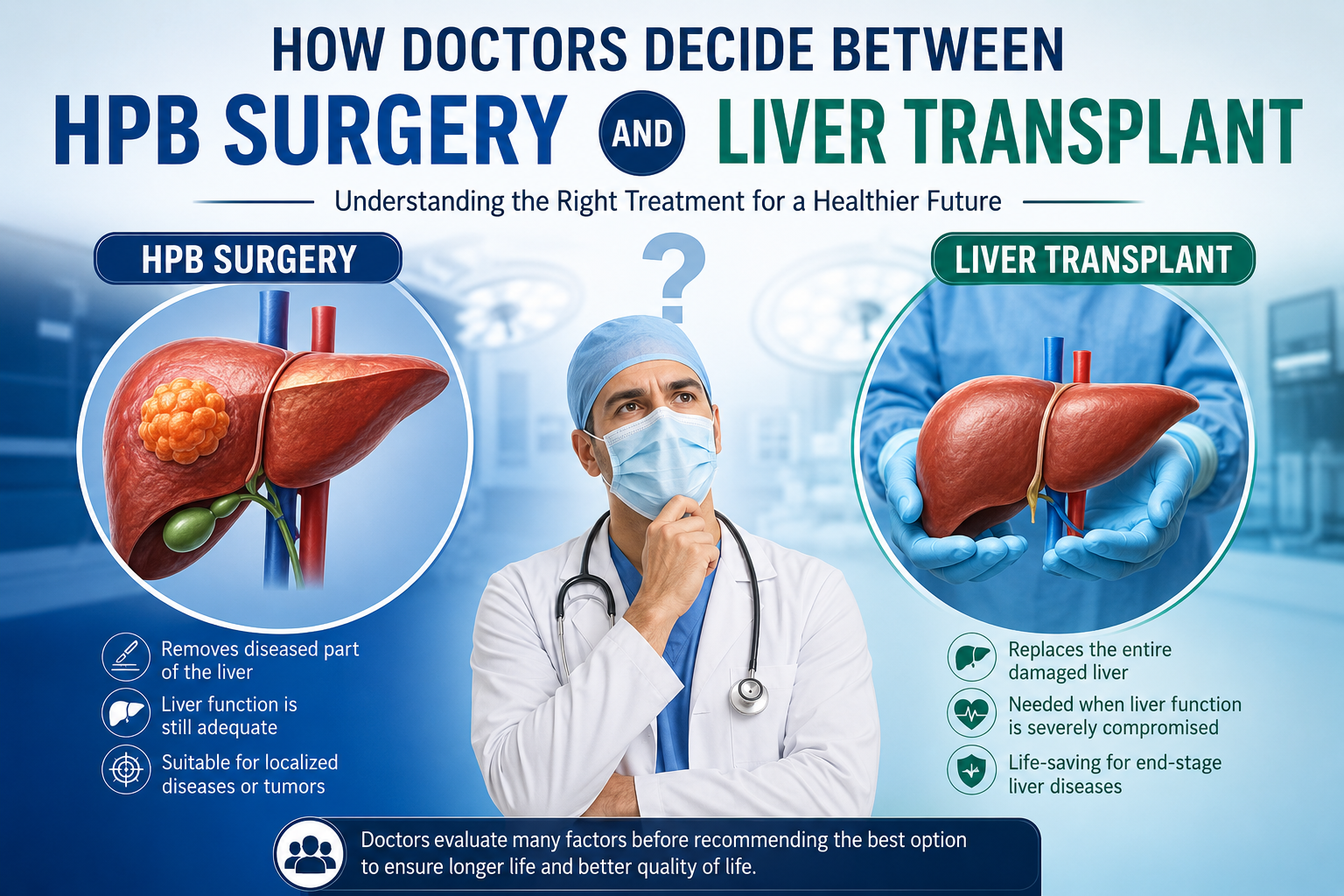
How Doctors Decide Between HPB Surgery and Liver Transplant

How Doctors Decide Between HPB Surgery and Liver Transplant

Introduction

When it comes to serious liver diseases, many patients and families face a difficult question: Should the patient undergo HPB surgery or a liver transplant? The answer is not always straightforward. Doctors carefully evaluate several factors before deciding which treatment option offers the best chance of recovery and long-term health.

The liver is one of the most important organs in the body, performing hundreds of functions that keep us alive and healthy. When liver diseases, tumors, or injuries affect its function, specialized treatment becomes essential. This is where HPB (Hepato-Pancreato-Biliary) surgery and liver transplantation come into the picture.

Think of the liver like the engine of a car. If one part of the engine is damaged, mechanics may repair or replace that specific component. However, if the entire engine is severely damaged, replacing the whole engine may be the only solution. Similarly, doctors decide whether to repair the liver through HPB surgery or replace it through a liver transplant based on the extent of damage.


Discover how doctors choose between HPB surgery and liver transplant based on liver function, disease severity, and patient health. Expert insights from the best liver transplant surgeon in india.

How Doctors Decide Between HPB Surgery and Liver Transplant

1. What Is HPB Surgery?

HPB surgery stands for Hepato-Pancreato-Biliary surgery, a specialized branch of surgery that focuses on diseases affecting the liver, pancreas, gallbladder, and bile ducts.

The main objective in HPB procedure is to eliminate the affected tissue and preserve as much organ function that is healthy as is feasible. The most common HPB procedures comprise:

  • Removal of a liver tumor (hepatectomy)
  • Gallbladder surgery
  • Bile duct reconstruction
  • Pancreatic surgery
  • Treatment of abscesses and liver cysts

HPB surgery is typically advised when the liver is functioning normally despite the existence of a disease.

2. What Is a Liver Transplant?

The procedure of a liver transplant is an operation in which an uninjured liver from the donor replaces the damaged or diseased liver.

Transplants are generally contemplated as a sign that the liver has lost the ability to function properly and can’t recover through surgery or medication on its own.

There are two major types:

  • Living donor liver transplant
  • Donor liver transplants from deceased donors

A liver transplant gives people a chance to live the future when their own liver is no longer able to meet the body’s requirements.

3. Understanding the Difference Between HPB Surgery and Liver Transplant

The main difference lies in the method of treatment.

HPB Surgery Liver Transplant
Get rid of diseased portions of the liver Replacing the entire liver
Preserves healthy liver tissue It is a completely new liver
Acceptable if liver function remains sufficient It is necessary when the function of the liver is severely impaired
A shorter recovery is common in many cases. Needs ongoing monitoring and medication

Doctors evaluate whether keeping the patient’s liver is feasible before deciding to consider a transplant.

4. Conditions treated with HPB Surgery

Many biliary and liver disorders can be effectively treated by HPB surgery.

Liver Tumors

Many malignant and benign liver tumors can be eliminated surgically, if they’re localized.

Gallbladder Diseases

Gallbladder cancers, as well as gallstones, often require surgery.

Bile Duct Disorders

Bile ducts that are damaged or blocked are usually repaired using HPB procedures that are specialized. HPB methods.

Liver Cysts

Large cysts that are symptomatic can be removed while protecting the healthy tissue of your liver.

When the signs are discovered in the early stages, HPB surgery can provide outstanding results.

5. Conditions That Require Liver Transplant

Certain liver diseases can progress to the point that surgery alone will not be able to help restore function.

End-Stage Liver Disease

This happens when liver damage hinders normal function.

Liver Cirrhosis

Advanced cirrhosis due to the liver diseases hepatitis and alcohol-related as well as fatty or liver-related diseases might need a transplant.

Acute Liver Failure

A sudden and serious liver failure could be life-threatening in a matter of days.

Certain Liver Cancers

Some patients with cancer of the liver meet certain criteria for which transplantation provides better long-term outcomes than surgery.

6. How Doctors Evaluate Liver Function

Before they recommend treatment, doctors evaluate the extent to which the liver is functioning.

Blood Tests

Tests evaluate:

  • Bilirubin levels
  • Liver enzymes
  • Albumin levels
  • Clotting causes

MELD Score

The Model for End-Stage Liver Disease (MELD) score can help determine the severity of liver disease.

More MELD scores typically suggest a greater need for transplant.

Child-Pugh Classification

This method helps doctors assess the liver’s reserve and anticipate the outcomes of surgeries.

These tests guide the treatment process and aid in determining the safety of surgery.

7. The Role of Imaging and Diagnostic Tests

Advanced imaging plays a key role in the planning of treatment.

CT Scan

The site provides detailed information on liver anatomy and tumors.

MRI

It provides superior imaging of liver lesions and bile ducts.

Ultrasound

Most often, it is the first instrument for diagnosing.

Biopsy

In selected cases, tissue samples help confirm diagnosis.

These tests help doctors identify the extent of disease and determine which is the best treatment plan.

8. Liver Tumors: Surgery or Transplant?

The most prevalent instances where doctors have to choose between HPB surgery or a liver transplantation is the case of liver cancer.

When Surgery Is Chosen

HPB surgery could be preferred for the following reasons:

  • The tumor is located.
  • Liver function is excellent.
  • There aren’t multiple tumors.
  • The patient is healthy enough to undergo surgery.

When Transplant Is Chosen

A liver transplant is a possibility for the following reasons:

  • The patient is suffering from liver cancer as well as cirrhosis.
  • Multiple tumors may be present in the criteria for transplant.
  • The remaining liver will not be functioning properly following surgery.

Each patient is different and treatment strategies are customized to meet the needs of the specific patient.

9. Importance of Patient’s Overall Health

Doctors do not only focus on the liver.

They also look at:

  • Heart health
  • Kidney function
  • Lung function
  • Status of diabetes
  • Condition of nutrition
  • Physical fitness and age

A patient could have a technically removable tumor, however when their overall health is poor, surgery may have serious risks.

A thorough evaluation will ensure the most secure as well as most efficient treatment option.

10. When HPB Surgery Is Preferred

Doctors usually opt for HPB surgery for the following reasons:

Healthy Liver Reserve Exists

The remaining liver cells can be regenerated and function properly.

Disease Is Localized

A specific part that is the liver’s affected.

No Advanced Cirrhosis

Patients with no severe scarring to the liver generally do better with surgery.

Lower Surgical Complexity

If the situation is suitable, HPB surgery avoids the requirement for long-term anti-rejection medication.

For a majority of patients, conserving their liver’s natural function is the best option.

11. When Liver Transplant Becomes Necessary

There are instances when keeping the liver is not feasible.

Severe Cirrhosis

Scarring that is extensive leaves a little tissue.

Repeated Liver Failure Episodes

Frequent complications indicate irreversible damage.

Portal Hypertension

A high level of pressure in the liver blood vessels could cause serious bleeding.

Poor Quality of Life

Insistent symptoms like fatigue and jaundice, as well as fluid accumulation and confusion can indicate the need for transplantation.

In these situations replacing the liver typically will yield the most long-term benefits.

12. Risks and Benefits of Both Procedures

Benefits of HPB Surgery

  • Protects the patient’s liver
  • Eliminates the need for lifelong immunosuppressive medication
  • It is effective for treating localized diseases.
  • The possibility of a shorter hospitalization

Risks of HPB Surgery

  • Bleeding
  • Infection
  • Insufficiency in the liver
  • Tumor recurrence

Benefits of Liver Transplant

  • Replacing the liver that is diseased completely
  • Treats liver failure as well as certain cancers
  • Improves long-term survival

Risks of Liver Transplant

  • Organ rejection
  • Infections
  • Medication side effects
  • It is essential to maintain a lifelong monitoring

Doctors take care to weigh these elements prior to making recommendations.

13. Recovery After HPB Surgery vs Liver Transplant

Recovery is different between the two processes.

After HPB Surgery

Patients usually:

  • In the hospital for a few days
  • Resume activities slowly
  • Regular follow-up imaging is required.

After Liver Transplant

Recovery is a process that involves:

  • Longer hospitalization
  • Strict medication schedules
  • Regular monitoring for rejection
  • Lifelong specialist care

The two procedures both require dedication as well as continuous medical surveillance.

14. Choosing the Right Specialist

The most crucial choices that patients make is choosing a reputable specialist.

Complex liver diseases require multidisciplinary expertise that includes:

  • HPB surgeons
  • Transplant surgeons
  • Hepatologists
  • Oncologists
  • Radiologists
  • Critical care specialists

If you are looking for the most effective liver transplant specialist in India patients must take into account:

  • Experiential surgical experience
  • Reliability of the transplants
  • Hospital infrastructure
  • Access to advanced liver health
  • Success rates and patient outcomes

A team of professionals with experience can greatly enhance the effectiveness of treatment and improve recovery.

15. Future Outlook for Liver Disease Patients

Medical advancements continue to improve the results for as well HPB procedure and transplantation of the liver.

Modern technology, for example:

  • Robotic liver surgery
  • Minimally surgical procedures that are not invasive
  • Improved imaging techniques
  • Better transplant procedures
  • More effective anti-rejection drugs

They are helping patients recover faster and lead more healthy lives.

Nowadays, a variety of liver disorders which were once thought to be untreatable can be successfully treated by timely diagnosis and expert treatment.

Conclusion

The choice whether to choose the HPB procedure and a liver transplantation is a complicated process that requires careful assessment of the patient’s health and the function of their liver overall health, as well as the long-term outlook. While HPB surgery focuses on conserving and repair of the liver, transplantation is a life-saving option in cases where liver damage is irreparable.

Doctors utilize modern diagnostic instruments, laboratory tests, imaging studies and multidisciplinary knowledge to determine the most effective method of treatment. For certain patients, a specific surgical procedure might be sufficient however, others could prefer a total liver transplant.

The most important factor to ensure the most effective outcome is prompt diagnosis, expert evaluation and treatment provided by skilled experts. When contemplating HPB surgery or seeking advice from the top liver transplant surgeons in India seeking prompt medical guidance can make a huge impact on recovery and the living quality.

FAQs

1. What is the most significant distinction in HPB surgery and a liver transplant?

HPB surgery is a procedure to remove or repair parts of the liver that are diseased A liver transplant substitutes for the injured liver by a new, healthy donor liver.

2. Can cancer of the liver be treated by HPB operation instead of transplant?

Yes. In the event that tumors are in a localized area and liver function is normal, HPB surgery may be the best treatment option.

3. What can doctors tell when a patient is in need of an organ transplant?

The doctors evaluate the liver’s function, imaging results MELD score, symptoms and general health to determine if transplantation is required.

4. Is HPB surgery more secure than a liver transplant?

Both procedures carry risks as well as advantages. HPB surgery is typically more straightforward, but the most safe option will depend on the specifics of the patient’s condition.

5. Where can I find the top surgeon for liver transplants in india?

Choose specialists who have vast experience with transplants, high rate of success, modern hospitals as well as a multidisciplinary liver treatment team.