
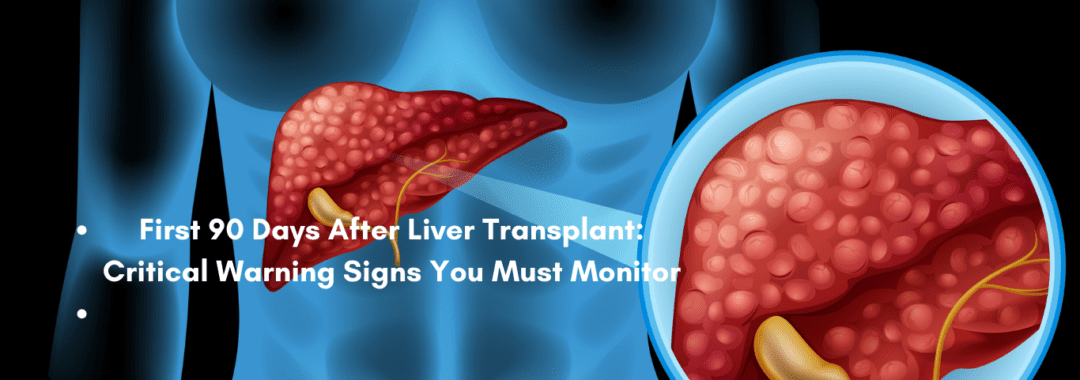
A liver transplant is not just a surgery– it’s a second chance at life. But here’s the truth many people don’t talk about enough: the first 90 days after a liver transplant are the most delicate and decisive. Think of this phase like nurturing a newly planted sapling. With the right care, it grows strong. Ignore early signs of trouble, and even a healthy plant can wither.
If you or someone you love has recently undergone a liver transplant, this article is written for you. We’ll walk through the critical warning signs, what’s normal, what’s not, and when to act fast– using simple language, real-life examples, and practical advice you can actually use.
1. Understanding the First 90 Days
The first three months after a liver transplant are like a trial period for your new organ. Your body is learning to accept it, and doctors are adjusting medications to keep rejection at bay. During this time, small symptoms can signal big problems.
This is why doctors insist on frequent follow-ups, blood tests, and strict routines. Skipping even one appointment can be risky.
2. Why Early Monitoring Is Life-Saving
Why all the fuss over early signs?
Because most complications start quietly. A mild fever or fatigue might seem harmless, but in transplant patients, these can be early alarms. Catching issues early often means simple treatment instead of emergency hospitalization.
In short: early action saves lives.
3. Signs of Liver Rejection
Liver rejection happens when your immune system attacks the new liver. It’s common– but manageable if detected early.
Key warning signs include:
Unusual fatigue
Yellowing of eyes or skin
Dark urine
Pain on the right side of the abdomen
Rejection doesn’t mean failure. With timely care from an experienced transplant team– and ideally the best liver transplant surgeon in India— most cases are reversed successfully.
4. Infection Warning Signals
After a transplant, your immunity is intentionally lowered to prevent rejection. This makes you more vulnerable to infections.
Watch out for:
Persistent cough
Burning while urinating
Redness or discharge from surgical wounds
Think of your immune system like a guard on night duty– still working, but not at full strength.
5. Fever: When to Worry
A fever above 100.4°F (38°C) should never be ignored.
Even a low-grade fever can signal:
Infection
Rejection
Medication reaction
Never self-medicate. Call your transplant coordinator immediately.
6. Changes in Urine and Stool
Your body’s waste tells a story– are you listening?
Concerning changes include:
Dark-colored urine
Pale or clay-colored stools
Strong-smelling urine
These signs may indicate bile flow problems or liver dysfunction.
7. Persistent Pain and Swelling
Some discomfort is expected after surgery. But persistent or worsening pain is not.
Red flags:
Abdominal swelling
Severe pain near the liver
Sudden bloating
This could mean fluid buildup, infection, or vascular complications.
8. Digestive Problems You Shouldn’t Ignore
Your digestive system often reacts first when something’s off.
Watch for:
Constant nausea
Vomiting
Loss of appetite
Unexplained weight loss
Occasional upset is okay– but persistent symptoms deserve attention.
9. Mental and Emotional Red Flags
Your mind heals too, not just your body.
Emotional warning signs include:
Severe anxiety
Depression
Confusion or memory issues
Some medications affect mood and thinking. Don’t suffer in silence– mental health is part of recovery.
10. Medication Side Effects
Anti-rejection drugs are lifesavers, but they can cause side effects.
Common ones include:
Tremors
High blood pressure
High blood sugar
Kidney issues
Never adjust doses on your own. Always consult your transplant team.
11. Skin and Eye Colour Changes
Your skin and eyes are visual indicators of liver health.
Seek help if you notice:
Yellowing (jaundice).
Persistent itching.
Unusual rashes.
These symptoms often signal bile or liver function problems.
12. Breathing Difficulties.
Shortness of breath is never normal post-transplant.
Possible causes include:.
Infection.
Fluid in lungs.
Blood clots.
If breathing feels hard, treat it as an emergency.
13. Blood Pressure and Sugar Fluctuations.
Many transplant patients develop:.
High blood pressure.
Diabetes.
Regular monitoring helps prevent long-term damage. Think of it as maintaining balance– like tuning a musical instrument.
14. When to Contact Your Transplant Team.
Call immediately if you experience:.
Fever.
Sudden pain.
Breathing trouble.
Mental confusion.
It’s better to be cautious than sorry.
15. Role of an Expert Transplant Surgeon.
Your recovery doesn’t end in the operating room. Continuous guidance from an experienced specialist– often considered the best liver transplant surgeon in India— makes a real difference.
Expert surgeons:.
Anticipate complications.
Adjust treatments quickly.
Offer long-term recovery strategies.
Dr. Neerav Goyal as a liver transplant specialist: To seek a consultation with a best liver transplant doctor in New Delhi , India: Call us at 8527516541 | Email at [email protected]
Conclusion.
The first 90 days after a liver transplant are a make-or-break phase. By staying alert, following medical advice, and responding quickly to warning signs, you dramatically improve your chances of a healthy, fulfilling life. Remember, your new liver is a gift– protect it like one.
Frequently Asked Questions (FAQs).
1. Is fever always dangerous after a liver transplant?
Yes, any fever should be reported immediately as it may indicate infection or rejection.
2. How common is liver rejection in the first 90 days?
Acute rejection is fairly common but usually reversible with early treatment.
3. Can emotional changes be linked to transplant medications?
Yes, many immunosuppressive drugs affect mood and mental clarity.
4. How often should follow-up tests be done initially?
Typically weekly or bi-weekly during the first few months, depending on recovery.
5. Does choosing the best liver transplant surgeon in india improve outcomes?
Absolutely. Experience and expertise significantly reduce complications and improve long-term success.