

Introduction
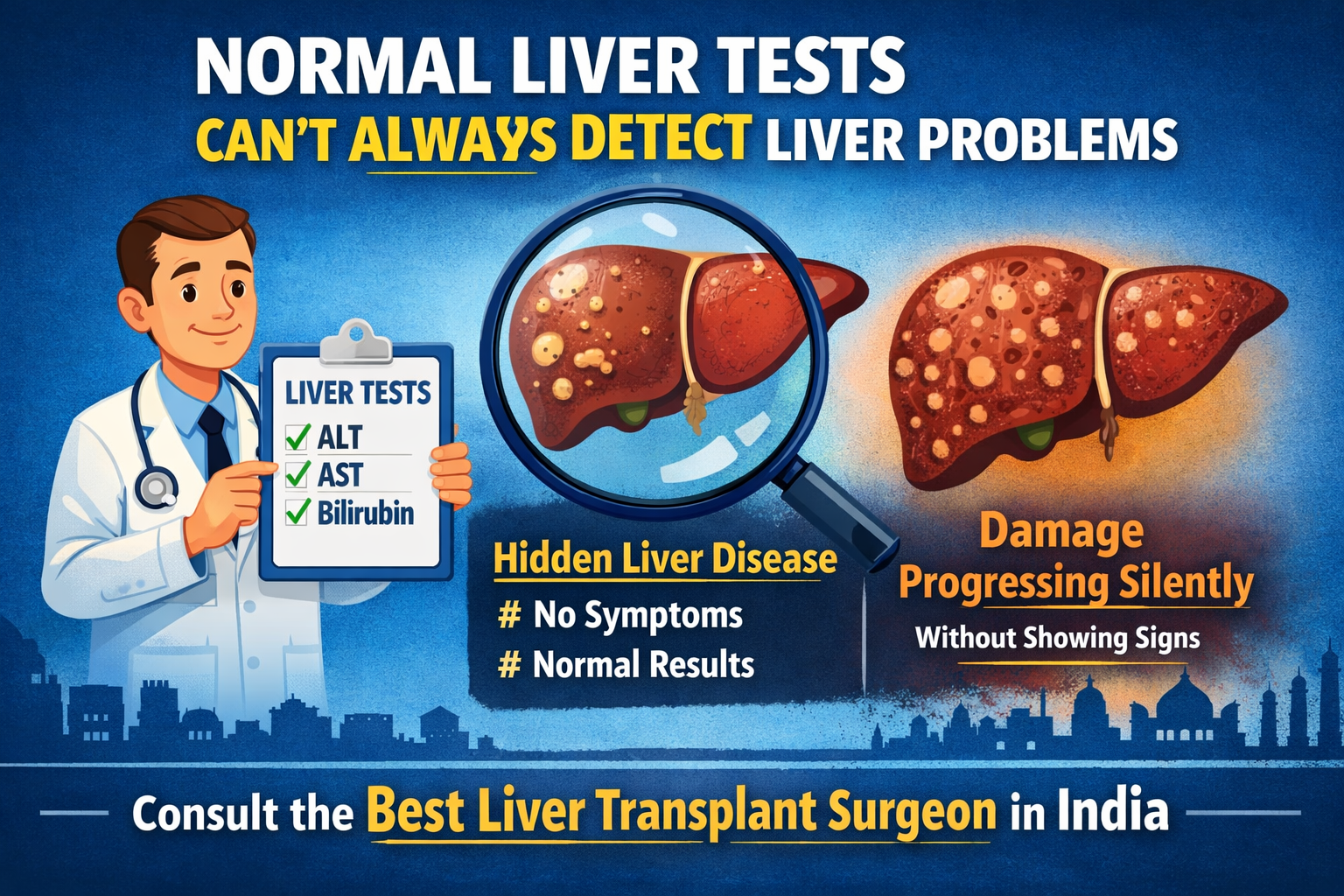
Have you ever thought, “My liver tests are normal, so I must be perfectly healthy”? You’re not alone. Many people believe that normal liver reports mean their liver is functioning flawlessly. But here’s the surprising truth—normal liver tests don’t always guarantee a healthy liver.
Think of your liver like a silent worker in a factory. It keeps doing its job even when parts of the machinery are damaged. By the time alarms ring, significant damage may already be done.
In this article, we’ll break down why liver tests can sometimes miss problems, what signs you should watch for, and when it’s important to consult an expert—even the best liver transplant surgeon in India if needed.
1. What Are Liver Function Tests (LFTs )?
Liver Function Tests (LFTs) are blood tests to determine the health of your liver functioning. They test proteins and enzymes such as:
- ALT (Alanine Aminotransferase)
- AST (Aspartate Aminotransferase)
- Bilirubin
- Albumin
These markers can give doctors information about the health of their livers, but they don’t provide the entire story.
2. How Do Liver Tests Work?
LFTs are able to detect inflammation or damage within the liver through testing the release of substances into the blood.
A simple analogy
This is similar to checking for smoke to identify fire. If smoke is present, there’s something not right. But what happens if the fire is not so large and concealed? There might not be any smoke to speak of.
It’s how liver disease behaves.
3. Why Normal Reports Can Be Misleading
The most important thing to remember is:
The results of a normal liver test do not always mean that your liver is healthy.
Why?
- The damage to the liver can be mild or even early
- The liver is able to be repaired temporarily
- Tests are only able to identify particular changes Not all problems
Yes, your reports will look flawless, even if you notice that something is going off.
4. Early Liver Disease Often Has No Symptoms
The majority of liver disorders are referred to as “silent illnesses.”
You might feel:
- Absolutely normal
- No pain
- No need to be tired
On the other hand, there is a chance that damage could already be taking place.
It’s the reason why relying solely on the symptoms or tests could be dangerous.
5. Hidden Conditions That LFTs May Miss
There are liver problems that can occur regardless of test results:
- Fat-liver disease
- The early stage liver inflammation
- Mild hepatitis
- Stages 1 and 2 of cirrhosis
This may not cause an increase in the levels of enzymes right away.
6. Fatty Liver Disease and Normal Tests
The condition known as fatty liver is among the most prevalent liver diseases nowadays, especially in India.
Here’s the thing:
As high as 50% of people suffering from the condition can also suffer from regular LFTs.
This translates to:
- There could be the liver to be fatty.
- But your blood tests are “normal”
Scary, right?
7. Liver’s Ability to Compensate Damage
The liver is extremely strong.
Even even if 70% is damaged the rest of it will perform normally for a short time.
This capability to compensate translates into:
- The damage can be silent
- Tests may stay normal until late stages
It’s as if a car is running effortlessly, even when the engine is slow to fail.
8. Limitations of Standard Blood Tests
LFTs are useful however they are not without limitations:
- They don’t test the stiffness of the liver, or scarring.
- They’re unable to identify the accumulation of fat with precision.
- The results can vary based on the food, medications or even fluid levels
Therefore, relying solely on LFTs is as judging a book based on its cover.
9. When Should You Be Concerned?
You shouldn’t ignore your liver’s health if you are suffering from:
- Diabetes or obesity
- Alcohol consumption
- The family History of liver problems in the family
- Viral infections like hepatitis
Even with regular reports, these risk factors can increase your chances of being a victim.
10. Additional Tests Beyond LFTs
Doctors frequently recommend tests that are more advanced for example:
- Ultrasound
- FibroScan
- CT scan, MRI
- Biopsies of the liver (in certain instances)
These tests give a greater examination of the structure of the liver and the damage.
11. Role of Imaging in Liver Diagnosis
Imaging tests can show what blood tests aren’t able to reveal.
They assist in identifying:
- Changes in fat
- Tumors
- Fibrosis and the cirrhosis
In many instances imaging can detect problems before symptoms begin to manifest.
12. Importance of Regular Health Checkups
Don’t wait until symptoms appear.
Routine checkups help:
- Detect hidden liver issues
- Monitor risk factors
- Beware of grave complications
Preventive measures are always more effective than curative.
13. When to Consult a Specialist
If you’re concerned or are unsure about your risk, it’s best to talk with a liver specialist.
In more serious cases, prompt consult with the top liver transplant surgeon in India could be life-saving.
They may:
- Diagnose complicated conditions
- Offer suggestions for more advanced treatment
- Provide guidance on long-term care
14. Lifestyle Risks That Go Undetected
Everyday habits can cause harm to the liver.
- Junk foods and high sugar consumption
- Inactivity and lack of exercise
- Alcohol consumption
- Self-medication
They may not be apparent immediately, but the damage will build over time.
15. How to Protect Your Liver Health
Here are some easy steps to follow:
- Consume a balanced and healthy diet
- Exercise regularly
- Avoid excessive alcohol
- Be vaccinated against hepatitis.
- Make sure you have regular health checks
Simple changes today can help keep you from having major issues tomorrow.
Conclusion
So, what’s the main takeaway?
The normal tests on the liver can be reassuring, but they are not foolproof.
The liver is a quiet organ that doesn’t make any noises. At the point that symptoms start to manifest it could be that the damage is already in the process of becoming.
It’s the reason it’s so important to:
- Do not limit yourself to test reports
- Be aware of potential risk factors
- Start preventive measures early
If you’re in need you need help, don’t hesitate to speak with an expert, even the top liver transplant surgeons in India–for appropriate guidance and assistance.
Your liver does a great job for you every single day. Why don’t you return the favor?
FAQs
1. Do I have a liver problem through routine blood testing?
Yes, some early-stage liver diseases, such as the fibrosis or fatty liver might not exhibit abnormal results in routine tests.
2. What is the best time to have my liver examined?
If you’re in good health, one time every year is sufficient. If you’re at risk Your doctor might recommend regular tests.
3. Which test is the most effective to detect earlier liver problems?
Tests such as FibroScan as well as ultrasound can be more effective at diagnosing the early signs of liver disease than standard blood tests.
4. What are the initial signs of liver issues?
The initial signs may be light or non-existent. In later stages, signs could include fatigue, jaundice or swelling.
5. When should I visit an expert in the field of liver?
Consult a physician in the event of concerns that are abnormal in imaging or persistent symptoms even the tests you have performed are normal.