Is Hepatic Cyst Liver Cancer?

When you hear the word cyst in your liver, your mind may immediately jump to cancer. That’s natural. The liver is a vital organ, and anything unusual there can feel frightening.

But here’s the good news: most hepatic cysts are NOT liver cancer.

Still, confusion is common. So let’s clear the air. In this detailed guide, we’ll talk about what a hepatic cyst really is, whether it can turn into cancer, and when you should worry. If you or someone in your family has been diagnosed with a liver cyst, this article is for you.

Think of it like this:
Your liver is like a busy factory. A cyst is often just a small water balloon sitting quietly in a corner. Cancer, on the other hand, is like a faulty machine that keeps multiplying and damaging everything around it. Very different things.

Worried about a hepatic cyst? Learn whether it’s cancerous, understand the symptoms, and discover treatment options. Get trusted guidance from Dr Neerav Goyal, recognized as one of the best liver transplant surgeons in India for advanced liver care.
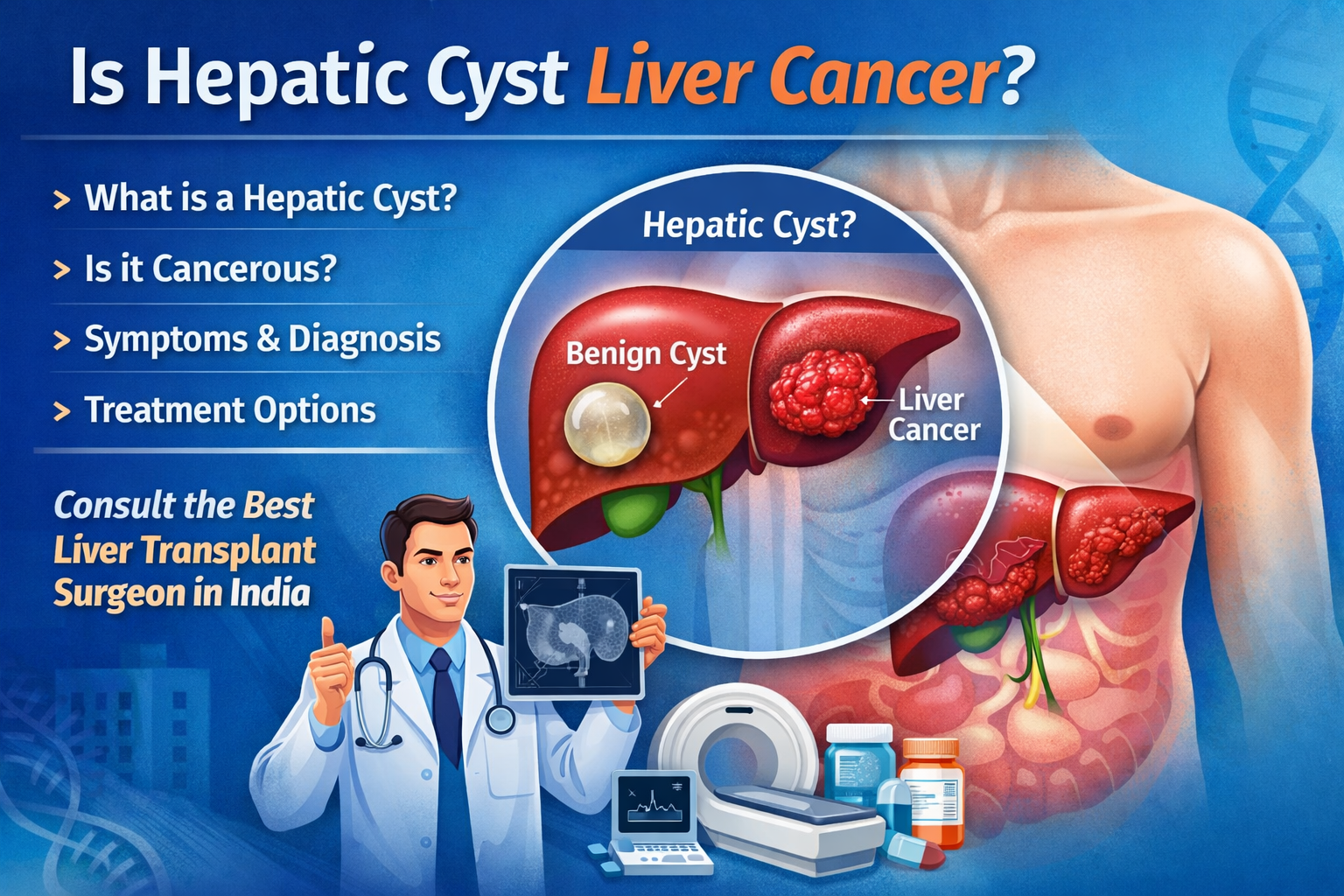
Is Hepatic Cyst Liver Cancer?

Let’s break it down step by step.

.1  What is Hepatic Cyst?
A Hepatic cyst is a cyst filled with fluid within the liver. It typically contains clear liquid and is generally harmless.

Most people don’t realize they have it since it doesn’t cause any symptoms. It’s typically discovered by accident when you have either an ultrasound scan or CT scan that is done for another reason.

The most frequent liver cysts can be classified as:

Small
Non-cancerous
Slow-growing
Not painful


2. Are Hepatic Cysts the Most Common?
They are popular.

Studies have shown that between 5 and 10 percent of people could suffer from liver cysts, particularly when they get older. The majority of cases are observed among people over 40.

Women are likely to get them more frequently than men.

What is the most important thing to keep in mind?
Most liver cysts do not cause any problems.


3. What is Hepatic Cyst the cause of Liver Cancer?
Let’s tackle the primary query clearly:

It’s not a problem, a normal Hepatic cyst isn’t liver cancer.

Simple cysts:

Is stuffed with fluid
It has walls with thin walls
Does not cause any spread
Does not infiltrate other tissues.

Liver cancer, like Hepatocellular Carcinoma (HCC), behaves quite differently. It is a very aggressive cancer that damages the liver tissue.

However there are many cysts that are not simple. Sometimes, complex cysts might require further examination to determine if they are cancerous.

This is why a thorough assessment is so important.


4. Different types of Liver Cysts

Simple Liver Cysts
The most common
Harmless
Most often, you do not require any treatment.

Polycystic Liver Disease
Genetic disorder
Multiple cysts in the liver
May cause enlargement

Hydatid Cysts
It is caused by parasite infections
More important
The need for treatment

Cystic Tumors
Rare
Could look like cysts, however, they could also be cancerous

Knowing the kind of cyst is essential to deciding which next action to follow.


5. What is the cause of Hepatic Cysts?
The majority of small cysts tend to be congenital which means that you are born with them. They develop slowly over time.

Other causes are:

Parasitic infections
Genetic disorders
Liver injury
Blocked bile ducts

In a lot of cases the reason for this is not known.


6. The symptoms of liver Cysts
A majority of people do not feel anything.

If a cyst gets to be large (more than 5 centimeters) it could be a sign:

Upper right abdominal pain
Bloating
Fullness
Nausea
Liver enlargement

Rarely, severe symptoms occur. However, they could include:

Sudden sharp pain (if cyst ruptures)
Fever (if you are infected)

If symptoms are evident be aware of them.


7. How do doctors diagnose Hepatic Cysts?
Diagnostic tests usually involve imaging:

Ultrasound
The first and most commonly used test. The test is fast and painless.

CT Scan
Provides high-quality pictures.

MRI
If doctors suspect that something is not quite right.

Doctors examine:

Size
Shape
Wall thickness
Solid components

If the cyst appears suspicious, additional tests could be required.


8. What are the signs to be concerned about?
It is recommended to seek out a liver specialist:

The cyst is big.
There is a persistent pain
The cyst develops rapidly.
There are areas of solidity within the cyst.
You already have liver disease

People suffering from cirrhosis and chronic hepatitis require more frequent monitoring due to the fact that their risk of liver cancer is greater.


9. Does a Hepatic Cyst develop into cancer?
This is the truth:

Simple cysts don’t change to cancer.

However, rare cystic tumors, such as cystadenocarcinoma or biliary cystadenoma could appear like normal cysts when scanned.

Expert evaluation is crucial.

If you’re uncertain regarding your diagnosis, obtaining an additional review from the top liver transplant surgeons in India or a reputable liver specialist could give you assurance.


10. Alternative Treatments for Hepatic Cysts
Treatment depends on symptoms.

No treatment is required
Most cysts are not complicated and need no treatment.

Medication
Only used in cysts that are parasitic.

Aspiration
Fluid is removed using needle (temporary solution).

Surgery Removal
It is required If:

Cyst is a very big
Causes pain
It is then infected.
Suspicious for cancer

Laparoscopic surgery that is minimally invasive is widely used in the present.


11. When is Liver Surgery Required?
Surgery isn’t common but could be necessary if:

The cyst compresses nearby organs.
There is bleeding within the cyst.
It is impossible to rule out cancer.
There are many large cysts

In the most extreme instances of severe damaged liver, a liver transplant could be thought of.

The choice of the most effective liver transplant specialist in India will guarantee:

Accurate diagnosis
Advanced surgical treatment
Better outcomes for recovery

India is now a world-class liver surgery center that has the highest level of expertise.


12. The role of a liver specialist
The liver specialists (hepatologist) assists in:

Accurate diagnosis
Monitoring growth of cysts
Differentiating benign vs cancerous lesions
Recommend treatment

Do not be anxious when you read your scan report. Let a professional read it correctly.


13. Lifestyle and Prevention Tips
While it isn’t always possible to prevent liver cysts, it is possible to keep your liver in good shape.

Healthy Diet
Eat fresh fruits and vegetables and whole grain cereals.

Limit Alcohol
The excess alcohol damage the liver cells.

Maintain Healthy Weight
Obesity can lead to the fatty liver disease.

Regular Check-ups
Particularly if you suffer from cirrhosis or hepatitis.

Your liver is silent all day. It is similar to taking care of your car before it fails.


14. Final Thoughts
Then, is it hepatic cyst liver cancer?

In most cases, absolutely not.

A common hepatic cyst is typically harmless and will not develop into cancer. However, a proper diagnosis is essential to rule out complicated cysts.

If you are experiencing symptoms or are at risk for developing like chronic liver disease consult a liver specialist. If you require more advanced treatment required, consulting the most experienced liver transplant surgeon in India could be the key to success.

Be aware that knowledge decreases anxiety. The more you know about your circumstances and the better you feel.


Commonly asked questions (FAQs)

1. Does a benign hepatic tumor be transformed into cancer?
Hepatic cysts that are simple are not cancerous. However, more complex cysts might require evaluation.

2. Do all liver cysts need surgery?
The majority of liver cysts are not a need for surgical intervention unless they cause symptoms or develop complications.

3. What can I do to determine if my cyst in my liver is a risk?
Imaging tests such as the ultrasound test, CT and MRI aid in determining whether the cyst is simple or complex.

4. How big is a cyst in the liver which is in need of treatment?
Cysts greater than 5 cm with symptoms might require treatment.

5. Do I need to consult with the top liver transplant doctor in india to treat an liver cyst?
Most cysts that are simple don’t require transplant surgery. However should the cyst be massive, complex or is associated with serious liver disease, consulting an expert is suggested.

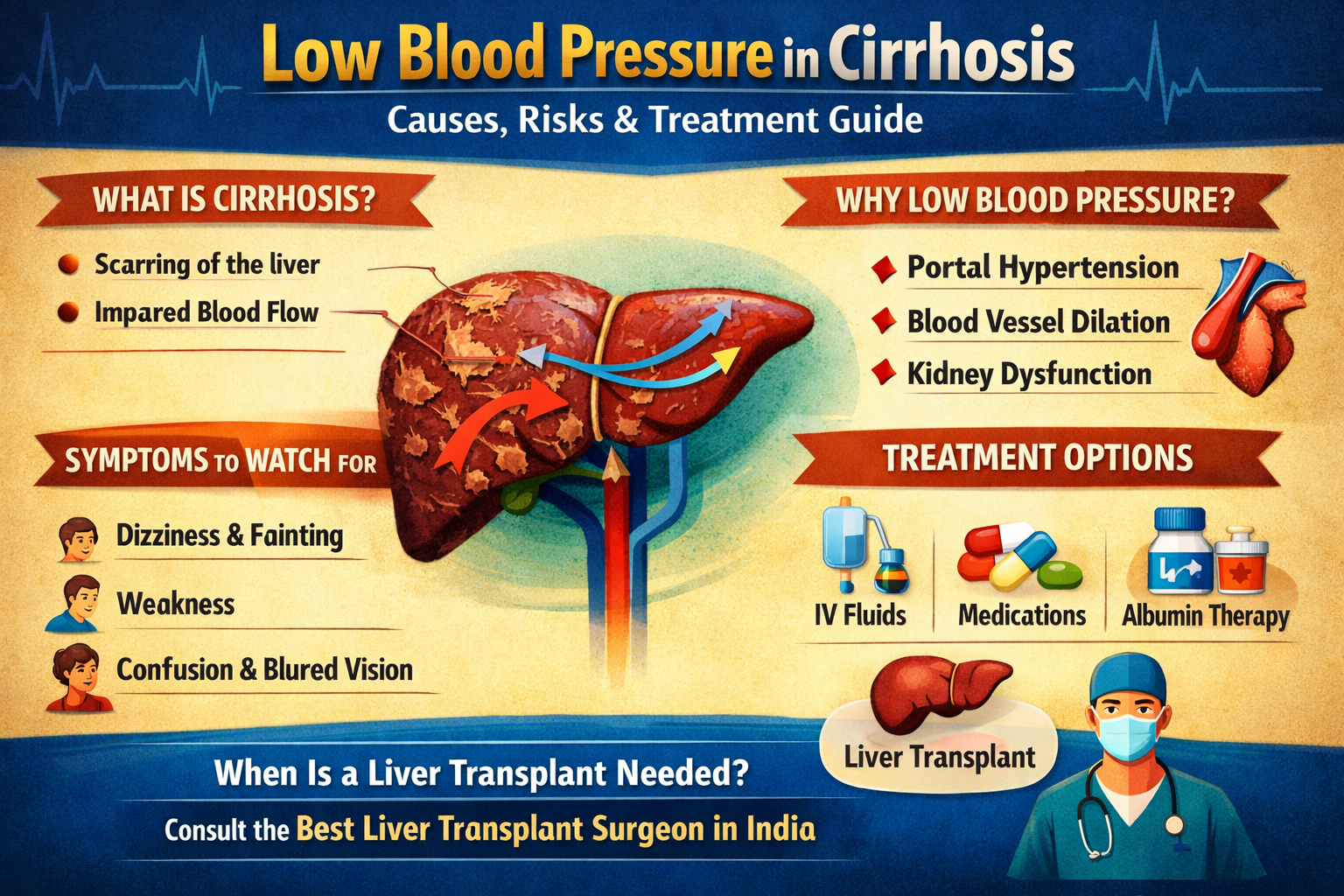
Low Blood Pressure in Cirrhosis: Causes, Risks & Treatment Guide

Living with liver cirrhosis can feel like walking on thin ice. Just when you think you understand one problem, another pops up. One of the most confusing — and sometimes dangerous — issues is low blood pressure in cirrhosis.

You might wonder, “Isn’t high blood pressure the real problem?” In many cases, yes. But when it comes to advanced liver disease, low blood pressure (hypotension) can become a serious concern.

In this guide, we’ll break everything down in simple words. We’ll talk about why it happens, what symptoms to watch for, and how it’s treated. If things become severe, we’ll also touch on when liver transplant becomes necessary — and why choosing the best liver transplant surgeon in India can make all the difference.

Let’s get started.

Understanding Cirrhosis and Blood Pressure

Cirrhosis is the final stage of long-term liver damage. Healthy liver tissue gets replaced by scar tissue. This scarring blocks normal blood flow through the liver.

Now here’s the interesting part: when blood can’t pass easily through the liver, your body reacts in unusual ways. Blood vessels in other areas widen. Fluid shifts. Hormones change. All this can lead to low blood pressure.

In simple words, the body tries to “compensate,” but sometimes it overdoes it.

What Is Low Blood Pressure?

Low blood pressure (hypotension) generally means a reading below 90/60 mmHg.

But numbers alone don’t tell the full story.

You may have low BP if you experience:

  • Dizziness
  • Fainting
  • Blurred vision
  • Fatigue
  • Confusion

In cirrhosis patients, low BP can be more dangerous than in healthy individuals because it may signal serious internal complications.

Why Does Cirrhosis Cause Low Blood Pressure?

Let’s break it down.

  • 1. Widened Blood Vessels
  • Cirrhosis causes the body to release chemicals that widen blood vessels. When vessels expand too much, pressure drops.
  • Imagine water flowing through a narrow pipe versus a wide pipe. The pressure falls in the wider one. That’s what happens inside your body.
  • 2. Fluid Loss
  • Many cirrhosis patients take diuretics (water pills) to control swelling and ascites. Too much fluid loss can lower BP.
  • 3. Internal Bleeding
  • Cirrhosis can cause enlarged veins (varices) in the food pipe or stomach. If they bleed, blood pressure can drop suddenly.

Role of Portal Hypertension

One major complication of cirrhosis is portal hypertension– increased pressure in the portal vein.

Because blood can’t flow properly through the scarred liver, pressure builds up. To cope, the body diverts blood elsewhere, leading to systemic blood vessel dilation.

This redistribution reduces effective blood volume, causing hypotension.

It’s like traffic being redirected from a blocked highway onto smaller streets. Chaos follows.

Impact on Kidneys (Hepatorenal Syndrome).

One serious complication is Hepatorenal Syndrome (HRS).

When blood pressure drops significantly, the kidneys receive less blood. Over time, kidney function declines.

Symptoms include:.

  • Reduced urine output.
  • Swelling.
  • Confusion.
  • Severe weakness.
  • HRS is life-threatening and requires immediate medical attention.

Symptoms You Should Never Ignore.

Low blood pressure in cirrhosis isn’t always mild. Watch for:.

  • Frequent fainting.
  • Sudden confusion.
  • Rapid heartbeat.
  • Cold, clammy skin.
  • Severe weakness.

If these appear, seek emergency care immediately.

Risks of Untreated Low BP in Cirrhosis.

  • Ignoring low BP can lead to:.
  • Kidney Failure.
  • Reduced blood supply damages kidneys permanently.
  • Shock.
  • Severely low pressure can cause circulatory shock.
  • Brain Dysfunction.
  • Poor blood flow affects mental clarity.
  • Increased Mortality.

Advanced cirrhosis with hypotension significantly increases risk of death.

This is why early management is crucial.

  • Diagnosis and Monitoring.
  • Doctors evaluate:.
  • Blood pressure readings.
  • Blood tests.
  • Kidney function tests.
  • Ultrasound scans.
  • Endoscopy (to check for varices).
  • Regular monitoring helps prevent emergencies.
  • Home BP monitoring can also help patients stay alert to changes.
  • Medical Treatment Options.
  • Treatment depends on the cause.

1. Adjusting Medications.

Diuretics may be reduced if they are causing excessive fluid loss.

2. IV Fluids.

If dehydration is present, fluids are given carefully.

3. Albumin Infusion.

Albumin helps pull fluid back into blood vessels, improving circulation.

4. Vasoconstrictor Drugs.

These medicines narrow blood vessels and raise BP.

Lifestyle and Dietary Changes.

You can play a role in managing your condition.

  • Stay Hydrated (But Carefully).
  • Don’t self-restrict fluids unless advised.
  • Avoid Alcohol Completely.
  • Alcohol worsens liver damage.
  • Follow Low-Salt Diet.
  • Prevents fluid buildup without worsening BP.
  • Stand Up Slowly.
  • Prevent dizziness and falls.
  • Small changes can make a big difference.

When Is Hospitalization Needed?

Immediate admission is required if:.

There’s internal bleeding.

Severe kidney dysfunction occurs.

Persistent fainting happens.

BP remains critically low.

Timely hospital care can be life-saving.

Liver Transplant as a Permanent Solution 

For advanced cirrhosis, medicines may only offer temporary relief.

In such cases, liver transplantation becomes the definitive treatment.

A successful transplant restores normal blood flow, corrects hormonal imbalances, and improves blood pressure regulation.

If you or your loved one has advanced liver failure with complications like hypotension and kidney dysfunction, consulting the best liver transplant surgeon in india can offer hope and long-term survival.

India has world-class transplant centers with experienced surgeons, high success rates, and affordable treatment options compared to many countries.

Preventing Complications.

Prevention is always better than cure.

  • Regular liver check-ups.
  • Early treatment of hepatitis.
  • Avoid alcohol.
  • Vaccinations.
  • Managing diabetes and obesity.
  • Early detection of cirrhosis can prevent hypotension complications later.

Long-Term Outlook and Recovery.

The prognosis depends on:.

  • Stage of cirrhosis.
  • Kidney function.
  • Response to treatment.
  • Overall health.
  • With proper management, many patients live stable lives.
  • In advanced cases, transplant offers a second chance at life.

Conclusion.

Low blood pressure in cirrhosis is not just a number on a monitor– it’s a warning signal. It tells us that the body is struggling to cope with liver damage.

The good news? Early detection, proper treatment, and lifestyle changes can prevent serious complications. And when cirrhosis reaches an advanced stage, consulting the best liver transplant surgeon in india can open the door to life-saving options.

If you or someone you love has cirrhosis, don’t ignore symptoms like dizziness or fainting. Your body might be asking for help.

Frequently Asked Questions (FAQs).
1. Why does cirrhosis cause low blood pressure?

Cirrhosis widens blood vessels and alters hormone balance, reducing effective blood circulation and lowering BP.

2. Is low blood pressure dangerous in liver patients?

Yes. It can lead to kidney failure, shock, and brain dysfunction if untreated.

3. Can low BP in cirrhosis be reversed?

Mild cases can be managed with medicines and lifestyle changes. Advanced cases may require liver transplant.

4. When should I see a doctor for low BP symptoms?

If you experience frequent dizziness, fainting, confusion, or weakness, seek medical help immediately.

5. Does liver transplant cure low blood pressure permanently?

In many advanced cases, transplant restores normal circulation and significantly improves blood pressure control.

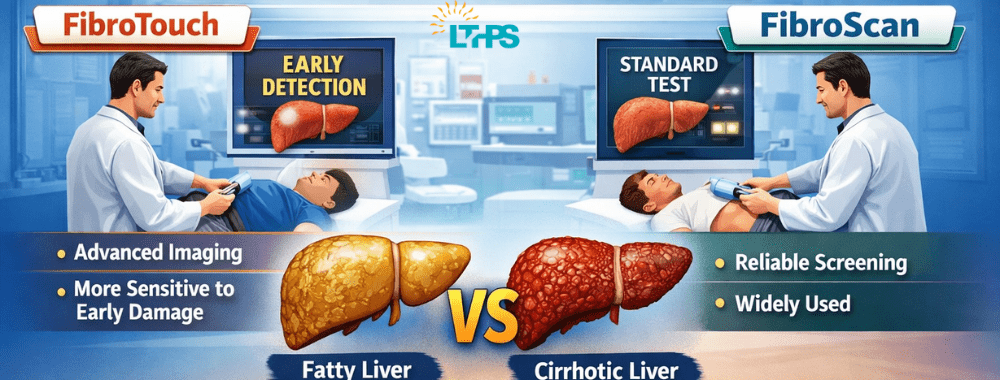
FibroTouch vs FibroScan for Fatty Liver: Which Detects Damage Earlier?

Introduction

Fatty liver disease has quietly become one of the most widespread health conditions, often with no discernible symptoms and buildup within the liver. When your doctor suggests tests like FibroScan or FibroTouch, one question immediately comes to mind: Which one provides better insight? Which detects liver damage earlier?

Think of your liver like a sponge; at first, it absorbs fat. Over time, that sponge becomes stiff and scarred, increasing the chances of reverse damage and avoiding serious outcomes such as cirrhosis or transplant. FibroScan and FibroTouch come into play here to detect stiffening.

This article breaks everything down in straightforward English—no medical jargon to worry about here! By the end, you’ll understand which technique detects damage earlier and fits into long-term liver care: FibroTouch or FibroScan?

This guide reflects the patient-first approach used at Liver Transplant International, where skin symptoms are explained in a clear, reassuring way. With 20+ years of experience, 3,000+ liver transplants, a 97% success rate, and 100% donor safety, the focus remains on early detection and timely, life-saving treatment for liver cirrhosis.  


1. What Is Fatty Liver Disease?

Fatty liver disease occurs when excessive fat accumulates within liver cells. At first, this may not pose much harm, but over time it may lead to inflammation, scarring (fibrosis), cirrhosis, and eventually liver failure.

Key Point:

  • Fatty liver can often develop unnoticed

  • By the time symptoms emerge, damage has already been done


2. Why Early Diagnosis of Liver Damage Is Important

Locating liver damage early can be like fixing a crack before the entire building collapses. Early-stage fatty liver can often be reversed with lifestyle modifications, medications, and monitoring.

Early diagnosis helps:

  • Reduce permanent scarring

  • Prevent disease progression

  • Improve long-term outcomes

FibroScan and FibroTouch non-invasive tests are a game-changer.


3. What Is FibroScan?

FibroScan is a non-invasive diagnostic test which measures:

  • Liver stiffness (fibrosis)

  • Fat content (steatosis)

This device utilizes ultrasound-based vibration technology and has been in widespread use worldwide for many years.

Simple explanation:
FibroScan measures how hard or soft your liver is; stiffer livers often indicate greater damage.


4. How FibroScan Works

FibroScan sends harmless vibrations through a probe placed on your skin into your liver. These waves travel faster through stiff tissue.

The test:

  • Takes approximately 5–10 minutes

  • Is painless

  • Requires no needles or anaesthesia

Instant results make this the ideal method for quick screening.


5. What Is FibroTouch?

FibroTouch is an advanced elastography device similar to FibroScan that utilizes more sophisticated signal processing and imaging integration techniques.

FibroTouch has gained increasing traction across Asia due to its adaptability and improved readings among certain patient groups.


6. How FibroTouch Works

FibroTouch emits mechanical waves into liver tissue and combines this technology with enhanced ultrasound imaging for more effective targeting.

Why this matters:

  • Accurate targeting allows earlier detection of mild fibrosis

  • Subtle liver changes are less likely to be missed


7. Comparison Between FibroTouch and FibroScan: Key Differences

Technology

  • FibroScan: Standard vibration-controlled elastography

  • FibroTouch: Elastography with imaging support

Detection capability

  • FibroScan: Ideal for moderate to advanced fibrosis

  • FibroTouch: More sensitive for early-stage damage

Patient adaptability

  • FibroTouch works better for obese patients


8. Which Test Predicts Fatty Liver Damage Early?

Here’s the honest answer: FibroTouch may detect early liver stiffness slightly earlier than FibroScan in mild and borderline cases of fibrosis.

Think of FibroScan like a camera that provides reliable HD resolution.

FibroTouch is like a lens with enhanced low-light performance—capable of picking up subtler changes sooner.

Both devices are effective, but FibroTouch may detect early damage more efficiently.


9. Accuracy for Obese and Diabetic Patients

Obesity and diabetes pose significant risks for fatty liver and create testing challenges.

FibroScan limitations:

  • Reduced accuracy in obese patients

  • Special probes may be required

FibroTouch advantages:

  • Improved tissue penetration

  • More consistent readings

This makes FibroTouch more practical in real-world clinical settings.


10. Comparative Comparison of Comfort, Time, and Safety

Both tests are:

  • Completely painless

  • Needle-free

  • Free from radiation exposure

  • Completed in less than 10 minutes

There is virtually no difference in patient comfort between the two.


11. Cost and Availability in India

  • FibroScan: Widely available, sometimes at a slightly higher cost

  • FibroTouch: Availability varies by city and hospital

Both tests are significantly cheaper and safer than liver biopsy.


12. Are These Tests an Alternative to Liver Biopsy?

Yes, in many cases.

FibroScan and FibroTouch reduce the need for biopsy in:

  • Fatty liver disease

  • Chronic hepatitis

  • Early fibrosis

However, biopsy may still be required when:

  • Results are unclear

  • Cancer is suspected

  • Severe liver damage is present


13. When Test Results Indicate Serious Injury or Malfunction

If either test shows:

  • High liver stiffness

  • Advanced fibrosis

  • Cirrhosis

Doctors may recommend:

Early planning can save lives.


14. Tests Prior to Liver Transplant

Before transplant decisions, doctors monitor:

  • Disease progression speed

  • Remaining liver function

FibroTouch and FibroScan help determine:

  • Urgency of transplant

  • Response to treatment

These tests play a vital role in transplant evaluation pathways.


15. Tips on Selecting an Appropriate Test for You

Choose FibroScan if:

  • You prefer a globally established test

  • Your body weight is within normal range

Choose FibroTouch if:

  • You are obese or diabetic

  • You want earlier detection of subtle liver damage

Ultimately, medical expertise matters more than the machine.


Conclusion

Fatty liver disease doesn’t yell—it whispers. FibroScan and FibroTouch both help doctors hear those whispers early. While FibroScan remains the standard choice, FibroTouch often excels at identifying early damage linked to modern lifestyles.

The key to effective liver care is not just the test, but timely diagnosis, proper follow-up, and expert medical guidance. Early action can mean the difference between lifestyle correction and lifelong liver disease.


Frequently Asked Questions (FAQs)

1. Does FibroTouch outperform FibroScan for fatty liver condition?

FibroTouch may detect early liver damage sooner, especially in obese patients, but both tests are reliable.

2. Are FibroScan and FibroTouch painful procedures?

No, both tests are completely painless and non-invasive.

3. Can fatty liver disease be reversed early on?

Yes, early-stage fatty liver can often be reversed with lifestyle changes and medical treatment.

4. Do I still require a liver biopsy following these tests?

Not usually. Biopsy is only needed if results are unclear or severe disease is suspected.

5. When should I consult the best liver transplant surgeon in India?

If tests show advanced fibrosis, cirrhosis, or worsening liver function, early consultation is essential.

Fatty Liver Without Cholesterol Causes, Risks & Care (1)

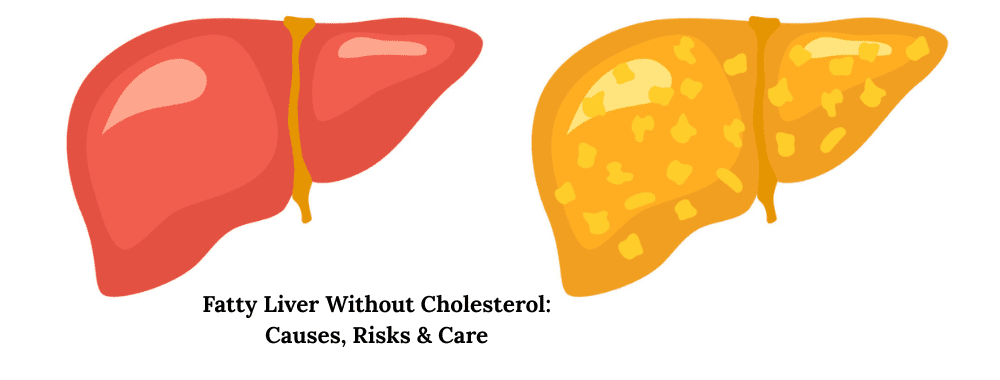
Fatty Liver Without Cholesterol: Causes, Risks & Care

When we hear the words “fatty liver,” the first thing that comes to mind is “cholesterol problem!”
But here’s the surprising truth: you can have fatty liver even if your cholesterol levels are perfectly normal.

Isn’t that confusing?
You’re not the only one. People often feel blindsided when a scan shows fatty liver, even though their blood tests are “perfect.” Your liver is like a sponge in the kitchen; it can soak up fat over time without anyone noticing, even when the rest of the house looks clean.

We’ll explain everything in this article in plain, everyday language. No medical terms. No tricks to scare people. Just answers that make sense for real people.

Fatty liver without cholesterol explained simply. Learn causes, symptoms, treatment, and when to consult the best liver transplant surgeon in india.

1. What is the disease of fatty liver?

When too much fat builds up inside liver cells, it causes fatty liver disease.
A healthy liver has a small amount of fat in it. But things start to go wrong when fat makes up more than 5–10% of the liver’s weight.

The scary part?
Your liver can be hurt for years without showing any signs.

2. Is it possible to have fatty liver without having high cholesterol?

Yes, for sure.
People don’t realize how common this is.

A lot of patients are shocked when doctors say:

“Your cholesterol is normal, but your liver has fat.”

This is because cholesterol is only one part of a much bigger picture.

3. Why cholesterol isn’t the only bad guy

This is a simple way to get it:

 Cholesterol is like trash that you can see, Fatty liver is like junk that you can’t see in your cupboards.

Even if your blood tests look good, your liver may still be storing fat because of:

How sugar is broken down

Hormonal imbalance

Swelling

Not being able to use insulin

4. Reasons Why People Get Fatty Liver Even Though Their Cholesterol Is Normal

Some of the most ignored causes are:

A lot of sugar

Resistance to insulin

Not moving around a lot

Quickly gaining or losing weight

Genetic inclination

Medications (painkillers, steroids) People who are thin can also get fatty liver. “Skinny fatty liver” is real, yes.

5. What is Non-Alcoholic Fatty Liver Disease (NAFLD)?

Non-Alcoholic Fatty Liver Disease (NAFLD) is what it’s called when fatty liver happens without alcohol.

Important point: NAFLD can happen even if cholesterol levels are normal and you don’t drink alcohol.

It has a lot to do with:

Health of the metabolism

Health of the gut

Balance of blood sugar

6. The Role of Blood Sugar and Insulin Resistance

This is a big deal.

When your body doesn’t use insulin the right way:

Blood sugar stays in the blood.

Too much sugar turns into fat.

The liver stores fat.

You might not have diabetes yet, but fatty liver could be a sign that you are at risk.

7. Things You Might Not Be Paying Attention To in Your Life

Let’s be honest: life these days isn’t good for your liver.

Things you do every day that hurt your liver:

Sitting for a long time

Eating late at night

Snacks that come in packages that say they’re “healthy”

Long-term stress

Not getting enough sleep

Your liver works all the time, but it also needs to rest and stay in balance.

8. Signs of Illness You Shouldn’t Ignore

People often call fatty liver a “silent disease,” but there are some signs that it is there:

Always tired

Heavy feeling on the right side of the stomach

Fog in the brain

A little bit of bloating

Weight changes that can’t be explained

Your liver may be trying to tell you something if you’ve been ignoring these.

9. How do doctors find out if someone has fatty liver?

Doctors usually check for fatty liver by:

Ultrasound

FibroScan

MRI (in some cases)

Tests for liver function (LFTs)

Important note: Having normal cholesterol does NOT mean you don’t have fatty liver.

10. Is having fatty liver without cholesterol bad for you?

Fatty liver in its early stages can be reversed.
But if you don’t pay attention to it, it can get worse:

NASH (inflammation)

Fibrosis

Cirrhosis

Failure of the liver

That’s when patients might need help from the best liver transplant surgeon in India.

11. Is it possible to reverse it naturally?

Yes, in a lot of cases.

The liver is like a superhero that can heal itself if you give it the right help.

Important steps:

Keeping your weight in check

Working out regularly

Less sugar

Sleep that is always the same

Doing little things every day can make a big difference.

12. Tips for a fatty liver diet with normal cholesterol

Don’t go on crash diets; instead, eat foods that help you heal.

Foods that are good for your liver:

Vegetables that are green

Fruits (in small amounts)

Whole grains

Seeds and nuts

Protein that is low in fat

Don’t:

Drinks with sugar

Refined carbs

Food that has been fried

Beverages

Keep in mind that it’s not about eating less; it’s about eating right.

13. Choices for medical care

There isn’t a magic pill yet, but doctors might suggest:

Vitamin E (for some patients)

Drugs that make insulin work better

Treatment for conditions that are causing the problem

It is very important to keep up with regular follow-ups to keep an eye on liver health.

14. When does fatty liver need a transplant?

Most people never get to this point.
But advanced fatty liver can hurt the liver in ways that can’t be fixed.

Liver transplant becomes necessary when:

Cirrhosis happens

The liver stops working

Problems get worse

At this point, picking the best liver transplant surgeon in India could save your life.

15. Picking the Best Liver Transplant Surgeon in India

Around the world, India is known for its advanced liver care.

When searching for the best liver transplant surgeon in India, think about:

Experience and success rates

Hospital infrastructure

Liver team from many fields

Quality of care after a transplant

In many cases, getting expert help early on can stop a transplant from happening.

In conclusion

Fatty liver without cholesterol is real, common, and often not understood.
The good news is? Most of the time, it can be stopped and fixed if caught early.

Pay attention to your body. Respect your liver.
And if things ever get serious, remember that timely care from India’s best liver transplant surgeon can make a big difference.

Your liver does its job without you knowing it. Perhaps it’s time for you to do the same.

FAQs
1. Can you get fatty liver even if your cholesterol levels are normal?

Even with normal cholesterol, insulin resistance, problems with sugar metabolism, and lifestyle choices can all lead to fatty liver.

2. Is fatty liver without cholesterol less serious?

Not always. If you don’t pay attention to it, it could still turn into fibrosis or cirrhosis.

3. Can just working out get rid of fatty liver?

Exercise is very helpful, but the best results come from making changes to your diet and lifestyle as well as exercising.

4. How long does it take for fatty liver to go away on its own?

If you make changes to your lifestyle and stick to them, mild fatty liver may get better in 3 to 6 months.

5. When should I see a liver specialist or transplant expert?

If your liver enzymes stay high, you have fibrosis, or your symptoms get worse, see a specialist or the best liver transplant surgeon in India as soon as possible.

Robotic Hepatectomy A Modern, Precise Way to Treat Liver Disease

Robotic Hepatectomy: A Modern, Precise Way to Treat Liver Disease

Introduction

If you or someone you love has been diagnosed with a liver condition that needs surgery, the first emotion is often fear. And that’s completely normal. Liver surgery sounds serious—and it is—but the good news is that medical science has come a long way. One of the most exciting advancements is robotic hepatectomy, a modern, minimally invasive way to remove part of the liver with extreme precision.

Think of it like upgrading from a basic phone to a smartphone. The purpose is the same—communication—but the experience is smoother, faster, and smarter. In this article, we’ll walk through robotic hepatectomy in simple, everyday language, so you truly understand what it is, why it’s done, and how it may help patients recover better and faster.

Must contact Dr Neerav Goyal

Dr Neerav Goyal is a renowned liver surgeon in India with strong expertise in liver transplantation and advanced liver surgeries. He is known for using modern techniques, including minimally invasive and robotic approaches, to improve surgical precision and patient recovery. Patients seeking care from the best liver transplant surgeon in India often value his experience, patient-focused approach, and commitment to safe, outcome-driven liver treatment.


1. What Is Robotic Hepatectomy?

Robotic hepatectomy is a minimally invasive liver surgery where surgeons remove a diseased portion of the liver using robotic-assisted technology.

The robot does not operate on its own. The surgeon is fully in control, guiding robotic arms with high-definition 3D vision and ultra-precise movements.

Key point:
The robot acts like an extension of the surgeon’s hands—steadier, sharper, and more precise.


2. Understanding the Liver and Its Role

The liver is like the body’s chemical factory. It:

  • Filters toxins

  • Helps digest food

  • Stores energy

  • Produces essential proteins

What’s amazing is that the liver can regenerate itself. Even after removing a portion, it can grow back to near-normal size—one reason hepatectomy is possible.


3. Why Liver Surgery May Be Needed

A robotic hepatectomy may be recommended for:

  • Liver tumors (benign or cancerous)

  • Liver cysts

  • Metastatic cancer spread to the liver

  • Localized liver damage

  • Preparation for liver transplant

Early and accurate surgical intervention can be life-saving, especially when guided by the best liver transplant surgeon in india.


4. What Makes Robotic Surgery Different?

Traditional surgery involves large cuts. Robotic surgery uses small keyhole incisions.

Here’s an analogy:
Imagine fixing a watch. Would you use gardening tools or fine tweezers? Robotic systems give surgeons those “fine tweezers.”

What’s different?

  • 3D magnified vision

  • Tremor-free movements

  • Better access to hard-to-reach liver areas


5. How Robotic Hepatectomy Is Performed

The process usually follows these steps:

  • General anesthesia is given

  • Small incisions are made

  • Robotic arms are inserted

  • Surgeon controls the robot from a console

  • Diseased liver portion is removed

  • Incisions are closed

Despite the advanced technology, the surgery often results in less pain and quicker recovery.


6. Who Is an Ideal Candidate?

Robotic hepatectomy is suitable for many—but not all—patients.

Ideal candidates include people with:

  • Localized liver tumors

  • Good liver function

  • No widespread cancer

  • Stable overall health

A thorough evaluation by an expert liver team is essential.


7. Benefits of Robotic Hepatectomy

Why are patients choosing this approach?

  • Smaller scars

  • Less blood loss

  • Reduced pain

  • Faster recovery

  • Shorter hospital stay

  • Quicker return to normal life

For many, it feels less like major surgery and more like a carefully managed medical procedure.


8. Are There Any Risks or Limitations?

Like all surgeries, robotic hepatectomy has risks:

  • Bleeding

  • Infection

  • Bile leakage

  • Anesthesia-related issues

However, in experienced hands, complication rates are often lower than traditional surgery.


9. Robotic vs Open Liver Surgery

Key differences include:

  • Incision size: Small (robotic) vs large (open)

  • Pain level: Less vs more

  • Hospital stay: Shorter vs longer

  • Recovery time: Faster vs slower

  • Precision: Very high vs moderate


10. Recovery After Robotic Hepatectomy

Most patients:

  • Walk within 24 hours

  • Start eating normally in a few days

  • Go home within 4–6 days

Full recovery usually takes 2–4 weeks, compared to months with open surgery.


11. Life After Liver Surgery

Life doesn’t stop after surgery—it often improves.

Patients are advised to:

  • Eat a healthy, balanced diet

  • Avoid alcohol

  • Follow up regularly

  • Take prescribed medications

The liver’s regenerative power helps patients return to a normal lifestyle.


12. Role of an Experienced Liver Surgeon

Technology alone isn’t enough. The outcome depends heavily on the surgeon’s skill and experience.

Choosing care under the best liver transplant surgeon in india ensures:

  • Correct patient selection

  • Safe surgery

  • Better long-term outcomes

Experience matters—especially with advanced robotic techniques.


13. Cost and Availability in India

Robotic hepatectomy is available at leading liver centers in India.

Cost factors include:

  • Hospital infrastructure

  • Surgeon expertise

  • Type of liver condition

  • Length of hospital stay

While robotic surgery may cost more upfront, faster recovery and fewer complications often balance the expense.


14. Future of Robotic Liver Surgery

The future looks promising:

  • Better robotic systems

  • AI-assisted planning

  • Shorter surgeries

  • Wider availability

Robotic hepatectomy is not just a trend—it’s becoming the new standard.


15. Why Patients Are Choosing Robotic Hepatectomy

Patients today want:

  • Safety

  • Precision

  • Faster recovery

  • Minimal scarring

Robotic hepatectomy blends human expertise with advanced technology, offering hope and healing together.


Conclusion

Robotic hepatectomy represents a major step forward in liver care. It combines precision, safety, and quicker recovery—something every patient hopes for when facing surgery. When performed by experienced hands, especially under the guidance of the best liver transplant surgeon in india, it can truly change lives.

If liver surgery is on your path, knowing your options empowers you to make better decisions—and robotic hepatectomy is certainly one worth understanding.


Frequently Asked Questions (FAQs)

  1. Is robotic hepatectomy safe?
    Yes, when performed by an experienced liver surgeon, it is considered very safe and effective.

  2. How long does robotic liver surgery take?
    The surgery usually takes 3–6 hours, depending on complexity.

  3. Will my liver grow back after surgery?
    Yes, the liver has a natural ability to regenerate over time.

  4. Is robotic hepatectomy painful?
    Pain is usually less compared to open surgery and well managed with medications.

  5. How do I choose the right surgeon for robotic hepatectomy?
    Look for experience, surgical volume, and outcomes—ideally guided by the best liver transplant surgeon in india.

Orthotopic Liver Transplant vs Heterotopic Liver Transplant: Which Is Better for Liver Cirrhosis Patients in India?

Liver cirrhosis is a serious health condition that affects many people in India. When the liver stops working well, doctors may recommend a liver transplant. But did you know there are different kinds of liver transplants? The two main types are Orthotopic Liver Transplant (OLT) and Heterotopic Liver Transplant (HLT). In this blog post, we’ll explain both in simple terms and help you understand which one might be better for cirrhosis patients in India.

We will also talk about when to call your doctor and give a clear summary at the end. This post uses easy language so liver patients and caregivers can understand their options. If you or a loved one is dealing with liver disease, this article can help you make informed decisions with your healthcare team, including the best liver transplant surgeon in India or the best liver transplant specialist near you.

Introduction

Liver cirrhosis happens when healthy liver tissue is replaced by scar tissue. This makes it hard for the liver to work properly. Over time, cirrhosis can lead to liver failure. When medicines and lifestyle changes are not enough, a liver transplant may be the best option.

Two transplant methods exist:

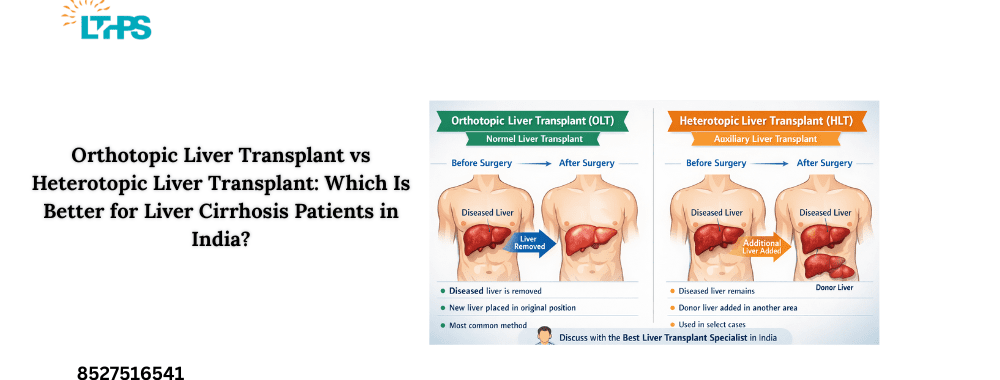
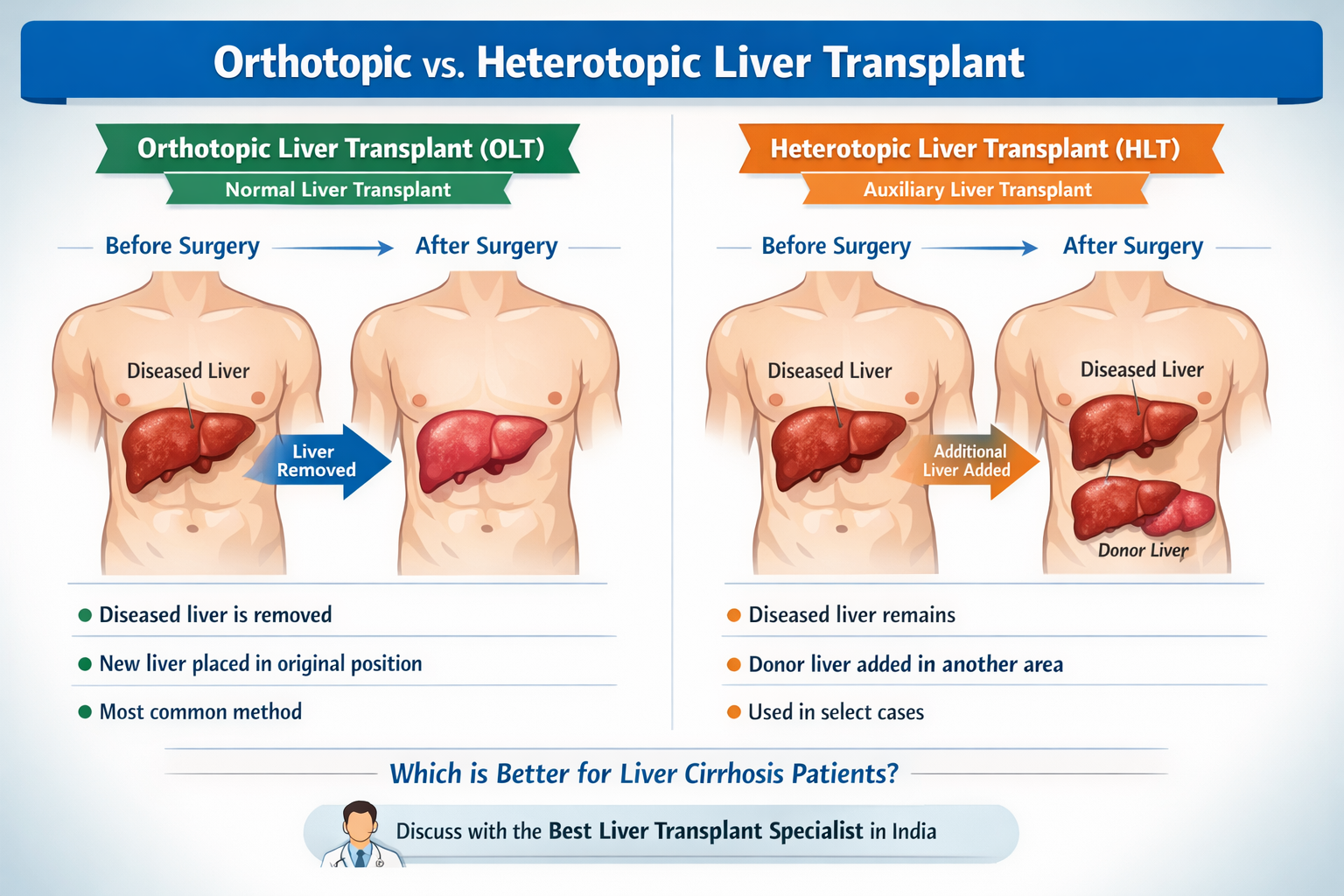
Orthotopic Liver Transplant (OLT)– the diseased liver is removed and a new liver is placed in the same spot.

Heterotopic Liver Transplant (HLT)– the patient keeps their old liver, and a new liver is placed in a different location inside the body.

This article explains both types, compares them, and gives helpful information for patients in India.

What Is an Orthotopic Liver Transplant (OLT)?

Before Surgery After Surgery
—————- —————-
[ Diseased Liver ] —> [ Healthy Donor Liver ]
| |
Removed Replaced
👉 Key idea:
The damaged liver is completely removed, and the donor liver takes its place. This is the most common and preferred method for liver cirrhosis patients.

In Orthotopic Liver Transplant (OLT), the surgeon removes the diseased liver and replaces it with a healthy donor liver in the exact position.

Key Points About OLT

  • The diseased liver is taken out completely.
  • The new liver goes in the original liver’s place.
  • This is the most common type of liver transplant worldwide.

Why OLT Is Common

It gives the patient a fresh, healthy liver with full function.

  • Surgeons are very experienced with this method.
  • Many studies show that long-term survival rates are higher with OLT
  • Pros of OLT
  • Better long-term results for many patients.
  • Less risk of the patient’s old liver causing problems later.
  • The new liver works where it is meant to work.
  • Cons of OLT.

It is a big surgery and may take longer.

Recovery may take more time at first.

Doctors often recommend OLT to patients with advanced cirrhosis because it gives them the best chance to live longer and healthier.

What Is a Heterotopic Liver Transplant (HLT)?

In Heterotopic Liver Transplant (HLT), the patient keeps their original liver and the new donor liver is placed in a different part of the abdomen.

Before Surgery After Surgery
—————- —————-
[ Diseased Liver ] —> [ Diseased Liver ]
+
[ Donor Liver ]
(Placed in another area)
👉 Key idea:
The patient keeps their original liver, and a second liver is added to help support liver function. This is rarely done and used only in special cases.

Key Points About HLT

The old liver stays inside the body.

A second liver is added and works alongside the diseased one.

  • This type is less common.
  • Why HLT Is Used
  • HLT may be an option when:
  • The patient can not tolerate a long surgery.
  • There is a need to support liver function for a short time.
  • Surgeons want to give the patient extra liver help without removing the old liver.
  • Pros of HLT
  • Surgery may be shorter.

The patient’s own liver remains undisturbed.

It may be helpful in specific medical situations where full liver removal is risky.

Cons of HLT

The old liver can still cause problems.

Space inside the abdomen is limited.

It may not work as well in the long term as OLT.

HLT is rare and only used in certain cases. Many liver experts view it as a backup or supportive transplant rather than a first choice.

Comparing OLT and HLT: What’s the Difference?

To make a good decision, it helps to see how both options compare.

  • FeatureOrthotopic Liver Transplant (OLT) Heterotopic Liver Transplant (HLT).
    Removes diseased liver ✔ ❌.
    Places new liver in original spot ✔ ❌.
    Surgery lengthLongerShorter.
    Long-term successHighModerate.
    Use in cirrhosisStandard choiceRarely used.
    ComplexityHigherLower in some cases.

In simple terms:.

OLT replaces the sick liver with a new one in the same place.

HLT adds another liver without removing the old one.

For most liver cirrhosis cases, especially in India, OLT is the standard and more reliable option when a patient is fit for surgery and a suitable donor liver is available.

Which Is Better for Liver Cirrhosis Patients in India?

Both types have benefits, but for liver cirrhosis patients, doctors most often recommend Orthotopic Liver Transplant (OLT). Here’s why:.

1. Better Long-Term Outcomes.

OLT gives a complete replacement of the diseased liver. This means:.

Less scar tissue left behind.

Better liver function over time.

Lower chance of future liver problems.

Many medical reports and patient studies have shown that people who receive OLT tend to live longer and have better quality of life.

2. More Experience in India.

Surgeons in major Indian cities like Delhi, Mumbai, Chennai, and Hyderabad have more experience with OLT. This includes best liver transplant surgeon in India specialists who perform these surgeries regularly.

3. Lower Risk of Complications.

HLT leaves the diseased liver in place, which can still cause portal hypertension and other problems. With OLT, the old liver is removed, and the body only relies on the healthy donor liver.

4. Better for Advanced Cirrhosis.

In advanced liver cirrhosis, the liver is badly damaged and scarred. Leaving it inside may not help the body much. Replacing it with a healthy liver, as done in OLT, gives patients a stronger chance at recovery.

Who Is a Good Candidate for OLT vs. HLT?
Good Candidates for OLT.

Patients who:.

Have advanced liver cirrhosis.

Have good heart and lung health.

Can withstand a major surgery.

Have a matching donor liver available.

Patients for Whom HLT Might Be Considered.

HLT is rare but might be considered when:.

The patient has specific surgical risks.

Shorter surgery time is critical due to health issues.

HLT can act as temporary support until a full transplant is possible.

However, most liver specialists in India still prefer OLT when possible.

Risks and Benefits at a Glance.
Benefits of OLT.

Replaces the damaged liver completely.

Better long-term survival.

Reduces future liver-related complications.

Most widely used method.

Risks of OLT.

Major surgery with longer anesthesia.

Risk of infection or bleeding.

Requires lifelong follow-up and medication.

Benefits of HLT.

Shorter surgery.

Might help patients who can’t tolerate full transplant.

Risks of HLT.

Diseased liver still present.

May not support full recovery.

Less common, fewer long-term studies.

Life After Liver Transplant.

Whether you receive OLT or HLT, life after surgery requires care and commitment:.

Follow your doctor’s instructions.

Take anti-rejection medicines every day.

Eat a balanced diet.

Avoid alcohol.

Get regular check-ups.

Watch for signs of infection or complications.

Patients need strong support from family and healthcare teams, including the Best Liver Transplant Specialist to guide them through recovery.

When to Call Your Doctor.

It’s important to know when to seek help. Call your doctor right away if you notice:.

  • High fever (above 101 ° F).
  • Severe pain in the belly.
  • Yellow skin or eyes (jaundice).
  • Confusion or extreme tiredness.
  • Swelling of legs or belly.
  • Unusual bleeding or bruising.
  • Redness or discharge from wound sites.

These can be signs of complications that need urgent medical attention.

5-Point Summary.

Here’s a quick recap:.

OLT replaces the diseased liver, while HLT adds a second liver.

OLT is the standard and preferred choice for most liver cirrhosis patients in India.

HLT is rare and used only in special cases.

Long-term results are generally better with OLT.

Always consult a best liver transplant surgeon in India or Best Liver Transplant Specialist for personalised care.

Pre-Transplant Care: Preparing for a Liver Transplant

Getting ready for a liver transplant is just as important as the surgery itself. Proper pre-transplant care improves success rates and helps the body handle surgery better.

1. Medical Evaluation and Tests

Before listing a patient for transplant, doctors perform several tests, including:

Blood tests to check liver function

Imaging tests like ultrasound or CT scan

Heart and lung fitness tests

Infection screening

These tests help the Best Liver Transplant Specialist decide if the patient is fit for surgery.

2. Managing Liver Cirrhosis Symptoms

While waiting for transplant, doctors focus on controlling symptoms such as:

Fluid buildup in the abdomen (ascites).

Confusion or memory problems.

Fatigue and weakness.

Bleeding risks.

Medicines, diet changes, and regular monitoring are very important during this phase.

3. Nutrition Before Transplant.

Good nutrition helps the body stay strong:.

Eat high-protein foods unless advised otherwise.

Reduce salt to prevent swelling.

Avoid raw or unhygienic food.

Stay well hydrated.

Malnutrition is common in cirrhosis patients and must be corrected before surgery.

4. Avoid Alcohol and Smoking.

Complete alcohol avoidance is mandatory. Even small amounts can disqualify a patient from transplant eligibility. Smoking should also be stopped to reduce lung and heart risks.

5. Mental and Emotional Preparation.

A liver transplant can feel overwhelming. Counseling helps patients and families:.

Understand the procedure.

Prepare mentally for surgery.

Learn about lifestyle changes.

Support from family plays a big role in transplant success.

Post-Transplant Care: Life After Liver Transplant.

Life after a liver transplant requires long-term care and commitment. With proper follow-up, most patients enjoy a healthy and active life.

1. Hospital Recovery Phase.

After surgery:.

Patients stay in ICU for monitoring.

Vital signs and liver function are checked closely.

Pain control and infection prevention are priorities.

Hospital stay usually lasts 2– 3 weeks, depending on recovery speed.

2. Lifelong Medications.

After transplant, patients must take:.

Anti-rejection medicines daily.

Antibiotics or antivirals (initially).

Supplements as advised.

Skipping medicines can cause organ rejection, which is why guidance from the best liver transplant surgeon in india is crucial.

3. Diet and Lifestyle After Transplant.

Healthy habits protect the new liver:.

Eat balanced, home-cooked meals.

Avoid raw food and street food.

Maintain a healthy weight.

Drink clean, safe water.

Alcohol should be strictly avoided even after transplant.

4. Regular Follow-Ups and Tests.

Post-transplant care includes:.

Frequent blood tests initially.

Gradual spacing of doctor visits.

Monitoring for infection or rejection.

Early detection of problems ensures better long-term outcomes.

5. Preventing Infections.

Because anti-rejection medicines lower immunity:.

Avoid crowded places initially.

Maintain good hygiene.

Report fever or illness immediately.

Simple precautions can prevent serious infections.

6. Emotional Health and Quality of Life.

Mood changes, anxiety, or stress may occur after transplant. Patients are encouraged to:.

Speak openly with doctors.

Join support groups.

Stay active physically and socially.

Most patients return to work and normal life within a few months.

Key Takeaway for Patients.

✔ Proper pre-transplant care improves surgery success.
✔ Strict post-transplant discipline protects the new liver.
✔ Guidance from the Best Liver Transplant Specialist is essential.
✔ Lifestyle changes are lifelong– but rewarding.

Conclusion.

Choosing between an orthotopic liver transplant and a heterotopic liver transplant is not simple. For most liver cirrhosis patients in India, Orthotopic Liver Transplant (OLT) remains the better choice because it offers more long-term benefits. However, every patient is different. The final decision should be made with the help of an experienced liver transplant team, including the best liver transplant surgeon in India you can trust.

Taking time to understand your options can help you make better decisions for your health. If you have more questions about liver transplant types or need support, don’t hesitate to talk with your healthcare provider.


Frequently Asked Questions (FAQs).
1. Which liver transplant is better for liver cirrhosis patients in India?

For most patients with liver cirrhosis, Orthotopic Liver Transplant (OLT) is considered better because it completely replaces the damaged liver and offers better long-term results.

2. Why is Heterotopic Liver Transplant rarely done in India?

HLT is rarely done because:.

The diseased liver remains inside the body.

Long-term results are not as strong as OLT.

Most Indian transplant centers specialize in OLT.

That’s why the best liver transplant surgeon in india usually recommends OLT.

3. Is Orthotopic Liver Transplant safe?

Yes. When performed by an experienced team and Best Liver Transplant Specialist, OLT is a well-established and safe procedure with good survival rates.

4. Can a patient live a normal life after liver transplant?

Yes. Many patients return to a near-normal life after transplant by:.

Taking medicines regularly.

Avoiding alcohol.

Eating healthy food.

Attending follow-up visits.

5. How do I choose the best liver transplant specialist?

You should look for:.

Experience in liver transplants.

High success rates.

Multidisciplinary transplant team.

Hospital with ICU and transplant facilities.

Consulting the best liver transplant surgeon in india ensures proper guidance and long-term care.

6. When should a cirrhosis patient consider liver transplant?

A liver transplant should be considered when:.

Medicines stop working.

Frequent fluid buildup occurs.

Confusion (hepatic encephalopathy) develops.

Repeated hospital admissions happen.

Early consultation with a Best Liver Transplant Specialist improves outcomes.

Primary Liver Cancer Treatment Guide (2025)

Primary Liver Cancer Treatment Guide (2025)

When you first hear the words primary liver cancer, it can feel like your world has suddenly tilted. Questions rush in: What now? What treatment options do I have? Who can help? If you’re feeling that way, you’re not alone—and you’re in the right place.

This guide breaks down liver cancer treatments in 2025 using simple, conversational language. Think of it like having a knowledgeable friend sit with you, explain the road ahead, and help you feel more confident about your choices. Let’s walk through it together.


Primary liver cancer guide with insights from the best liver transplant experts.


1. Understanding Primary Liver Cancer

Primary liver cancer begins in the liver itself– not in another organ. The most common type is hepatocellular carcinoma (HCC). Imagine the liver as your body’s natural detox center: when it gets injured repeatedly, the cells may begin to grow abnormally, eventually forming cancer.

Understanding this helps you make sense of the treatments that follow.

2. Key Causes and Risk Factors

Certain conditions can quietly harm the liver for years without showing symptoms. Over time, these injuries increase cancer risk.

  • • Chronic Hepatitis B and C
  • These viral infections are major contributors because they keep the liver inflamed.
  • • Alcohol Overuse
  • Think of it like rusting metal– slow but damaging.
  • • Non-Alcoholic Fatty Liver Disease (NAFLD).
  • Increasingly common with rising obesity and diabetes.
  • • Cirrhosis.

Scar tissue replaces healthy liver tissue, limiting function.

While having risk factors doesn’t guarantee cancer, knowing them helps in early monitoring and prevention.

3. Signs and Symptoms to Watch.

Liver cancer whispers before it shouts. Symptoms often appear late but can include:.

  • Unexplained weight loss.
  • Loss of appetite.
  • Right-side abdominal pain.
  • Jaundice (yellowing of eyes/skin).
  • Fluid buildup (ascites).

If something feels “off,” it’s always better to check with a healthcare provider.

4. How Primary Liver Cancer Is Diagnosed.

Diagnosis is like assembling a puzzle.

  • • Imaging Tests.
  • Ultrasound, CT scans, and MRIs reveal lumps or unusual patterns.
  • • Blood Tests.
  • AFP (Alpha-fetoprotein) can indicate liver cancer.
  • • Biopsy (Only When Needed).

A small tissue sample is examined under a microscope.

Doctors combine these results to form a clear picture before recommending treatment.

5. Staging: Why It Matters.

Cancer staging helps determine how far the disease has progressed.

  • Stage I: A single tumour.
  • Stage II: Tumour with early blood vessel involvement.
  • Stage III: Multiple tumors or major vessel concern.
  • Stage IV: Cancer has spread beyond the liver.

Treatment choices depend heavily on the stage.

6. Treatment Overview for 2025.

In 2025, liver cancer care has evolved with more personalized treatments. Instead of a “one-size-fits-all,” options are tailored to your liver function, tumor size, overall health, and personal preferences.

Major treatment categories include:.

  • Surgery.
  • Liver transplantation.
  • Locoregional therapies.
  • Systemic therapies.
  • Immunotherapy.
  • Targeted drugs.

7. Surgical Options.

Surgery is often recommended for early-stage liver cancer.

• Liver Resection.

The surgeon removes the cancerous portion of the liver.
What’s amazing? The liver can regenerate– like pruning a tree and watching it grow back.

Surgery works best for patients with good liver function and localized tumors.

8. Liver Transplantation.

A liver transplant replaces the diseased liver with a healthy one from a donor. It’s life-changing for patients with cirrhosis or multiple tumors confined to the liver.

Transplantation offers two major benefits:.

Removes the entire diseased liver.

Eliminates the underlying conditions causing cancer.

This is why choosing the best liver transplant surgeon in India becomes crucial– outcomes depend heavily on surgical expertise and transplant-center experience.

9. Choosing the Best Liver Transplant Surgeon.

Finding the right surgeon can feel overwhelming, but here are factors that truly matter:.

  • • Experience and Success Rates.
  • How many transplants have they performed? What are the long-term outcomes?
  • • Multidisciplinary Team.
  • Surgeons who collaborate with oncologists, hepatologists, and radiologists provide more comprehensive care.
  • • Hospital Infrastructure.
  • High-quality ICUs, advanced imaging, and trained nursing staff can significantly impact recovery.
  • • Patient Reviews.

Real stories from real people can provide reassurance.

Remember, choosing a surgeon is like choosing a pilot– you want skill, experience, and calm confidence.

10. Locoregional Therapies.

These treatments target tumors directly within the liver.

  • • Radiofrequency Ablation (RFA).
  • Uses heat to destroy cancer cells.
  • • Microwave Ablation.
  • Similar to RFA but faster and effective for larger tumors.
  • • TACE (Transarterial Chemoembolization).
  • Chemotherapy delivered directly into the tumor’s blood supply.
  • • TARE/ SIRT (Radioembolization).
  • Tiny radioactive beads block the blood supply while delivering radiation.

These are popular for patients not suitable for surgery.

11. Systemic Therapies (2025 Updates).

Systemic therapies treat cancer throughout the body.

• Chemotherapy.

Not the mainstay for liver cancer but still used in selected cases.

• Newer Drug Combinations (2025 ).

Therapies are now more targeted and have fewer side effects. Combinations involving immunotherapy and targeted drugs are gaining importance.

12. Immunotherapy Advances.

Immunotherapy has transformed liver cancer care. It works by “waking up” your own immune system to fight cancer– like giving it night-vision goggles to spot hidden threats.

Common types include:.

Checkpoint inhibitors (PD-1, PD-L1 blockers).

Drug combos that improve survival and quality of life.

Patients with advanced stages often benefit from these modern treatments.

13. Targeted Therapy Options.

Targeted therapy blocks specific molecules that help cancer grow.

• Tyrosine Kinase Inhibitors (TKIs).

These drugs slow tumor growth and cut off blood supply to cancer cells.

• Combination Approaches.

TKIs + immunotherapy can improve outcomes.

These therapies are carefully selected depending on tumour biology.

14. Lifestyle and Supportive Care.

Treatment doesn’t end at the hospital. How you live every day can strengthen your recovery.

• Nutrition.

Balanced meals support liver function.

• Exercise.

Even light walking helps maintain strength.

• Avoid Alcohol.

Essential for slowing liver damage.

• Mental Well-Being.

Counseling, support groups, or simply talking to a friend can make a big difference.

15. Living with Liver Cancer: Emotional & Social Support.

A cancer diagnosis doesn’t just affect the body– it touches your emotions, relationships, and daily routine. Families often feel like they’ve entered a storm without an umbrella.

But support is available:.

Counseling services.

Psychological therapy.

Financial and social support programs.

Online communities offering shared experiences.

No one has to go through it alone.

Conclusion.

Primary liver cancer may be a challenging journey, but today’s treatments in 2025 offer more hope than ever before. From advanced surgical techniques to sophisticated immunotherapies, patients can choose from a wide spectrum of effective options.

And if transplantation becomes necessary, selecting the best liver transplant surgeon in India can be a pivotal step toward recovery and long-term survival.

Remember– knowledge is power, and you’re already taking the first step by reading this guide.

FAQs.
1. What is the most effective treatment for early-stage primary liver cancer?

Surgery or localized treatments like RFA are often effective for early-stage disease, depending on liver function.

2. When is a liver transplant recommended?

A transplant is considered for patients with cirrhosis or limited tumors confined to the liver who are unsuitable for resection.

3. Is immunotherapy safe for liver cancer?

Many patients tolerate immunotherapy well, but suitability depends on overall health and medical history.

4. How long does recovery take after liver transplantation?

Most patients spend 2– 3 weeks in the hospital and require several months for full recovery.

5. Can lifestyle changes improve liver cancer outcomes?

Yes. Healthy eating, alcohol avoidance, medical follow-ups, and emotional support all contribute to better outcomes.

5 Warning Signs of Liver Fibrosis You Should Never Ignore

Liver fibrosis often develops silently—like a slow leak in a pipe you never notice until your whole kitchen floods. Many people don’t realize they have liver damage until the condition becomes serious. The good news? Your body sends early warning signs. The key is learning to recognize them.

Before we explore the top warning signs, remember this: the liver is resilient, but only up to a point. When the damage becomes chronic, it can lead to cirrhosis or liver failure. Understanding the early symptoms can help you protect your long-term health.


1. What Is Liver Fibrosis?

Liver fibrosis is the buildup of scar tissue in the liver due to long-term injury or inflammation. Think of it like placing patches over a damaged cloth again and again—eventually, those patches begin to change the fabric itself.

The liver tries to repair damage, but repeated stress (from alcohol, fatty liver disease, hepatitis, infections, or toxins) leads to excessive scarring. Over time, this scar tissue makes the liver stiff and reduces its ability to function.


2. How Liver Fibrosis Develops

The process usually develops slowly. At first, your liver quietly tolerates the damage. But as the injury continues, scar tissue gradually replaces healthy cells. In advanced stages, this condition progresses to cirrhosis, a life-threatening illness.

Early detection is crucial because the liver can still recover if treated on time.


3. Warning Sign 1: Persistent Fatigue

Feeling tired occasionally is normal. But when fatigue becomes your daily companion—even with enough sleep—it may be more than stress.

Many people with early liver fibrosis experience:

  • Constant tiredness

  • Low energy levels

  • Difficulty concentrating

It’s your body’s way of signaling that something inside isn’t working properly.


4. Why Fatigue Happens in Liver Fibrosis

The liver plays a vital role in filtering toxins and producing energy. When fibrosis affects liver cells, toxins begin to build up in the bloodstream. This makes you feel tired, drained, and mentally foggy.

Imagine running a car on dirty fuel—it simply can’t perform at its best.


5. Warning Sign 2: Abdominal Pain or Discomfort

Another early symptom is pain or discomfort in the upper right side of the abdomen, where the liver is located.

You may feel:

  • A dull ache

  • Pressure or heaviness

  • Occasional sharp pain

This discomfort often worsens after eating fatty foods or consuming alcohol.


6. Location & Nature of Liver Pain

Liver-related pain typically feels like deep pressure just under the ribs on the right side. Many people mistake it for gastric trouble, acidity, or muscle strain. But persistent or recurring pain in this area should always be evaluated.


7. Warning Sign 3: Unexplained Weight Loss

Unintentional weight loss is a major red flag. Liver fibrosis interferes with digestion and metabolism, which can lead to:

  • Loss of appetite

  • Nausea

  • Muscle loss