

Introduction
The liver is one of the most hardworking organs in the human body. It silently performs more than 500 essential functions, including detoxifying harmful substances, storing energy, and producing proteins necessary for life. Despite its resilience, the liver can develop serious diseases — and one of the most concerning is liver cancer.
But how does liver cancer actually start? Does it appear suddenly, or does it develop over time?
In most cases, liver cancer develops slowly through years of liver damage. Conditions such as fatty liver disease, hepatitis infections, or cirrhosis can gradually harm liver cells, allowing abnormal cells to grow and multiply.
Think of the liver like a well-organized factory. Each worker (cell) has a specific role. When the system runs smoothly, everything functions perfectly. But if some workers start ignoring instructions and producing defective products, chaos begins — and that’s similar to how cancer cells behave.
Understanding the causes and warning signs of liver cancer can help people detect the disease earlier and seek treatment at the right time. In advanced cases, consulting the best liver transplant surgeon in india can significantly improve survival and quality of life.
Let’s explore how liver cancer develops and what signs your body may show.
Understanding Liver Cancer
Liver cancer occurs when abnormal cells grow uncontrollably in the liver. These cells multiply rapidly and form tumors that interfere with normal liver function.
The most common type of liver cancer is hepatocellular carcinoma (HCC). It accounts for nearly 80–90% of liver cancer cases worldwide.
Unlike some cancers that appear suddenly, liver cancer often develops as a complication of long-term liver disease. This means that people with chronic liver conditions are at higher risk.
Types of Liver Cancer
Understanding the different types of liver cancer can help patients and families better understand the disease.
• 1. Hepatocellular Carcinoma (HCC)
This is the most common type and usually occurs in people with cirrhosis or chronic hepatitis.
• 2. Cholangiocarcinoma
Also called bile duct cancer, it develops in the bile ducts inside the liver.
• 3. Angiosarcoma
A rare and aggressive cancer that starts in the blood vessels of the liver.
• 4. Secondary Liver Cancer
Sometimes cancer spreads to the liver from other organs like the colon, lung, or breast. This is called metastatic liver cancer.
How Liver Cancer Develops
Liver cancer usually develops through a gradual process of damage and mutation.
Here’s how it typically happens:
-
Chronic liver injury occurs due to infection, fat buildup, alcohol, or toxins.
-
Inflammation damages liver cells repeatedly.
-
The body tries to repair the damage by creating new cells.
-
Some of these new cells develop DNA mutations.
-
These abnormal cells multiply uncontrollably, forming tumors.
This process may take years or even decades.
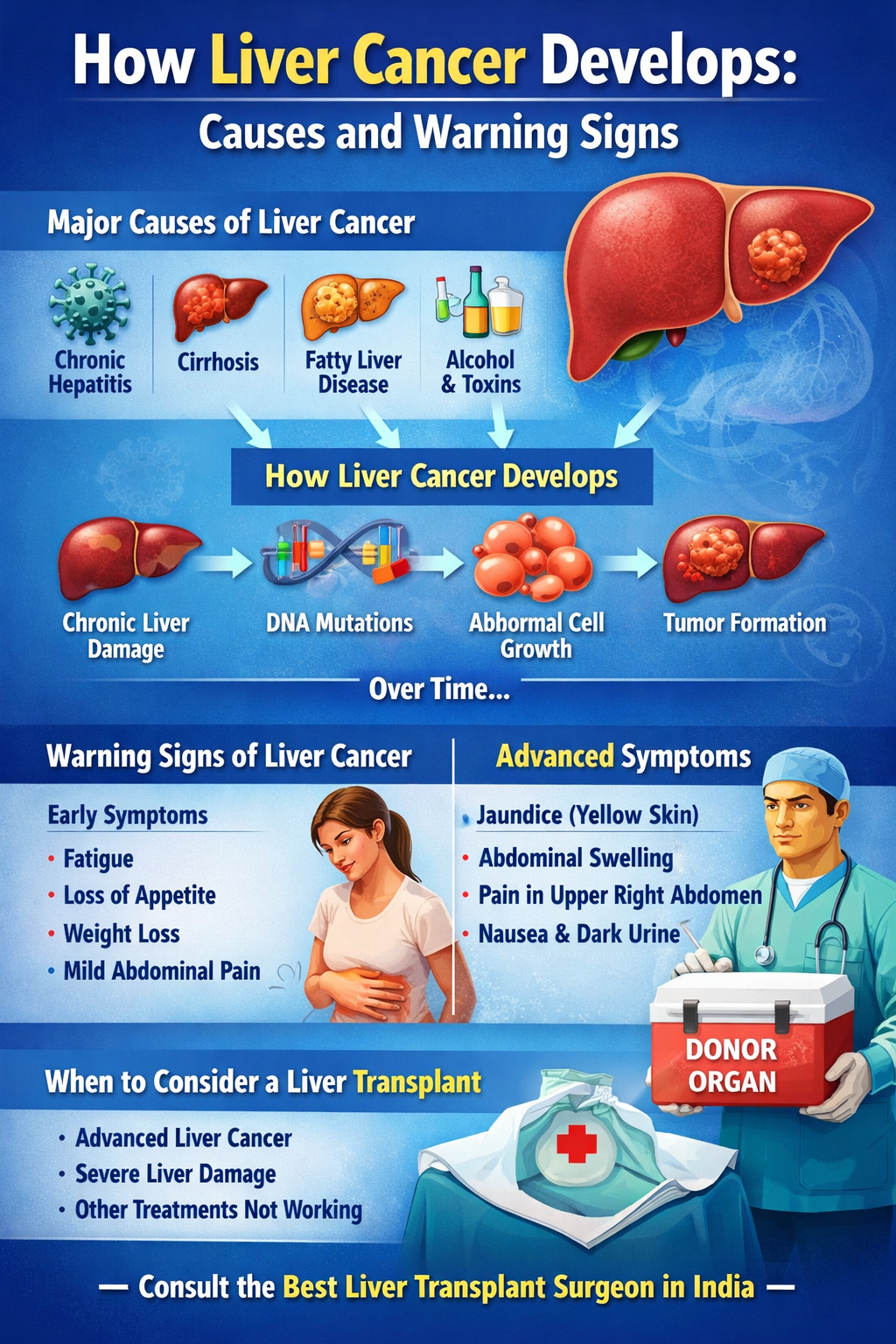
Major Causes of Liver Cancer
Several factors increase the risk of developing liver cancer.
-
Chronic Liver Disease
People with long-term liver disease are significantly more likely to develop liver cancer. -
Cirrhosis
Cirrhosis is the leading risk factor for liver cancer. -
Viral Hepatitis
Hepatitis infections damage liver cells and increase cancer risk. -
Exposure to toxins
Certain chemicals and contaminated food can damage liver tissue.
Role of Fatty Liver Disease
Fatty liver disease is becoming a major cause of liver cancer, especially in India.
There are two main types:
-
Alcoholic fatty liver disease
-
Non-alcoholic fatty liver disease (NAFLD)
In NAFLD, excess fat accumulates in the liver. Over time, it can lead to:
-
Liver inflammation
-
Fibrosis
-
Cirrhosis
-
Liver cancer
With increasing obesity and diabetes rates, fatty liver disease is now a major global health concern.
Hepatitis B and Hepatitis C Infection
Chronic infection with Hepatitis B or Hepatitis C is one of the most common causes of liver cancer worldwide.
These viruses attack liver cells and cause continuous inflammation.
Over many years, this damage may lead to:
-
Cirrhosis
-
Liver failure
-
Liver cancer
People with hepatitis should undergo regular screening for liver cancer.
Liver Cirrhosis and Cancer Risk
Cirrhosis means severe scarring of the liver.
Healthy liver tissue is gradually replaced by scar tissue, which affects liver function.
Cirrhosis can be caused by:
-
Alcohol abuse
-
Chronic hepatitis
-
Fatty liver disease
-
Genetic disorders
Around 80–90% of liver cancer cases occur in people with cirrhosis.
Lifestyle Factors That Increase Risk
Your daily habits also play a big role in liver health.
-
Alcohol Consumption
Heavy alcohol use damages liver cells and increases cancer risk. -
Smoking
Smoking exposes the body to harmful toxins that affect liver cells. -
Obesity
Excess weight contributes to fatty liver disease. -
Diabetes
Diabetes is closely linked to liver inflammation and cancer risk.
Genetic and Metabolic Conditions
Certain inherited disorders can increase the likelihood of liver cancer.
Examples include:
-
Hemochromatosis (excess iron in the body)
-
Wilson’s disease
-
Alpha-1 antitrypsin deficiency
These conditions damage the liver over time and increase the risk of cancer.
Early Warning Signs of Liver Cancer
One of the biggest challenges with liver cancer is that early symptoms are often mild or unnoticed.
Some possible early signs include:
-
Persistent fatigue
-
Loss of appetite
-
Mild abdominal discomfort
-
Unexplained weight loss
-
Feeling full quickly after eating
Because these symptoms are subtle, many people ignore them.
Advanced Symptoms to Watch For
As the cancer progresses, symptoms become more noticeable.
Common advanced symptoms include:
-
Pain in the upper right abdomen
-
Yellowing of skin and eyes (jaundice)
-
Abdominal swelling
-
Nausea and vomiting
-
Dark urine
-
Itchy skin
These symptoms indicate that liver function may be severely affected.
How Liver Cancer Is Diagnosed
Doctors use several tests to detect liver cancer.
• Blood Tests
These check liver function and tumor markers such as AFP (alpha-fetoprotein).
• Imaging Tests
Common imaging tests include:
-
Ultrasound
-
CT scan
-
MRI
These help doctors identify tumors in the liver.
• Liver Biopsy
In some cases, doctors remove a small tissue sample to confirm cancer.
Treatment Options for Liver Cancer
Treatment depends on the stage of cancer and overall liver health.
Common treatments include:
-
Surgery
Doctors may remove the tumor or part of the liver. -
Ablation Therapy
This treatment destroys cancer cells using heat or chemicals. -
Radiation Therapy
High-energy rays are used to shrink tumors. -
Targeted Therapy
Special drugs target specific cancer cells. -
Immunotherapy
This treatment helps the immune system fight cancer.
When Liver Transplant Becomes Necessary
In some cases, the best treatment option is a liver transplant.
A transplant replaces the diseased liver with a healthy donor liver.
It is usually recommended when:
-
Cancer is limited to the liver
-
The liver is severely damaged
-
Other treatments are not effective
Consulting the best liver transplant surgeon in india can help determine whether a transplant is the right option and improve treatment outcomes.
India has become a global destination for advanced liver transplant procedures, offering experienced surgeons and world-class hospitals.
How to Reduce the Risk of Liver Cancer
The good news is that many risk factors are preventable.
Here are some simple steps to protect your liver:
-
Maintain a healthy weight
Obesity increases fatty liver disease. -
Limit alcohol intake
Excessive alcohol damages liver cells. -
Get vaccinated for Hepatitis B
-
Practice safe hygiene and medical practices
-
Eat a balanced diet
-
Exercise regularly
Regular health checkups can also help detect liver disease early.
Conclusion
Liver cancer rarely develops overnight. In most cases, it is the result of years of liver damage caused by infections, lifestyle habits, or chronic diseases.
The earlier the condition is detected, the better the chances of successful treatment. Paying attention to warning signs, undergoing regular health screenings, and maintaining a healthy lifestyle can significantly reduce the risk.
For patients with advanced liver disease or liver cancer, consulting the best liver transplant surgeon in india can provide access to life-saving treatments and expert care.
Taking care of your liver today is one of the best investments you can make for your long-term health.
FAQs
1. What is the most common cause of liver cancer?
The most common causes are chronic hepatitis B, hepatitis C, and liver cirrhosis. These conditions cause long-term liver damage that may eventually lead to cancer.
2. Can fatty liver disease lead to liver cancer?
Yes. If fatty liver disease progresses to inflammation and cirrhosis, it can significantly increase the risk of liver cancer.
3. What are the first signs of liver cancer?
Early signs may include fatigue, loss of appetite, weight loss, and mild abdominal discomfort. However, many people do not notice symptoms in the early stages.
4. Is liver cancer curable?
Yes, liver cancer can be treated successfully if detected early. Treatments may include surgery, ablation, targeted therapy, or liver transplant.
5. When should someone consult a liver transplant specialist?
If liver cancer occurs along with severe liver damage or cirrhosis, patients should consult the best liver transplant surgeon in india to evaluate whether a transplant is the best treatment option.