
Introduction
A liver transplant is often considered a life-saving treatment for people with advanced liver disease or liver cancer. For many patients, it offers a second chance at life and the hope of a cancer-free future. But naturally, one question often worries patients and families: Can liver cancer return after a transplant?
The short answer is yes—liver cancer recurrence after transplant is possible, although it doesn’t happen to everyone. Modern medical techniques, strict patient selection, and advanced treatments have significantly reduced the risk.
Think of a liver transplant like replacing the engine of a car. The new engine may work perfectly, but if the conditions that caused the original damage still exist, problems can sometimes return. In the same way, certain factors can allow cancer cells to reappear even after transplant surgery.
In this guide, we’ll explain why liver cancer may recur, how common it is, warning signs, and what patients can do to reduce the risk. We’ll also discuss why choosing the best liver transplant surgeon in India can make a major difference in long-term outcomes.
Understanding Liver Cancer
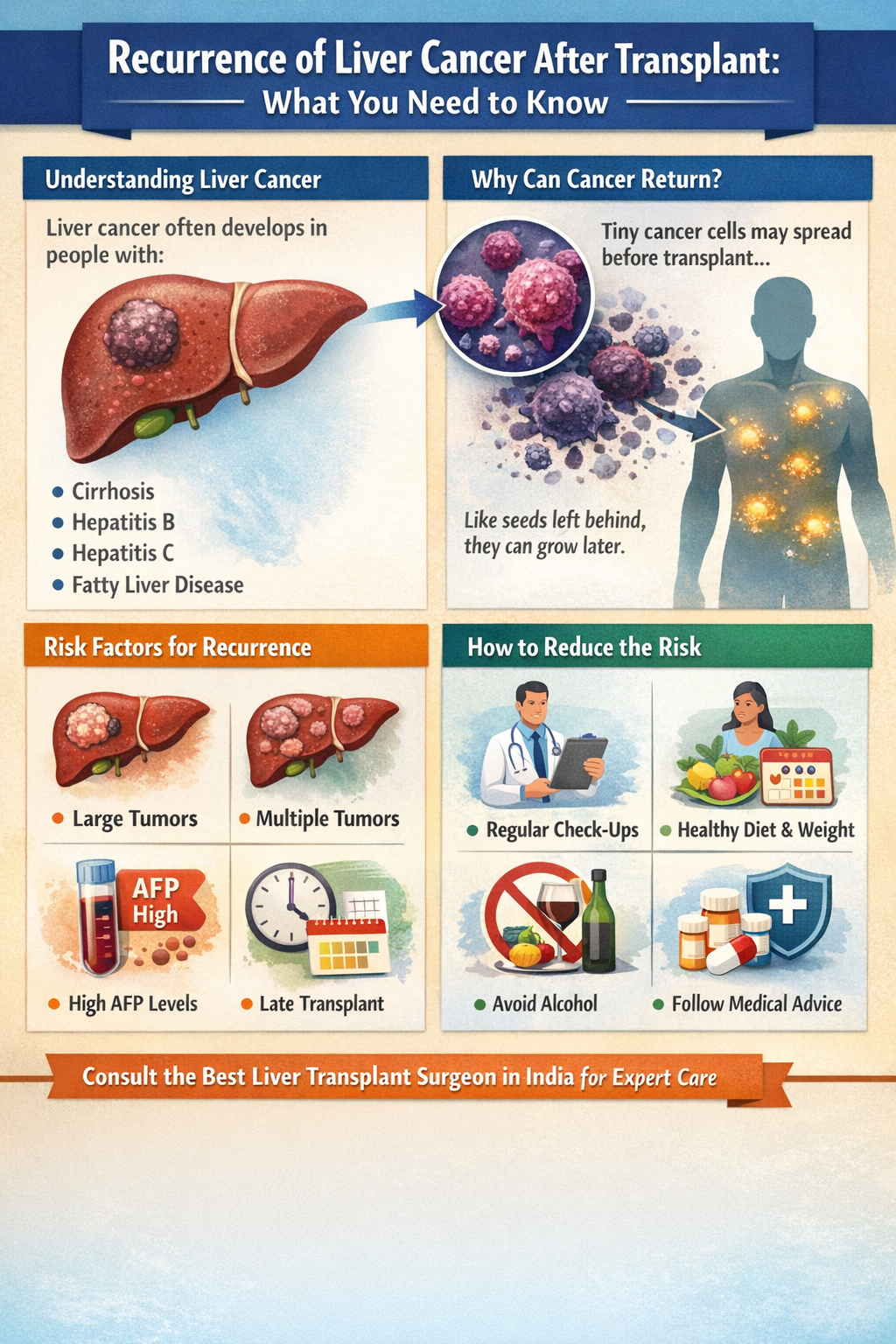
Liver cancer, particularly hepatocellular carcinoma (HCC), is one of the most common cancers affecting the liver. It usually develops in people who already have liver diseases, such as the following:
-
Cirrhosis
-
Hepatitis B
-
Hepatitis C
-
Fatty liver disease
In many cases, the damaged liver creates an environment where cancer cells can grow.
Key Point:
Early-stage liver cancer can sometimes be treated with surgery, ablation, or targeted therapy. But in more severe cases, liver transplantation becomes the most effective treatment.
What Happens During a Liver Transplant?
A liver transplant involves removing the diseased liver and replacing it with a healthy donor liver.
The procedure usually involves:
-
Careful patient evaluation
-
Matching with a suitable donor
-
Surgical removal of the damaged liver
-
Implanting the new liver
For liver cancer patients, doctors follow strict criteria—such as the Milan Criteria—to ensure the cancer is limited enough for transplant to be successful.
Why this matters:
Patients who meet these criteria have much lower chances of cancer recurrence.
Can Liver Cancer Return After a Transplant?
Yes, liver cancer recurrence after transplant is possible, but it is relatively uncommon.
Studies show that recurrence happens in approximately 10–20% of patients who undergo liver transplantation for liver cancer.
The good news?
Many patients live long, healthy lives without the cancer returning.
The likelihood depends on several factors, including:
-
Tumor size and number before transplant
-
Cancer aggressiveness
-
Patient’s overall health
-
Quality of surgical care
This is why selecting the best liver transplant surgeon in India is extremely important for improving survival and reducing complications.
Why Does Liver Cancer Recurrence Occur?
You might wonder: If the entire liver is replaced, how can cancer come back?
Here’s the reason.
Before the transplant, tiny cancer cells may have already spread to other parts of the body but were too small to detect. These cells can later grow and cause recurrence.
Think of it like seeds scattered in a garden. Even if you remove the main plant, a few hidden seeds may sprout later.
Common reasons include:
-
Microscopic cancer spread before transplant
-
Aggressive tumor biology
-
Weak immune system after transplant
Risk Factors for Recurrence
Certain factors increase the chances of liver cancer returning.
Large Tumor Size
Tumors larger than recommended transplant criteria carry higher recurrence risk.
Multiple Tumors
More than one tumor in the liver increases the possibility of cancer spread.
High AFP Levels
Alpha-fetoprotein (AFP) is a tumor marker. High levels may indicate aggressive cancer.
Poor Tumor Differentiation
Some cancers grow faster and spread more easily.
Late Transplant Timing
Long waiting periods before transplant can allow tumors to progress.
These factors help doctors determine whether a transplant is the best treatment option.
When Does Recurrence Usually Happen?
Most cases of recurrence occur within the first two to three years after transplant.
However, in rare situations, cancer may return even later.
This is why long-term monitoring is essential.
Doctors usually schedule:
-
Regular imaging scans
-
Blood tests
-
AFP monitoring
The goal is to detect any recurrence early, when treatment options are more effective.
Signs and Symptoms of Liver Cancer Recurrence
Sometimes recurrence is discovered during routine tests. But in some cases, symptoms may appear.
Common signs include:
-
Unexplained weight loss
-
Fatigue
-
Abdominal pain
-
Loss of appetite
-
New lumps or swelling
However, many patients experience no symptoms at all in early stages, which is why follow-up care is so important.
How Doctors Monitor Patients After Transplant
Follow-up care after liver transplant is extremely important.
Doctors usually recommend:
Regular Imaging Tests
CT scans or MRI scans help detect early recurrence.
Blood Tests
AFP levels are monitored for signs of cancer activity.
Physical Check-ups
Routine visits help doctors monitor overall health.
Patients are typically monitored every 3–6 months during the first few years.
Treatment Options if Cancer Returns
If liver cancer comes back, treatment depends on where the recurrence occurs and how extensive it is.
Possible treatments include:
-
Surgery – If the cancer is localized, surgical removal may be possible.
-
Targeted Therapy – Medications that specifically attack cancer cells.
-
Immunotherapy – These drugs help the immune system fight cancer.
-
Radiation Therapy – Used in certain cases where surgery isn’t possible.
Advances in cancer treatment are improving survival even after recurrence.
Ways to Reduce the Risk of Recurrence
While recurrence cannot always be prevented, several steps can significantly lower the risk.
Strict Patient Selection
Doctors carefully choose transplant candidates who have the best chances of success.
Effective Pre-Transplant Treatments
Procedures like TACE or ablation may control tumors before surgery.
Regular Monitoring
Early detection improves treatment outcomes.
Healthy Lifestyle
Patients should:
-
Avoid alcohol
-
Maintain healthy weight
-
Follow medical advice
-
Take immunosuppressant medications correctly
Importance of Choosing the Right Surgeon
Liver transplantation is one of the most complex surgeries in modern medicine. Experience and expertise play a huge role in outcomes.
The best liver transplant surgeon in India typically offers:
-
Advanced surgical techniques
-
Multidisciplinary transplant teams
-
High success rates
-
Comprehensive follow-up care
Choosing an experienced surgeon significantly improves survival rates and reduces complications.
Life After Liver Transplant
Many people worry that life will never be the same after transplant. But the reality is often much brighter.
Most patients can return to:
-
Work
-
Travel
-
Exercise
-
Family life
With proper care, the new liver can function normally for decades.
Patients simply need to maintain regular check-ups and follow medical advice.
Emotional and Mental Health Support
A transplant journey is not only physical—it is emotional as well.
Patients often experience:
-
Anxiety about recurrence
-
Stress about medications
-
Fear of complications
Talking with:
-
Doctors
-
Counselors
-
Support groups
can make the journey easier.
Remember, you’re not alone in this process.
Future Advances in Liver Cancer Treatment
Medical science is rapidly advancing.
New technologies are helping doctors detect and treat liver cancer earlier than ever before.
Promising developments include:
-
AI-based cancer detection
-
Liquid biopsy
-
Precision medicine
-
Advanced immunotherapy
These innovations may further reduce recurrence risk in the future.
Conclusion
A liver transplant can offer a new beginning for patients with liver cancer, providing the chance for long-term survival and improved quality of life. While recurrence of liver cancer after transplant is possible, it occurs in a minority of patients and can often be managed with early detection and treatment.
The key lies in proper patient selection, advanced surgical expertise, and regular follow-up care. Patients who work closely with experienced specialists and maintain healthy lifestyles significantly improve their chances of long-term success.
If you or a loved one is considering liver transplantation, consulting the best liver transplant surgeon in India can help ensure the highest standards of care and better long-term outcomes.
FAQs
1. How common is liver cancer recurrence after transplant?
Liver cancer recurrence occurs in about 10–20% of transplant patients, depending on tumor characteristics and patient selection.
2. How long after transplant can liver cancer return?
Most recurrences occur within 2–3 years after transplant, although late recurrence is possible.
3. Can liver cancer recurrence be treated?
Yes. Treatments such as surgery, targeted therapy, immunotherapy, and radiation may help manage recurrent cancer.
4. What lifestyle changes help prevent recurrence?
Patients should avoid alcohol, maintain a healthy diet, exercise regularly, and attend regular medical checkups.
5. Why is choosing the best liver transplant surgeon in India important?
An experienced surgeon improves surgical success, reduces complications, and increases long-term survival rates for transplant patients.