

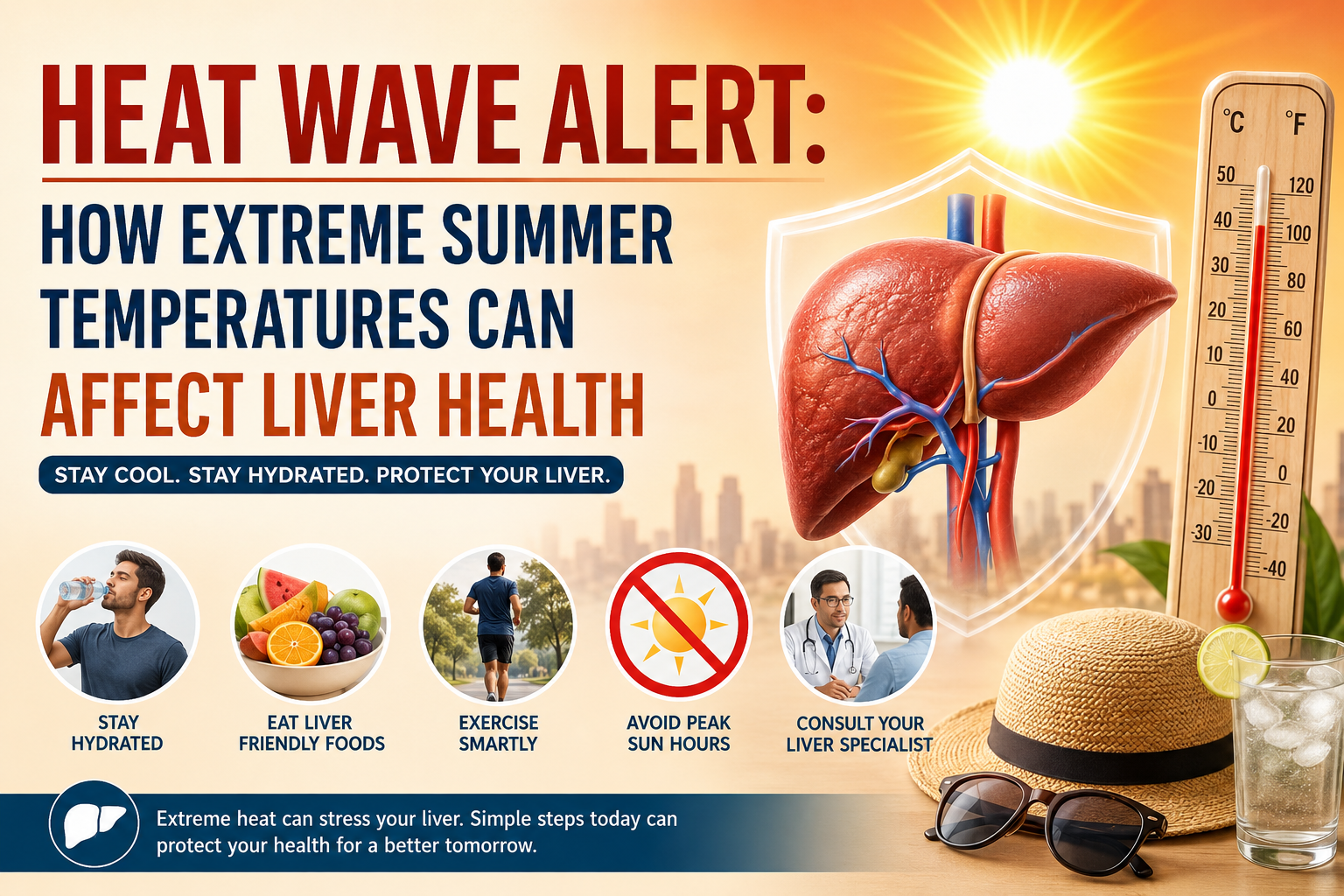
Summer heat can be exhausting for most people. If temperatures get too much your body can be afflicted with more than only discomfort. The heat waves can cause serious harm to vital organs, like the liver. The majority of people think of dehydration, heatstroke or skin issues when it gets hot, but only a few people are aware that extreme heat could put a lot of stress on the liver.
Imagine your liver as it’s “chemical factory.” It operates throughout the day and night to cleanse the body of toxins, process nutrients as well as balance hormones and aid digestion. When it’s hot the liver’s factory must perform at a high level. If your body loses too much fluid or is suffering due to heat stress, the liver function may be disrupted.
In recent times, India and many other countries have faced prolonged and intense heat wave. This has caused concern with doctors, particularly for those suffering from Hepatitis, fatty liver disease liver cirrhosis or people recovering from a liver transplant. Knowing the relationship between heat and health of the liver will help you safeguard your family and friends in extreme summer temperatures.
Protect your liver during heat waves with hydration, healthy habits, and expert advice from the best liver transplant surgeon in India.
1. Understanding Heat Waves
What Is a Heat Wave?
It is an event with unusually high temperatures which lasts for a number of days. In a lot of parts of India temperatures can exceed 45 degrees Celsius during summer peak times. The high humidity can make the situation even more challenging because sweat is unable to evaporate as efficiently.
They aren’t just uncomfortable. They could be dangerous in a short time. The body is unable to cool itself down, leading to dehydration, weakness dizziness and, in some cases, life-threatening issues.
Why Heat Waves Are Becoming More Common
Urban heat, climate change and pollution from the environment are contributing to the rise in temperatures across the globe. Cities that have a lot of buildings and more greenery tend to hold heat like an oven.
As heat waves increase in frequency the need to be aware of their effects to internal organs and systems, particularly the liver is crucial.
2. Why the Liver Is Important
The liver is among the most demanding organs of the human body. It performs over 500 vital functions each day.
Major Functions of the Liver
Eliminates toxins from blood
Helps digest fats
Vitamins and minerals are stored in the storage area
Controls blood sugar levels
Produces proteins to aid in blood for clotting
Helps to strengthen resistance
If the liver is not healthy, the body is unable to function. In extreme temperatures the liver can become overloaded due to the fact that the body is stressed.
3. How Heat Affects the Human Body
The Body’s Cooling System
When temperatures increase then the body is forced to cool itself by sweating. The blood vessels are enlarged to let heat escape via the skin. This process requires enough electrolytes and fluids.
If the body is losing enough water, organs start to become weak.
What Happens During Extreme Heat?
When there is a heat wave there are a variety of things that can occur:
Heavy sweating
Minerals and sodium are lost due to the loss of sodium
Heart rate increases
A decrease in blood flow to organs
The weakness and fatigue of the body
The liver might not get sufficient oxygen-rich blood, which can lead to injury or stress.
4. The Connection Between Heat and Liver Health
Can Heat Really Damage the Liver?
Yes, extreme heat can affect liver function. Research has shown that extreme heatstroke and dehydration can result in liver inflammation or even injury to the liver.
If the body temperature is too high, the liver cells can be damaged. In extreme instances acute liver failure may occur.
Why the Liver Becomes Vulnerable
The liver is dependent on a the health of blood circulation. The effects of heat stress decrease the fluid levels and also thickens blood making it difficult for nutrients and oxygen to reach the liver.
Imagine operating an industrial facility during the event of a power outage. The machines will slow down, overheat and struggle to operate effectively. Similar to the way that liver cells react when it is in extreme temperatures.
5. Dehydration and Liver Stress
How Dehydration Affects the Liver
Dehydration is among the most serious risks during the summer months. When your body isn’t getting enough fluids:
Blood flow is reduced
Toxin removal slows down
The balance of electrolytes is disturbed
Liver metabolism weakens
This can exacerbate existing liver issues.
Symptoms of Dehydration
Be on the lookout for these warning indications:
Dry mouth
Urine that is dark
Extreme thirst
Headache
Muscle cramps
Fatigue
Confusion
Many people ignore the slight dehydration until it turns serious.
6. Heat Exhaustion vs Heatstroke
Heat Exhaustion
It happens because the body has lost excess salt and water.
Common Symptoms
Heavy sweating
Weakness
Nausea
Dizziness
Rapid heartbeat
If treated early, with fluids and rest the recovery will usually be fast.
Heatstroke
The medical emergency of heatstroke is. The body temperature can reach 40degC.
Symptoms of Heatstroke
Confusion
Fainting
Dry and hot skin
Seizures
Breathing difficulties
The effects of heatstroke could be devastating to the kidneys, liver, and even the brain.
7. Fatty Liver Disease During Summer
Why Fatty Liver Patients Need Extra Care
Patients suffering from the condition of fatty liver may already be suffering from inflammation in the liver. Heat extremes can cause worsening of the condition by putting more the stress over the human body.
Common Summer Triggers
Sweet cold drinks
Alcohol consumption
Fast food that is oily and greasy
Inactivity and lack of exercise
Dehydration
These lifestyles can cause the amount of fat in your liver.
How to Stay Safe
Make sure you drink enough water
Consume fresh fruits and vegetables
Beware of eating too many fried items
Limit the consumption of sugary drinks
Exercise during cooler hours
8. Risks for Liver Cirrhosis Patients
Why Cirrhosis Patients Are More Vulnerable
Liver cirrhosis affects the liver’s capacity to function normally. When the weather is hot patients with cirrhosis may have difficulty to keep their fluid levels in check.
Many patients already use medications such as diuretics, which may increase the risk of dehydration.
Possible Complications
Low blood pressure
Kidney issues
Confusion due to ammonia levels that are high levels
Swelling of the abdomen and legs
The doctors often advise patients suffering from cirrhosis to stay clear of direct sunlight and keep hydrated throughout heat waves.
9. Heat Wave Risks After Liver Transplant
Special Care After Liver Transplant Surgery
Patients recovering from liver transplant surgery require additional protection in the summer months. The immune system of these patients may be weakened due to the anti-rejection medications.
Extreme heat can raise the chance of getting infections and dehydration.
Important Summer Precautions
Avoid outdoor exposure during afternoon hours
Drink safe, clean water
Wear loose cotton clothes
Be sure to follow the medication schedules
Make sure you attend regular follow-up appointments
Referring to the most reputable liver transplant specialist in India will allow patients undergoing a transplant to receive individualized summer care advice.
10. Warning Signs You Should Never Ignore
Symptoms That Need Immediate Medical Attention
Seek medical help if you experience:
Eyes or skin are yellowing
Severe vomiting
High fever
Mental confusion
Trouble staying awake
Extreme abdominal pain
The reduction in urine
These symptoms could indicate the presence of a serious stress on the liver or heat-related problems.
11. Foods and Drinks That Protect the Liver
Hydrating Foods for Summer
Certain foods can help keep the body cool and hydrated.
Best Summer Foods
Watermelon
Cucumber
Coconut water
Oranges
Muskmelon
Leafy vegetables
Drinks That Support Liver Health
Lemon water
Buttermilk
Fresh fruit juices
Coconut water
Avoid drinking excessive soft drinks and alcohol as they can cause dehydration to worsen.
12. Summer Lifestyle Tips for Better Liver Health
Simple Daily Habits Matter
Protecting your liver during summer does not require complicated changes.
Helpful Tips
Drink water frequently even if not thirsty
Keep cool during peak heat hours
Wear light-colored clothes
Wear sunscreen and hats when outdoors
Sleep well
Reduce alcohol intake
Do not eat too much or a lot of heavy meals
Exercise Smartly
Exercise is vital however, avoid intense workouts during extreme heat. Morning or evening walks are better during summer.
13. Who Is at Higher Risk During Heat Waves
Certain groups are more prone to complications related to heat in the liver.
High-Risk Groups Include
People who are elderly
Children
Outdoor workers
People suffering from liver disease
Alcohol users
Obese people
Diabetic patients
Transplant recipients of the liver
They should be extra vigilant in the event of heat alerts.
14. When to See a Doctor
Do Not Ignore Persistent Symptoms
If the symptoms of nausea, fatigue or jaundice persist for a long time an evaluation by a doctor is necessary.
Doctors can recommend:
Liver test its function
Hydration therapy
Adjustments to medication
Dietary changes
Early detection can avoid serious complications.
Choosing the Right Specialist
For serious liver issues seeking the advice of a knowledgeable liver specialist is vital. Patients suffering from serious liver diseases or issues related to transplants typically search for the most experienced liver transplant surgeons in India for advice from a professional as well as treatment alternatives.
15. Final Thoughts
They are more than just a minor nuisance. They can cause significant strain on the liver, and aggravate existing liver issues. From dehydration to heatstroke extreme temperatures can alter the way that the liver functions and the body’s ability to recover from the effects of illness.
The positive side is that a few steps can make a big difference. Being hydrated, eating healthful food choices, avoiding extreme heat exposure, and seeking prompt medical treatment are all effective methods to ensure the liver from damage during the summer.
Your liver performs a gruelling job every day to ensure your health. When temperatures are extremely hot you should give it a little more care and attention.
FAQs
1. Does the hot summer weather impact the function of the liver?
Yes excessive heat as well as dehydration could hinder circulation to the liver and make it more likely for injuries or stress.
2. Do you think dehydration is a risk for people who suffer from liver disease?
Absolutely. Dehydration can cause liver-related complications to worsen particularly in those with the liver disease fatty or cirrhosis.
3. What are the symptoms of liver issues related to heat?
The symptoms can include nausea, fatigue and confusion. Other symptoms include jaundice, fatigue as well as weakness and dehydration.
4. How can patients who have had a liver transplant remain safe in the heat of summer?
It is important to be hydrated, stay away from direct sunlight, adhere to the correct dosage, and keep regular medical check-ups.
5. What is the best time to consult an expert in liver disease during the heatwave?
It is recommended to seek medical attention for frequent vomiting, jaundice, extreme weakness, confusion or decreased urination in extreme temperatures.