
Introduction
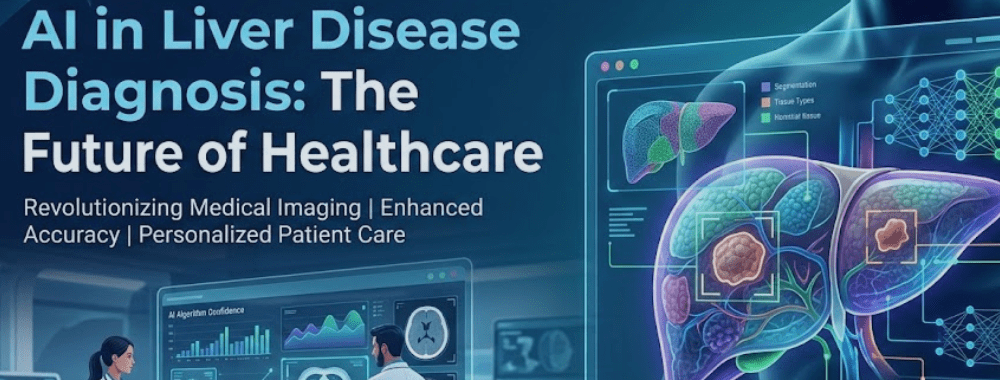
Liver diseases are becoming increasingly common around the world. Conditions such as fatty liver disease, hepatitis, liver cirrhosis, and liver cancer affect millions of people every year. Unfortunately, many patients are diagnosed late, when the disease has already progressed. This is where Artificial Intelligence (AI) is beginning to change the game.
Imagine your liver as a complex factory working inside your body 24/7. When something goes wrong in that factory, doctors need tools to quickly identify the problem. AI acts like a highly intelligent assistant, analysing medical data faster and more accurately than traditional methods.
From analyzing medical images to predicting disease progression, AI is transforming how doctors diagnose and treat liver conditions. It is helping healthcare professionals detect diseases earlier, recommend better treatments, and guide patients to the best liver transplant surgeon in india when advanced care is needed.
So, how exactly does AI work in liver disease diagnosis? And why is it considered the future of healthcare? Let’s explore.
1. Understanding Liver Diseases
The liver is one of the most important organs in the human body. It helps with digestion, detoxification, metabolism, and nutrient storage. However, many diseases can damage the liver over time.
Common liver diseases include:
-
Fatty liver disease
-
Hepatitis B and C
-
Liver cirrhosis
-
Liver cancer
-
Alcohol-related liver damage
Many of these conditions develop silently. People may not notice symptoms until the disease becomes severe. That is why early diagnosis is extremely important.
2. What is Artificial Intelligence in Healthcare?
Artificial Intelligence refers to computer systems designed to analyze data, learn patterns, and make decisions similar to human intelligence.
In healthcare, AI can analyze:
-
Medical images
-
Blood test reports
-
Patient history
-
Genetic information
-
Hospital records
Think of AI as a super-powered microscope for doctors. It helps them see patterns and signals that might otherwise go unnoticed.
This technology allows doctors to diagnose diseases faster and more accurately than ever before.
3. Why Early Detection of Liver Disease Matters
Early detection can make a huge difference in liver disease treatment.
If liver disease is detected early:
-
Lifestyle changes can reverse fatty liver
-
Medications can control hepatitis
-
Liver damage can be slowed or stopped
However, if the disease progresses to advanced stages like cirrhosis or liver failure, patients may require liver transplantation.
This is why many patients eventually seek treatment from the best liver transplant surgeon in india, especially when advanced care becomes necessary.
AI helps bridge this gap by identifying disease much earlier.
4. How AI Detects Liver Disease Earlier
AI systems are trained using thousands or even millions of medical records. They learn patterns linked with specific diseases.
For example, AI can analyze:
-
Blood test markers
-
Liver enzyme levels
-
Imaging scans
-
Medical histories
By comparing this information with large medical databases, AI can identify subtle warning signs that may indicate liver disease.
Sometimes these signs are too small for the human eye to detect.
The result? Earlier diagnosis and faster treatment.
5. AI in Medical Imaging for Liver Diagnosis
Medical imaging is one of the biggest areas where AI is making a difference.
AI can analyze images from:
-
Ultrasound
-
CT scans
-
MRI scans
These images contain huge amounts of data. AI algorithms can scan thousands of images within seconds and detect abnormalities such as:
-
Liver tumors
-
Fat accumulation
-
Fibrosis
-
Cirrhosis
Doctors then use this information to make better treatment decisions.
AI doesn’t replace doctors — it supports them like a second pair of highly trained eyes.
6. Predicting Liver Disease Progression with AI
One of the most exciting uses of AI is predicting how a disease will progress.
Using patient data, AI can estimate:
-
Risk of liver failure
-
Probability of cirrhosis
-
Chances of liver cancer development
-
Need for liver transplant in the future
This predictive capability allows doctors to plan treatment earlier.
For example, if AI predicts rapid disease progression, doctors may recommend early consultation with the best liver transplant surgeon in india before complications worsen.
7. AI and Non-Invasive Liver Tests
Traditionally, liver biopsies were used to diagnose serious liver damage.
However, biopsies can be painful and carry some risk.
AI is now helping develop non-invasive alternatives, such as:
-
AI-assisted ultrasound analysis
-
FibroScan data interpretation
-
Blood-based diagnostic models
These methods reduce the need for invasive procedures while still providing accurate results.
Patients benefit from faster, safer testing.
8. Role of AI in Liver Cancer Detection
Liver cancer is one of the most dangerous complications of chronic liver disease.
The problem is that early tumors are often very small and difficult to detect.
AI tools can analyze imaging scans to detect tiny tumors that doctors might miss.
This early detection allows for:
-
Faster treatment
-
Improved survival rates
-
Better surgical planning
In many cases, early diagnosis means patients can avoid transplant surgery altogether.
9. AI in Liver Transplant Decision Making
Liver transplantation is a life-saving treatment for patients with severe liver failure.
However, deciding who needs a transplant and when can be complex.
AI systems help doctors analyze factors such as:
-
MELD score
-
Disease progression
-
Patient survival probability
-
Donor compatibility
These insights help transplant teams make more informed decisions.
Patients may then be referred to the best liver transplant surgeon in India for specialized treatment and surgical care.
10. Benefits of AI for Patients and Doctors
AI provides numerous advantages in liver disease management.
For Patients
-
Faster diagnosis
-
Early treatment
-
Reduced testing risks
-
Better survival chances
For Doctors
-
Improved accuracy
-
Faster data analysis
-
Better treatment planning
-
Enhanced patient monitoring
Ultimately, AI helps both doctors and patients make better decisions.
11. Challenges and Limitations of AI in Healthcare
Despite its benefits, AI still faces several challenges.
Some limitations include:
-
Data privacy concerns
-
High implementation costs
-
Need for medical supervision
-
Training healthcare professionals
AI should always be used as a support tool, not a replacement for doctors.
Human expertise remains essential in patient care.
12. AI and Personalized Treatment for Liver Patients
Every patient is different. Two people with the same disease may respond differently to treatment.
AI helps doctors create personalized treatment plans by analyzing:
-
Genetic data
-
Lifestyle habits
-
Medical history
-
Disease progression patterns
This personalized approach improves treatment success and patient outcomes.
13. Future Innovations in AI for Liver Care
The future of AI in liver healthcare is extremely promising.
Emerging technologies include:
-
AI-powered wearable health monitoring
-
Real-time disease prediction systems
-
AI-guided robotic liver surgery
-
Virtual health assistants for liver patients
These innovations may soon transform liver care into a highly predictive and preventive healthcare system.
14. How Patients Can Benefit from AI-Powered Healthcare
Patients can benefit from AI by:
-
Getting regular liver screenings
-
Using AI-based health apps
-
Tracking liver health indicators
-
Consulting specialists early
Early diagnosis and expert care are critical. When liver disease becomes advanced, patients should consult the best liver transplant surgeon in india to explore life-saving treatment options.
Conclusion
Artificial Intelligence is revolutionizing liver disease diagnosis and treatment. By analyzing vast amounts of medical data, AI can detect diseases earlier, predict complications, and support doctors in making better treatment decisions.
Think of AI as a powerful assistant in the healthcare system, helping doctors see what was previously invisible. From detecting fatty liver to identifying early liver cancer, AI is improving patient outcomes worldwide.
While AI will never replace experienced doctors, it will certainly enhance their capabilities. Combined with expert medical care and guidance from the best liver transplant surgeon in india, AI technology has the potential to significantly improve the future of liver healthcare.
The future of liver disease management is not just about treatment — it’s about early detection, smarter decisions, and better patient outcomes.
FAQs
1. Can AI detect liver disease earlier than traditional methods?
Yes. AI can analyze medical data and imaging scans to detect subtle changes in the liver earlier than traditional diagnostic methods.
2. Is AI used in liver transplant evaluation?
Yes. AI helps doctors assess transplant eligibility, disease progression, and patient survival probability before recommending liver transplantation.
3. Can AI replace doctors in diagnosing liver diseases?
No. AI supports doctors by analyzing data and providing insights, but final diagnosis and treatment decisions are always made by medical professionals.
4. How accurate is AI in detecting liver cancer?
Studies show that AI can detect small liver tumors with high accuracy, sometimes identifying abnormalities earlier than traditional imaging analysis.
5. When should someone consult a liver transplant specialist?
Patients should consult the best liver transplant surgeon in india when they have advanced liver disease, liver failure, or complications like cirrhosis or liver cancer.