
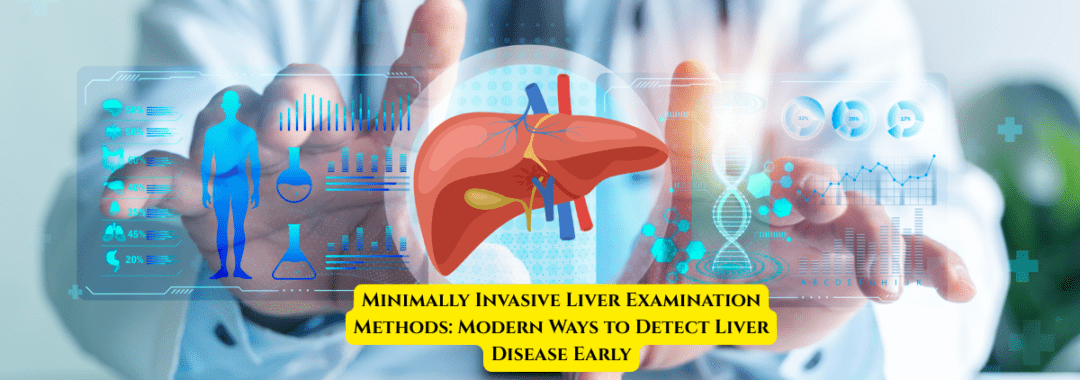
The liver is one of the hardest-working organs in the human body. It filters toxins, stores energy, supports digestion, and helps fight infections. Yet, many people don’t realize their liver is in trouble until serious damage has already occurred. That’s because liver disease often develops silently, without clear symptoms in the early stages.
Thankfully, modern medicine has changed the way doctors examine liver health. Gone are the days when painful surgical procedures were the only option. Today, minimally invasive liver examination methods allow doctors to detect liver disease early, quickly, and with much less discomfort.
Think of it like servicing a car before the engine breaks down completely. Early liver testing helps doctors find problems before they become severe. This is especially important for conditions like fatty liver disease, hepatitis, cirrhosis, and liver cancer.
In this article, we’ll explore the latest minimally invasive liver examination methods, how they work, who needs them, and why early diagnosis can save lives. We’ll also discuss the importance of consulting the best liver transplant surgeon in India when advanced liver care is needed.
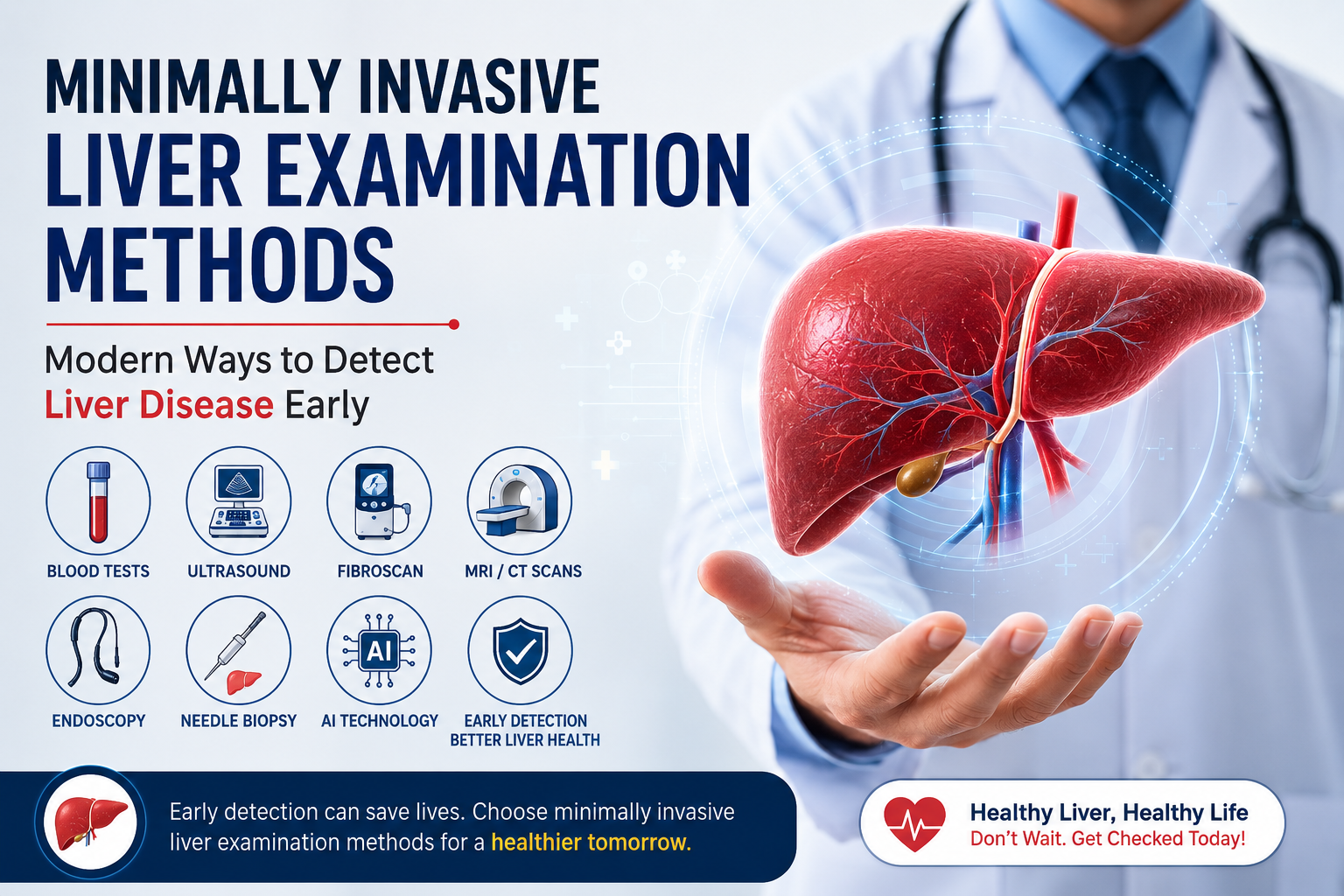
Table of Contents
| Sr# | Headings |
|---|---|
| 1 | Understanding the Importance of Liver Health |
| 2 | Why Early Detection of Liver Disease Matters |
| 3 | What Are Minimally Invasive Liver Examination Methods? |
| 4 | Blood Tests for Liver Health |
| 5 | Ultrasound and Advanced Liver Imaging |
| 6 | FibroScan: A Breakthrough in Liver Testing |
| 7 | MRI and CT Scans for Liver Diagnosis |
| 8 | Endoscopic Examination of the Liver |
| 9 | Needle Biopsy: Less Painful Than Before |
| 10 | AI and Digital Technology in Liver Diagnosis |
| 11 | Who Should Get Liver Screening? |
| 12 | Benefits of Minimally Invasive Liver Examination |
| 13 | Role of Lifestyle in Liver Disease Prevention |
| 14 | When to Consult a Liver Specialist |
| 15 | Conclusion and FAQs |
1. Understanding the Importance of Liver Health
Your liver performs more than 500 essential functions every day. It helps digest food, stores vitamins, regulates blood clotting, and removes harmful toxins from the body.
But unhealthy habits such as excessive alcohol consumption, obesity, poor diet, smoking, and viral infections can slowly damage the liver. Over time, this damage may lead to serious conditions like:
- Fatty liver disease
- Hepatitis
- Liver fibrosis
- Cirrhosis
- Liver failure
- Liver cancer
The scary part? Many liver diseases show no symptoms initially. That’s why regular examination is so important.
2. Why Early Detection of Liver Disease Matters
Early diagnosis can make a huge difference in treatment success. When liver disease is found early:
- Treatment becomes easier
- Damage may be reversible
- Complications can be prevented
- Liver transplant risks reduce
- Recovery chances improve significantly
For example, fatty liver disease detected in its early stage can often be controlled through diet, exercise, and medication. However, untreated fatty liver may progress into cirrhosis or liver failure.
This is where modern minimally invasive testing methods become life-changing.
3. What Are Minimally Invasive Liver Examination Methods?
Minimally invasive liver examination methods are diagnostic procedures that cause little discomfort and require fewer surgical interventions. These tests help doctors evaluate liver function, detect damage, and identify disease progression.
Unlike traditional surgery-based methods, modern examinations use:
- Blood samples
- Imaging technology
- Elasticity measurements
- Tiny needles
- Advanced scanning systems
These techniques are safer, faster, and more patient-friendly.
4. Blood Tests for Liver Health
Liver Function Tests (LFTs)
One of the most common and simple methods for checking liver health is the Liver Function Test.
This blood test measures:
- ALT (Alanine transaminase)
- AST (Aspartate transaminase)
- Bilirubin
- Albumin
- Alkaline phosphatase
Abnormal levels may indicate liver inflammation or damage.
Advantages of Blood Tests
- Quick and affordable
- No hospitalization needed
- Minimal discomfort
- Useful for routine screening
Doctors often recommend blood tests as the first step in diagnosing liver disease.
5. Ultrasound and Advanced Liver Imaging
Traditional Ultrasound
Ultrasound uses sound waves to create images of the liver. It helps identify:
- Fatty liver
- Liver enlargement
- Tumors
- Cysts
- Blockages
It is painless and takes only a few minutes.
Doppler Ultrasound
This advanced form checks blood flow within liver vessels. It is especially useful for patients with cirrhosis or portal hypertension.
Contrast-Enhanced Ultrasound
Special contrast agents improve image quality and help detect liver tumors more accurately.
6. FibroScan: A Breakthrough in Liver Testing
One of the biggest advancements in liver examination is FibroScan.
What Is FibroScan?
FibroScan is a non-invasive technology that measures liver stiffness. Increased stiffness usually indicates fibrosis or cirrhosis.
The procedure works like an ultrasound and takes around 10–15 minutes.
Why FibroScan Is Popular
- Completely painless
- No needles involved
- Immediate results
- Accurate fibrosis assessment
- Suitable for fatty liver patients
Doctors now widely use FibroScan to monitor chronic liver diseases.
It’s similar to checking the softness or hardness of a fruit from the outside without cutting it open. That’s how FibroScan evaluates the liver internally without surgery.
7. MRI and CT Scans for Liver Diagnosis
MRI (Magnetic Resonance Imaging)
MRI provides highly detailed liver images using magnetic fields and radio waves.
It helps detect:
- Liver tumors
- Fat accumulation
- Cirrhosis
- Blood vessel abnormalities
MR Elastography
This advanced MRI technique measures liver stiffness with exceptional precision.
CT Scan
CT scans create cross-sectional liver images and are useful for:
- Cancer detection
- Trauma evaluation
- Liver infections
- Surgical planning
Doctors may use contrast dye for better visibility.
8. Endoscopic Examination of the Liver
What Is Endoscopy?
Endoscopy involves inserting a thin flexible tube with a camera through the mouth or small incision.
For liver-related conditions, doctors use procedures like:
- Endoscopic Ultrasound (EUS)
- ERCP (Endoscopic Retrograde Cholangiopancreatography)
These help examine bile ducts and surrounding organs.
Benefits of Endoscopic Methods
- Smaller incisions
- Faster recovery
- Better visualization
- Reduced pain
These procedures are especially helpful in diagnosing bile duct disorders and liver-related complications.
9. Needle Biopsy: Less Painful Than Before
What Is a Liver Biopsy?
A liver biopsy involves removing a tiny tissue sample for microscopic analysis.
Although it sounds intimidating, modern liver biopsies are far less painful than older methods.
Types of Minimally Invasive Biopsies
Percutaneous Biopsy
A thin needle is inserted through the skin.
Transjugular Biopsy
Performed through a neck vein for high-risk patients.
Laparoscopic Biopsy
Uses small surgical tools and a camera.
Why Biopsy Is Still Important
Biopsy remains one of the most accurate ways to:
- Confirm liver disease
- Assess fibrosis stage
- Detect cancer cells
- Evaluate unexplained liver abnormalities
10. AI and Digital Technology in Liver Diagnosis
Technology is transforming liver healthcare rapidly.
Artificial Intelligence in Imaging
AI-powered software can now analyze scans more accurately and quickly.
It helps doctors identify:
- Tiny tumors
- Fibrosis progression
- Fat accumulation
- Abnormal tissue patterns
Digital Monitoring Tools
Wearable devices and mobile apps also help monitor:
- Diet
- Weight
- Alcohol intake
- Medication schedules
These tools improve long-term liver care and patient awareness.
11. Who Should Get Liver Screening?
Many people assume liver tests are only for heavy drinkers. That’s not true.
You should consider liver screening if you:
- Have obesity
- Have diabetes
- Consume alcohol regularly
- Have hepatitis infection
- Experience unexplained fatigue
- Have abdominal swelling
- Notice yellowing of eyes or skin
- Have a family history of liver disease
Even healthy-looking individuals can develop silent liver conditions.
12. Benefits of Minimally Invasive Liver Examination
Modern examination methods offer several advantages compared to traditional surgery-based diagnosis.
Key Benefits
Less Pain
Most procedures involve minimal discomfort.
Faster Recovery
Patients usually return home the same day.
Lower Risk
Reduced infection and complication risks.
Early Diagnosis
Diseases are detected before major damage occurs.
Cost-Effective
Early treatment prevents expensive advanced care later.
These benefits encourage more people to undergo timely liver screening.
13. Role of Lifestyle in Liver Disease Prevention
While medical technology is important, lifestyle choices still play the biggest role in liver health.
Healthy Habits for a Strong Liver
Eat Nutritious Foods
Focus on fruits, vegetables, whole grains, and lean proteins.
Limit Alcohol
Excess alcohol is one of the leading causes of liver damage.
Exercise Regularly
Physical activity reduces fatty liver risk.
Maintain Healthy Weight
Obesity increases liver disease chances.
Avoid Self-Medication
Overuse of medicines can harm the liver.
Get Vaccinated
Vaccines for hepatitis A and B can protect liver health.
Small daily habits can make a huge difference over time.
14. When to Consult a Liver Specialist
If your tests show liver abnormalities, it’s important to consult an experienced liver expert.
A hepatologist or liver transplant specialist can guide you regarding:
- Further diagnosis
- Medication
- Lifestyle management
- Surgical treatment
- Liver transplantation if necessary
In advanced cases, seeking care from the best liver transplant surgeon in india can significantly improve treatment outcomes. Experienced specialists use advanced technology, minimally invasive surgical techniques, and personalized treatment plans for better recovery.
India has become a global destination for liver treatment due to highly skilled surgeons, modern hospitals, and affordable healthcare facilities.
15. Conclusion
Modern medicine has completely transformed liver disease diagnosis. Today, minimally invasive liver examination methods allow doctors to detect problems earlier, faster, and with far less discomfort than traditional procedures.
From blood tests and FibroScan to MRI scans and advanced endoscopy, these technologies are helping save lives every day. Early detection not only improves treatment success but can also prevent irreversible liver damage.
Your liver works silently for you every single day. The least we can do is pay attention to its health before warning signs appear. If you have risk factors or symptoms, don’t delay testing. Timely examination and guidance from the best liver transplant surgeon in india can make all the difference.
FAQs
1. What is the most common minimally invasive liver examination method?
The most common methods include liver function blood tests, ultrasound, and FibroScan because they are painless, quick, and widely available.
2. Is FibroScan better than liver biopsy?
FibroScan is non-invasive and very useful for assessing liver stiffness, but biopsy may still be needed for detailed tissue analysis in certain cases.
3. Can liver disease be detected early without surgery?
Yes, many liver diseases can now be detected early using blood tests, imaging scans, FibroScan, and other minimally invasive techniques.
4. Who is at high risk for liver disease?
People with obesity, diabetes, alcohol use, hepatitis infections, or a family history of liver problems are at higher risk.
5. When should someone consult the best liver transplant surgeon in india?
You should consult a liver transplant specialist if you have advanced liver disease, cirrhosis, liver failure, or if your doctor recommends transplant evaluation.