Introduction
Your liver is one of the hardest-working organs in your body. It quietly filters toxins, processes nutrients, and keeps your metabolism running smoothly. But what happens when fat starts accumulating in this vital organ?
Many people today are diagnosed with fatty liver disease, often during routine health checkups. At first, it may not seem like a serious problem because it rarely causes symptoms in the early stages. But a common question people ask is: Can fatty liver turn into hepatitis?
Fatty liver can progress to hepatitis and cirrhosis. Learn symptoms, causes, prevention, and treatment from the best liver transplant surgeon in India
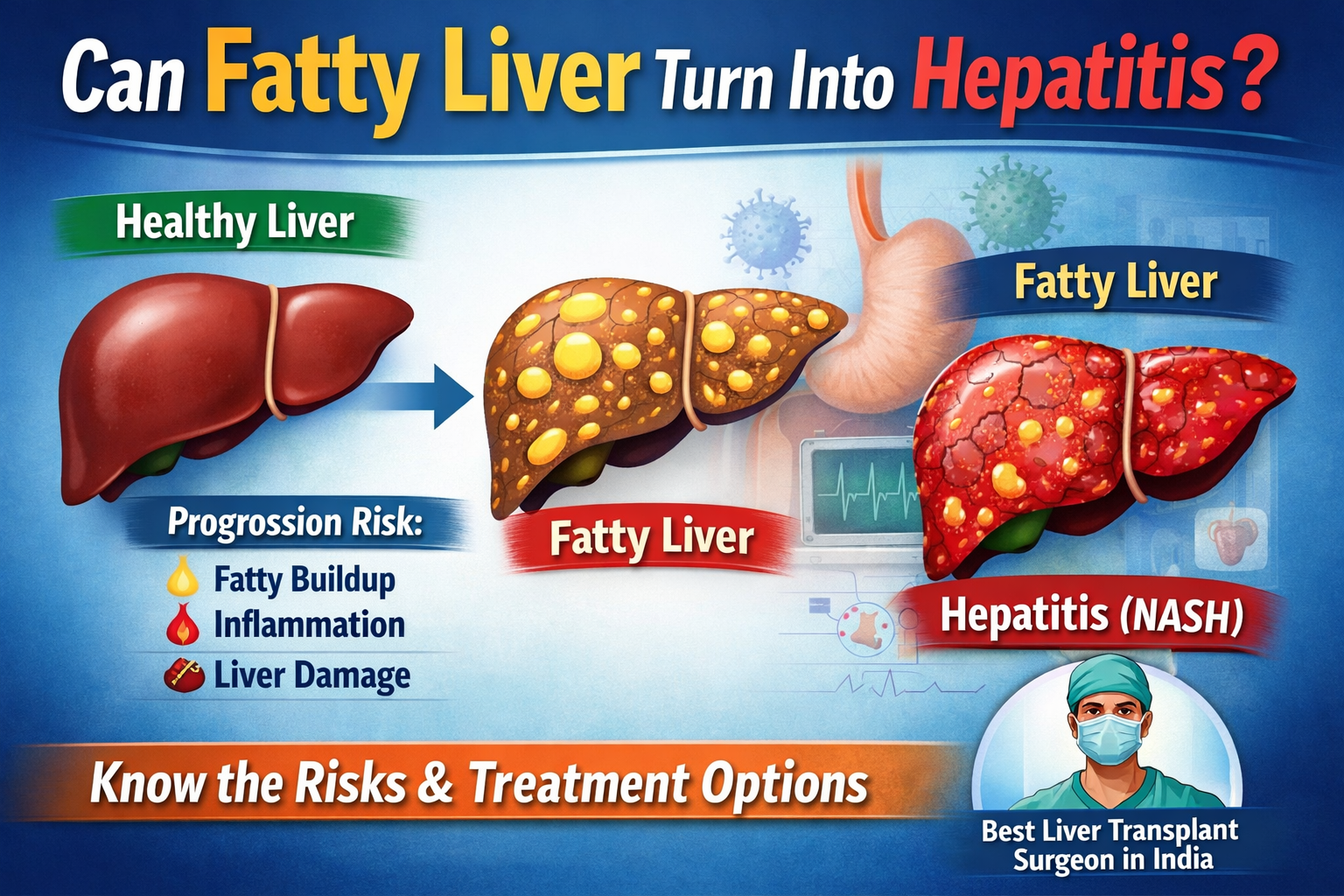
The short answer is yes, in some cases it can lead to liver inflammation, which is known as “hepatitis.” Over time, untreated fatty liver can trigger the following:
-
Inflammation
-
Fibrosis
-
Cirrhosis
-
Liver failure
Think of your liver like a kitchen sponge. When it’s clean, it absorbs and filters everything efficiently. But when it becomes overloaded with grease (fat), it becomes stiff and ineffective. Eventually, damage starts building up.
Let’s break down how fatty liver progresses, when it becomes dangerous, and how you can protect your liver’s health.
Understanding Fatty Liver Disease
Fatty liver disease occurs when excess fat accumulates in liver cells. Normally, the liver contains a small amount of fat. But when fat makes up more than 5–10% of the liver’s weight, it is called fatty liver.
There are two main types:
1. Non-Alcoholic Fatty Liver Disease (NAFLD)
Occurs in people who drink little or no alcohol. It is often linked with:
-
Obesity
-
Diabetes
-
High cholesterol
2. Alcoholic Fatty Liver Disease
Caused by excessive alcohol consumption that damages liver cells.
In many cases, fatty liver doesn’t cause symptoms, but if ignored, it can slowly progress to more serious liver conditions.
What is Hepatitis?
Hepatitis simply means inflammation of the liver.
This inflammation can occur due to several reasons such as:
-
Viral infections (Hepatitis A, B, C)
-
Alcohol abuse
-
Fat accumulation
-
Certain medications
-
Autoimmune diseases
When the liver becomes inflamed, its ability to function properly decreases. Over time, this inflammation can lead to permanent liver damage.
Can Fatty Liver Turn Into Hepatitis?
Yes, fatty liver can progress into a form of hepatitis called Non-Alcoholic Steatohepatitis (NASH).
Here’s what happens:
-
Fat builds up in the liver
-
The fat triggers inflammation
-
Liver cells become damaged
-
Scar tissue begins forming
This stage—NASH—is essentially fatty liver with hepatitis-like inflammation.
Not everyone with fatty liver develops NASH, but studies show about 20–30% of fatty liver patients may progress to this stage.
If left untreated, NASH can lead to:
-
Liver fibrosis
-
Liver cirrhosis
-
Liver failure
-
Liver cancer
The Stages of Fatty Liver Disease
Fatty liver disease usually develops gradually in stages.
Stage 1 – Simple Fatty Liver
-
Fat accumulates in the liver
-
Causes little or no damage
Stage 2 – NASH (Inflammation)
-
Fat accumulation triggers inflammation
-
Liver cells begin to get injured
Stage 3 – Fibrosis
-
Scar tissue forms around damaged liver areas
Stage 4 – Cirrhosis
-
Severe scarring affects liver function
-
May lead to liver failure
At advanced stages, patients may require treatment from the best liver transplant surgeon in India to restore liver function.
Difference Between Fatty Liver and Hepatitis
Many people confuse these two conditions. While they are related, they are not exactly the same.
-
Fatty Liver – Excess fat accumulation
-
Hepatitis – Inflammation of the liver
-
NASH – Fat + inflammation
So fatty liver does not always mean hepatitis, but it can progress into it.
Causes That Trigger Liver Inflammation
Several factors can worsen fatty liver and trigger hepatitis-like inflammation.
Common causes include:
-
Obesity
-
Type 2 diabetes
-
High cholesterol
-
High triglycerides
-
Poor diet
-
Lack of exercise
-
Excess alcohol consumption
Modern lifestyle habits such as eating processed foods and sitting for long hours are major contributors.
Warning Signs You Should Never Ignore
Fatty liver often develops silently. But once inflammation begins, symptoms may appear.
Common symptoms include:
-
Fatigue
-
Abdominal discomfort
-
Unexplained weight loss
-
Nausea
-
Yellowing of skin (jaundice)
-
Swelling in abdomen
If you notice these symptoms, consult a liver specialist immediately.
Who Is at Risk of Developing Fatty Liver Hepatitis
Certain individuals are more likely to develop inflammation from fatty liver.
High-risk groups include:
-
People with obesity
-
Patients with diabetes
-
Individuals with metabolic syndrome
-
People with high cholesterol
-
Sedentary individuals
Even young adults are increasingly being diagnosed with fatty liver today.
How Doctors Diagnose Liver Inflammation
Doctors use several tests to diagnose fatty liver and hepatitis.
Common diagnostic tests include:
-
Liver Function Tests (LFT)
-
Ultrasound
-
FibroScan
-
MRI
-
Liver biopsy
These tests help determine how much fat and damage exist in the liver.
Treatment Options for Fatty Liver and Hepatitis
Currently, there is no single medication that cures fatty liver completely, but treatment focuses on controlling the underlying causes.
Treatment options include:
-
Weight loss
-
Diet modification
-
Exercise
-
Diabetes management
-
Cholesterol control
-
Avoiding alcohol
Early treatment can prevent the disease from progressing to cirrhosis.
When Does a Liver Transplant Become Necessary?
If fatty liver progresses to advanced cirrhosis or liver failure, a liver transplant may be required.
A liver transplant replaces the damaged liver with a healthy donor liver.
Symptoms indicating transplant may be needed include:
-
Severe liver scarring
-
Fluid accumulation in abdomen
-
Internal bleeding
-
Confusion due to liver failure
At this stage, consulting the best liver transplant surgeon in India becomes critical for survival and long-term recovery.
Prevention Tips to Protect Your Liver
Protecting your liver is much easier than treating liver disease later.
Simple prevention tips include:
-
Maintain healthy body weight
-
Eat a balanced diet
-
Exercise regularly
-
Avoid excess alcohol
-
Control diabetes
-
Monitor cholesterol levels
These habits help keep the liver functioning properly.
Lifestyle Changes That Can Reverse Fatty Liver
The good news is that fatty liver can often be reversed, especially in early stages.
Healthy lifestyle changes include:
-
Losing 5–10% of body weight
-
Eating more fruits and vegetables
-
Reducing sugar intake
-
Avoiding processed food
-
Staying physically active
Think of it like cleaning out a clogged filter—once the overload reduces, the liver starts healing itself.
When to See a Liver Specialist
You should consult a liver specialist if:
-
Liver tests remain abnormal
-
Fatty liver persists for years
-
Symptoms worsen
-
Imaging shows fibrosis
Early consultation can prevent complications and ensure proper treatment.
The Importance of Early Detection
Early detection is the key to preventing severe liver damage.
Routine health screenings can help identify fatty liver before it progresses into hepatitis or cirrhosis.
The earlier the condition is detected, the easier it becomes to treat and reverse.
Conclusion
Fatty liver may seem harmless at first, but ignoring it can lead to serious complications. In some cases, fatty liver can progress into inflammatory liver disease known as NASH, which behaves like hepatitis.
Over time, this inflammation can lead to:
-
Fibrosis
-
Cirrhosis
-
Liver failure
The good news is that with early diagnosis, lifestyle changes, and proper medical care, fatty liver disease can often be reversed.
If liver damage progresses to advanced stages, expert care from the best liver transplant surgeon in India may be required to restore liver function and save lives.
Taking care of your liver today means protecting your health for the future.
FAQs
1. Can fatty liver turn into hepatitis?
Yes, fatty liver can progress into Non-Alcoholic Steatohepatitis (NASH), which is a form of liver inflammation similar to hepatitis.
2. Is fatty liver reversible?
Yes, in many cases fatty liver can be reversed through:
-
Weight loss
-
Healthy diet
-
Regular exercise
3. How long does it take for fatty liver to become serious?
Fatty liver can take years or even decades to progress into severe liver disease, depending on lifestyle and health conditions.
4. What foods should be avoided with fatty liver?
People with fatty liver should avoid:
-
Fried foods
-
Sugary drinks
-
Refined carbohydrates
-
Processed foods
5. Can fatty liver lead to liver transplant?
Yes, if fatty liver progresses to cirrhosis or liver failure, a transplant may be required under the guidance of the best liver transplant surgeon in India.