
The liver is one of the hardest-working organs in your body. It filters toxins, produces essential proteins, helps digest food, and stores nutrients. But when liver disease develops, it often progresses silently without noticeable symptoms. By the time warning signs appear, significant damage may already have occurred.
For many years, doctors relied on liver biopsy as the gold standard for diagnosing liver scarring (fibrosis). While biopsy remains valuable in certain situations, it is invasive, uncomfortable, and carries some risks.
Liver elastography is a safe, painless, and non-invasive test that detects liver fibrosis early, reducing the need for biopsy while helping doctors diagnose and monitor liver disease accurately.
If you are at risk of advanced liver disease, consulting the best liver transplant surgeon in India can help ensure timely diagnosis and treatment.
Today, liver elastography has transformed liver disease diagnosis. This modern, painless, and non-invasive imaging test allows doctors to assess liver stiffness without surgery or needles. Think of it like checking the ripeness of a fruit without cutting it open—it provides valuable information while keeping the fruit intact. Similarly, liver elastography evaluates liver health without removing tissue.
Whether you’re living with fatty liver disease, hepatitis, cirrhosis, or simply want to monitor your liver health, understanding liver elastography can help you make informed healthcare decisions.
1. What Is Liver Elastography?
Liver elastography is an advanced imaging technique that measures the stiffness of liver tissue. Healthy liver tissue is soft and flexible, while damaged liver tissue becomes stiff due to fibrosis or cirrhosis.
Unlike a biopsy, elastography does not require needles or surgery. Instead, it uses ultrasound waves or MRI technology to estimate liver stiffness within minutes.
Doctors commonly recommend liver elastography for patients with:
- Fatty liver disease (NAFLD/MASLD)
- Alcohol-related liver disease
- Hepatitis B
- Hepatitis C
- Liver cirrhosis
- Autoimmune liver diseases
2. Why Is Liver Health Important?
Your liver performs more than 500 vital functions every day.
These include:
- Filtering harmful substances
- Producing bile for digestion
- Regulating blood sugar
- Storing vitamins and minerals
- Producing clotting factors
Because the liver can repair itself, damage often goes unnoticed until fibrosis becomes severe. Early diagnosis allows treatment before permanent damage develops.
3. How Liver Elastography Works
Liver elastography measures how quickly vibrations travel through liver tissue.
Here’s how it works:
- Soft liver tissue slows the waves.
- Stiff liver tissue allows waves to travel faster.
The machine converts this information into a stiffness measurement.
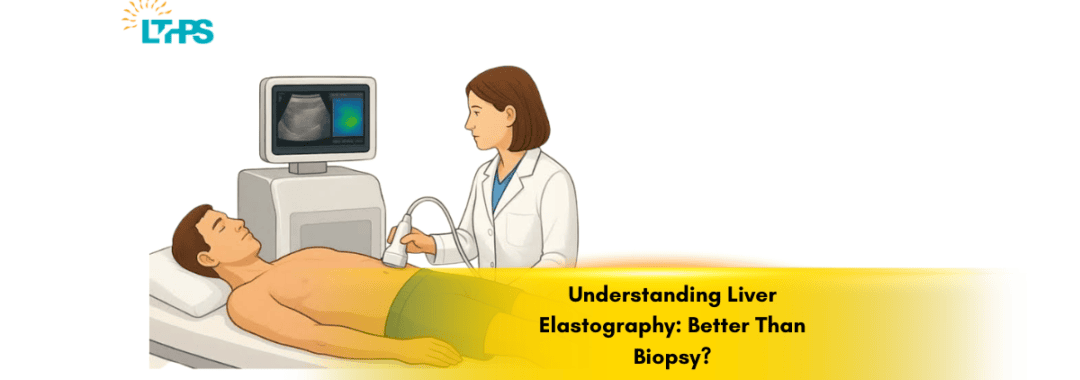
The procedure usually takes 10–20 minutes and is completely painless.
During the examination:
- You lie comfortably on your back.
- A technician places a probe on the upper abdomen.
- Gentle vibrations pass through the liver.
- Results are generated immediately.
No recovery time is needed.
4. Types of Liver Elastography
Transient Elastography (FibroScan)
The most common form.
Uses ultrasound vibrations to measure liver stiffness.
Best for:
- Fatty liver
- Hepatitis
- Fibrosis monitoring
Shear Wave Elastography
Performed during a standard ultrasound.
Provides detailed imaging while measuring stiffness.
Useful for:
- Routine liver evaluations
- Monitoring disease progression
Magnetic Resonance Elastography (MRE)
Uses MRI technology.
Advantages include:
- Excellent accuracy
- Works well in obese patients
- Provides detailed liver images
Although more expensive, MRE is considered one of the most accurate methods available.
5. Liver Elastography vs Liver Biopsy
| Feature | Liver Elastography | Liver Biopsy |
|---|---|---|
| Invasive | No | Yes |
| Pain | Minimal | Moderate |
| Recovery | Immediate | Several hours |
| Hospital Stay | No | Sometimes |
| Risk of Bleeding | None | Small risk |
| Cost | Lower | Higher |
| Repeat Testing | Easy | Less practical |
While biopsy examines actual liver cells, elastography evaluates liver stiffness over a much larger area, reducing sampling errors.
6. Who Should Get Liver Elastography?
Doctors may recommend elastography if you have:
- Fatty liver disease
- Diabetes
- Obesity
- High cholesterol
- Chronic hepatitis
- Heavy alcohol use
- Elevated liver enzymes
- Family history of liver disease
It is also useful for monitoring treatment response over time.
7. Conditions Diagnosed with Elastography
Fatty Liver Disease
One of the leading causes of chronic liver disease worldwide.
Elastography helps determine whether fatty liver has progressed to fibrosis.
Liver Fibrosis
Fibrosis develops when scar tissue replaces healthy liver tissue.
Early detection helps prevent cirrhosis.
Liver Cirrhosis
Cirrhosis represents advanced liver scarring.
Elastography helps evaluate disease severity and monitor progression.
Viral Hepatitis
Patients with hepatitis B or C benefit from regular stiffness measurements to monitor liver damage.
Alcoholic Liver Disease
Regular monitoring helps determine whether liver damage is improving after alcohol cessation.
8. Benefits of Liver Elastography
The popularity of liver elastography continues to grow because it offers several advantages.
Non-Invasive
- No needles
- No cuts
- No stitches
Painless
Most patients describe the experience as similar to a regular ultrasound.
Fast Results
Results are usually available immediately.
Highly Accurate
Especially effective for identifying moderate to severe fibrosis.
Repeatable
Doctors can safely repeat the test multiple times to monitor disease progression.
Cost-Effective
Compared with biopsy, elastography often reduces healthcare costs by avoiding invasive procedures.
9. Limitations of Liver Elastography
Although highly useful, elastography is not perfect.
Results may be affected by:
- Severe obesity
- Inflammation
- Fluid around the liver (ascites)
- Recent meals
- Technical limitations
In uncertain cases, doctors may still recommend a liver biopsy.
10. Preparing for the Test
Preparation is simple.
Most patients are advised to:
- Avoid eating for 2–4 hours before the test
- Wear comfortable clothing
- Bring previous medical records
- Inform the doctor about liver medications
The procedure usually finishes within 20 minutes.
11. Understanding Your Results
Liver stiffness values are measured in kilopascals (kPa).
Generally:
- Low stiffness: Healthy liver
- Mild stiffness: Early fibrosis
- Moderate stiffness: Significant fibrosis
- High stiffness: Advanced fibrosis or cirrhosis
Your doctor interprets these values alongside:
- Blood tests
- Medical history
- Ultrasound findings
- Symptoms
Never interpret elastography results in isolation.
12. How Often Should the Test Be Done?
The frequency depends on your liver condition.
Examples include:
- Healthy individuals: Usually not required routinely
- Fatty liver disease: Every 1–2 years or as advised
- Chronic hepatitis: Periodic monitoring based on disease activity
- Cirrhosis: More frequent follow-up
Regular monitoring allows doctors to detect improvements or worsening early.
13. Can Elastography Replace Liver Biopsy?
In many situations, yes.
For patients with fatty liver disease, hepatitis, or chronic liver conditions, elastography often provides enough information for diagnosis and follow-up.
However, biopsy remains important when:
- Cancer is suspected
- Rare liver diseases need confirmation
- Results are unclear
- Tissue analysis is essential
Rather than replacing biopsy entirely, elastography has significantly reduced the need for invasive testing.
14. Choosing the Right Liver Specialist
While advanced technology is important, expert interpretation matters just as much.
An experienced liver specialist can combine elastography findings with blood tests, imaging studies, and clinical evaluation to create the most effective treatment plan.
Patients with advanced liver disease, cirrhosis, or liver failure should seek evaluation from an experienced hepatology and transplant team. If liver transplantation becomes necessary, consulting the best liver transplant surgeon in india can help ensure access to advanced treatment options, comprehensive care, and long-term follow-up.
For advanced liver disease or transplant evaluation, consulting Dr. Neerav Goyal, a leading liver transplant specialist, ensures expert diagnosis, personalized treatment, and access to advanced liver transplant care in India.
Remember, technology supports diagnosis—but experienced specialists make the critical treatment decisions.
15. Final Thoughts
Liver elastography has revolutionized the way liver disease is diagnosed and monitored. It offers a safe, painless, and highly effective alternative to liver biopsy for many patients. By detecting liver stiffness early, this test allows doctors to identify fibrosis before irreversible damage occurs, improving the chances of successful treatment.
If you have risk factors such as fatty liver disease, hepatitis, diabetes, obesity, or excessive alcohol consumption, talk to your healthcare provider about whether liver elastography is right for you. Early detection, healthy lifestyle choices, and regular follow-up can make a significant difference in protecting your liver and your overall health. When advanced liver disease is suspected, timely consultation with an experienced hepatologist and the best liver transplant surgeon in India can ensure you receive the most appropriate care.
Frequently Asked Questions (FAQs)
1. Is liver elastography painful?
No. Liver elastography is completely painless and feels similar to a routine ultrasound examination.
2. Can liver elastography replace a liver biopsy?
In many cases, yes. However, a biopsy may still be needed when tissue analysis is required or the diagnosis remains uncertain.
3. How long does a liver elastography test take?
The procedure usually takes 10 to 20 minutes, and you can resume normal activities immediately afterward.
4. Who should undergo liver elastography?
People with fatty liver disease, hepatitis, obesity, diabetes, elevated liver enzymes, or suspected liver fibrosis are commonly advised to undergo the test.
5. Is liver elastography accurate for detecting liver fibrosis?
Yes. Liver elastography is highly accurate for detecting moderate to advanced liver fibrosis and is widely used for monitoring chronic liver diseases without the need for repeated biopsies.