
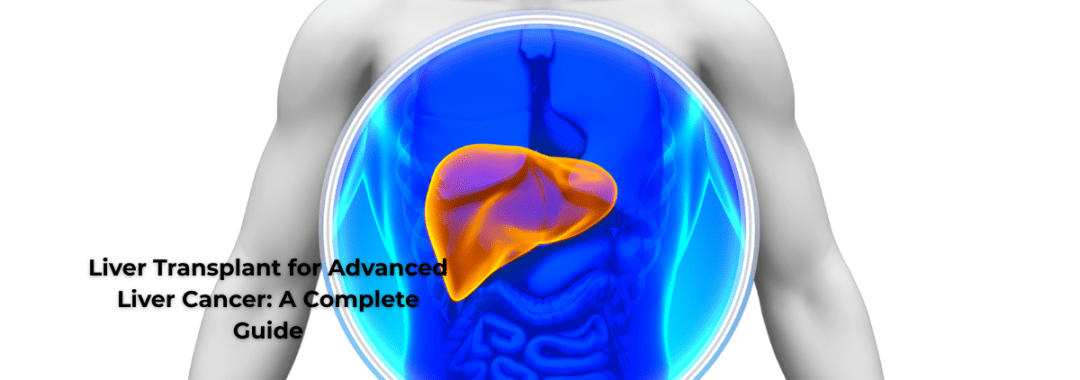
Liver Transplant for Advanced Liver Cancer A Complete Guide

Liver Transplant for Advanced Liver Cancer: A Complete Guide

When someone hears the words “advanced liver cancer,” it often brings fear, confusion, and uncertainty. But while the disease is serious, modern medicine has made incredible progress—and one of the most promising treatment options is liver transplantation. Think of a liver transplant like replacing a damaged engine in a car: instead of repeatedly fixing parts that no longer work well, doctors replace the whole organ to give the body a fresh start.

In this article, written in simple, conversational language, we’ll walk through how liver transplants work, who can benefit from it, what the risks and benefits look like, and why choosing the best liver transplant surgeon in India can make a major difference.


1. Understanding Advanced Liver Cancer

Liver cancer begins when unhealthy cells inside the liver start growing uncontrollably. In early stages, treatments like surgery, medications, or targeted therapies might work well. But once the cancer becomes advanced, things get more complicated.

Advanced liver cancer often means:

The tumour is too large to remove safely

Multiple tumours are present

The liver is too damaged (often due to cirrhosis).

Cancer is close to– or affects– major blood vessels.

In such cases, traditional treatments may not be enough. This is where liver transplant enters the conversation as a powerful alternative.

2. What Makes Liver Transplant a Treatment Option?

A liver transplant doesn’t just remove the cancer– it replaces the entire diseased liver with a healthy one. This offers two major benefits:.

The cancer is removed along with the old liver.

The underlying liver disease is treated, giving the patient a healthy organ to start over with.

For selected patients, this can significantly increase survival and quality of life.

3. How Liver Transplant Helps in Advanced Liver Cancer.

You might wonder, “How can an entire organ replacement help treat cancer?”

Here’s the simple answer:.

Cancer often grows in a liver already damaged by cirrhosis or long-term inflammation. Fixing the cancer alone isn’t enough– if the liver is too unhealthy, the patient’s body still struggles. A transplant offers a clean slate.

Doctors often use the Milan Criteria, which help determine when transplant is safe and effective:.

One tumor ≤ 5 cm.

Or up to 3 tumors, each ≤ 3 cm.

No spread outside the liver.

No major vessel involvement.

Patients in this category often experience excellent long-term outcomes after transplant.

4. When Is a Patient Considered Eligible?

Not everyone with advanced liver cancer is eligible. Doctors consider:.

Tumor size and number.

Liver function.

Overall health.

Absence of spread to other organs.

Response to earlier treatments, if any.

Sometimes doctors use bridging therapies– like radiofrequency ablation or TACE– to keep cancer stable while the patient awaits a transplant.

5. The Evaluation Process Before Transplant.

This evaluation is detailed because doctors must ensure the patient can handle the surgery and recover well.

It generally includes:.

  • Blood tests.
  • Imaging scans (CT, MRI).
  • Heart and lung evaluations.
  • Psychological assessments.
  • Lifestyle assessments, including alcohol abstinence if needed.

Although the process is thorough, it ensures safety and helps doctors plan the best approach.

6. Types of Liver Transplants.

There are two main types:.

a. Deceased Donor Transplant.

A liver from someone who has passed away is transplanted into the patient. Many patients depend on the waiting list, which can take months.

b. Living Donor Transplant.

A healthy person donates a part of their liver. The liver has a unique ability to regenerate, meaning both donor and recipient grow back full-sized livers within months.

Living donor transplants are increasingly popular because they:.

Reduce waiting time.

Offer better planned surgeries.

Often lead to quicker recovery.

7. Living Donor vs. Deceased Donor Transplants.

Choosing between the two depends on medical needs, timing, and availability.

  • Living donor advantages:.
  • Shorter wait times.
  • Reduced risk of cancer spreading while waiting.
  • Planned, scheduled surgery.
  • Often better outcomes in select cases.
  • Deceased donor advantages:.
  • No risk to a living person.

Suitable for patients without an eligible living donor.

Both options work well, especially in the hands of experienced surgeons.

8. Preparing for a Liver Transplant.

Preparation can feel overwhelming, but doctors guide patients every step of the way.

Preparation may include:.

Improving nutrition.

Stopping harmful habits, especially alcohol.

Exercise as tolerated.

Learning about postoperative care.

Family counseling.

Think of this stage as preparing the soil before planting a seed– the better the preparation, the better the outcome.

9. The Transplant Surgery: What Happens Inside the Operating Room.

A liver transplant surgery usually lasts 6– 12 hours. Surgeons:.

Remove the diseased liver.

Implant the healthy donor liver.

Connect major blood vessels.

Reconnect the bile duct.

Ensure the new organ begins functioning.

Modern surgical techniques and advanced monitoring have made liver transplant much safer than before.

10. Recovery After a Liver Transplant.

Recovery begins in the ICU, followed by a hospital stay of about 1– 2 weeks in most cases.

Patients typically:.

Take medications to prevent organ rejection.

Attend regular follow-ups.

Slowly resume normal activities.

Follow a liver-friendly diet.

Many patients return to regular routines, work, and even exercise within months.

11. Life After Transplant: What to Expect.

Life after a liver transplant can be incredibly rewarding.

Patients often report:.

Better energy.

Improved appetite.

Restored daily functioning.

Renewed hope and emotional well-being.

Key responsibilities after transplant include:.

Taking medications daily.

Avoiding infections.

Staying active.

Regular medical checkups.

12. Risks and Challenges of Liver Transplant.

As with all major surgeries, risks exist:.

Organ rejection.

Infections.

Bleeding.

Complications from medications.

Cancer recurrence (rare if criteria are followed).

But with careful monitoring, many patients enjoy long-term survival.

13. Advances in Liver Transplant Technology.

Modern innovations have made transplants safer and more successful:.

Robotic-assisted surgeries.

Improved immunosuppressants.

Better donor– recipient matching.

Organ preservation technologies (like machine perfusion).

These advances mean faster recovery, fewer complications, and better long-term outcomes.

14. Why Choosing the Right Surgeon Matters.

A liver transplant is one of the most complex surgeries in medicine. Experience matters– a lot.

Choosing the best liver transplant surgeon in India can mean:.

Better pre-transplant planning.

Higher surgical success rates.

Reduced complications.

Faster recovery.

Improved long-term survival.

Always look for:.

Strong hospital transplant program.

Experienced multidisciplinary team.

Good patient reviews.

High annual transplant volume.

Your surgeon becomes your long-term partner– and choosing the right one can change the outcome entirely.

15. Conclusion.

A liver transplant is not just a medical procedure– it’s a second chance at life. For people living with advanced liver cancer, it offers hope when other treatments may not work. With advances in technology, improved screening, and the availability of both living and deceased donor transplants, more patients can now benefit from this life-saving treatment.

And remember: the expertise of your surgeon and transplant team plays a crucial role in the overall success of the process. With the guidance of the best liver transplant surgeon in India, patients can look forward to longer, healthier lives.

Frequently Asked Questions.
1. Is liver transplant always recommended for advanced liver cancer?

No. It depends on tumor size, number, spread, and overall health. Doctors evaluate each case individually.

2. How long does it take to recover after a liver transplant?

Most patients recover within 2– 3 months, though full recovery may take six months or more.

3. Can liver cancer come back after a transplant?

If patients meet strict criteria, recurrence is rare but still possible. Regular follow-up is essential.

4. Are living donor liver transplants safe for the donor?

Yes. Donors typically recover in 6– 8 weeks, and the liver regenerates. However, like any surgery, some risks exist.

5. What improves the success rate of liver transplant in liver cancer patients?

Early diagnosis, meeting transplant criteria, choosing an experienced team, and proper post-transplant care increase success.

Robotic surgery being performed for liver tumor removal by a surgeon in a high-tech operating room

The Benefits of Robotic Surgery in Liver Tumor Removal

 What Is Robotic Surgery?

A robotic procedure is a kind of minimally invasive surgery which uses robots to carry out surgeries with greater control and accuracy. It’s not the robot that is performing the work on its own — consider it as an extremely sophisticated tool that is that is controlled by a expert surgeon at a desk.

This technique is particularly beneficial for complex and delicate procedures, such as removing liver tumours.

Do you need expert advice for serious liver problems? Find our complete guide for selecting the Best Liver Transplant Surgeon in India, with a reputation for trust with top hospitals and everything you require to make the best choice for your liver health.

How Does Robotic Liver Tumour Surgery Work?

When performing a robotic liver tumor surgery the surgeon makes tiny incisions and inserts tiny tools as well as a camera. The instruments are connected to the robotic arms, which surgeons control in real time. The camera offers an immersive 3D view that allows the surgeon to be able to see clearly, similar as if you were zooming into your television.

With this system, the surgeon can take out the tumour using extreme precision and minimise the risk of injury to the healthy tissue of the liver.

Why Is Robotic Surgery Better Than Traditional Methods?

You may be wondering: What’s so great about robotic surgery in comparison to traditional surgical procedures?

Traditional liver surgeries require massive incisions and bleeding, and more time to recover. However, robotic surgery provides:

Smaller cuts

Less pain

Quicker healing

Better accuracy

Consider replacing your chainsaw by the laser pointer. both are able to cut, however one cuts with more precision.

Benefits of Robotic Surgery in Liver Tumour Removal

Let’s have a review of the important advantages of robots specifically designed for the removal of liver tumours:

Improved precision and control

Minimises the chance of contracting an infection

Lower injury to the body

Quicker return to everyday activities

Improved long-term outcomes

 Smaller Incisions, Less Scarring

With robotic surgery, the incisions typically are not much larger than an opening in a keyhole. This signifies:

Reduced loss of blood

Minimal scarring

Lower risk of wound infection

For a lot of patients, this means improved cosmetic results that can be essential for emotional recovery.

 Faster Recovery Times

There’s no doubt that no person wants to be recuperating in an hospital bed. Robotic surgery is often able to allow patients to return home earlier and sometimes in just several days. You will be able to return to normal routine sooner whether that’s activities, work or just having time with your family.

Precision That Matters in Delicate Areas

The liver is enclosed by blood vessels vital to life and organs. Any mistake could cause serious complications. With robots that provide 360° rotation and precise movement, surgeons can work in these areas of concern effortlessly.

It’s like threading needles instead of slicing into the cloth.

 Lower Risk of Complications

Because of greater control and visibility, robotic surgery can reduce the chance of

Bleeding

Infection

Post-op pain

Organs surrounding the damaged area

This is a huge victory for anyone having surgery on their liver.

 Better Visualisation for Surgeons

One of the most notable features that robotic surgeries offer includes their 3-D high-definition camera. It provides a clearer and more magnified view of the liver, which can help surgeons distinguish between healthy and tumour tissue with greater precision.

The result is a less invasive as well as better thorough removal of cancerous tumours.

 Shorter Hospital Stay

Patients who undergo a robotic liver procedure typically are required to stay much less time at hospital. This is not just a reduction in the cost of medical expenses, but also the possibility of contracting a variety of infections that are often seen in health care settings.

Additionally the luxury of the comfort of the privacy of your bed is better than sleeping in a hospital cot anytime.

The Truth About Patients Who Profited from Robotic Surgery

Let’s look at some real-world examples. Jane is a teacher of 52 years who was diagnosed with a tumour in her liver and removed with robotic surgery. Jane was released from the hospital in just three days and back at work in less than three weeks. In comparison to the six weeks of recovery her friend had to endure following open surgery, it was an impressive improvement.

The stories of these kinds are becoming commonplace as robotic surgery becomes more accessible.

 Are There Any Drawbacks?

There is no perfect medical procedure. Although robotic surgery comes with numerous benefits but there are a few things to consider:

Costs are higher (though usually paid by insurance)

The availability of HTML0 may be limited in certain regions.

The majority of surgeons are educated in robotics systems.

It’s crucial to discuss with your doctor if this is the best option for your particular circumstance.

Is Everyone a Candidate for Robotic Liver Surgery?

However, not every patient is eligible for a robotic liver surgery. Things like size, the location where the cancer is located, and general health can play a part. For instance, extremely deep-encased or large tumours could require traditional techniques.

This is why an in-depth medical examination is vital.

The Future of LivTumour Treatment

Robotic surgery is only the beginning. With the advancements in AI machine learning, as well as live-time images, this year’s liver surgeries are very promising. The future of liver surgery includes:

Much less intrusive

More personal

Highly precise

This is a sign of improved outcomes and better outlooks for patients across the globe.

 Conclusion and Final Thoughts

The robotic procedure for the removal of liver tumours isn’t simply a fancy technological upgrade, it’s an revolution in the field of medicine. With greater precision, speedier recovery and fewer complications, it can bring hope and healing for thousands who are suffering from this serious disease.

If you or someone close to you is thinking about having a liver transplant, don’t be afraid to inquire about information on robotic alternatives. Your well-being, comfort, and security are paramount.

Dr. Neerav Goyal is a liver transplant specialist:

To seek a consultation with the best liver transplant doctor in New Delhi, India:

Call us at 8527516541 | Email at [email protected]

FAQs

1. Are robotic liver surgeries risk-free? Absolutely. If performed by experienced surgeons, Robotic liver surgery is thought to be extremely secure and is often safer than open surgery.

2. How long is the recovery after removal of a tumour in the liver using robotic surgery?y Patients typically recover within two weeks, which is compared to 6-8 weeks with open surgery.

3. Do insurance companies will cover the cost of robotic surgery? In a lot of instances the answer is yes. The majority of insurance companies will will cover robotic surgery if medically required.

4. Does the entire procedure have to be performed by a robot? Not at all. The robot is completely controlled by the surgeon, who controls the entire procedure.

5. What is the success rate for the removal of tumors from the liver using robotics The success rates are very high especially for tumors that have been detected earlier. The accuracy of robotic tools can ensure the complete removal of tumours in many cases.

Dr. Neerav Goyal – Leading Liver Transplant Surgeon at Apollo Hospital, India

Minimally Invasive Donor Hepatectomy: A Safer Path to Saving Lives

By the Liver Transplant and HPB Surgery Unit, Indraprastha Apollo Hospital

At the Liver Transplant and HPB Surgery Unit at Indraprastha Apollo Hospital, we believe that saving a life should not compromise another. That’s why we’ve embraced the future of living donor liver surgery—Minimally Invasive Donor Hepatectomy (MIDH).

💡 What Is Minimally Invasive Donor Hepatectomy?

It’s a highly advanced surgical technique where a portion of a healthy person’s liver is removed using small incisions, laparoscopic tools, or robotic assistance. Unlike traditional open surgery, this approach focuses on reducing pain, scarring, and recovery time for the donor—who is usually a family member or loved one.

💪 Why It Matters to Us—and You

We’ve seen firsthand the generosity of our donors. They step forward selflessly, and we’re committed to honoring that act by making the process as safe and smooth as possible.

With MIDH, our donors experience:

  • ✅ Less postoperative pain
  • ✅ Smaller, almost invisible scars
    • ✅ Faster recovery and earlier return to normal life
    • ✅ Greater confidence in stepping forward
  • 🛠️ Our Approach at Apollo

    Our unit offers both:

    • Laparoscopic Donor Hepatectomy – Ideal for pediatric or left lobe donations.
    • Robotic Donor Hepatectomy – Preferred for right lobe donation, offering unmatched precision and surgeon control.

    Using the da Vinci robotic system, our experienced team performs complex liver surgeries with a focus on donor safety, exceptional outcomes, and rapid recovery.

    👤 Who Can Be a Candidate?

    Each potential donor undergoes a detailed assessment to ensure:

    • Safe liver anatomy
    • Good overall health
    • Appropriate lobe selection (left, right, or left lateral)
    • Full understanding of the process and risks
      • ✅ Faster recovery and earlier return to normal life
      • ✅ Greater confidence in stepping forward
    • 🇮🇳 A Leading Program in India

      Our center at Indraprastha Apollo Hospital is among the few in India offering robotic donor hepatectomy with outcomes that match global benchmarks. We’ve successfully performed numerous minimally invasive liver donations, with excellent recovery and feedback from donors.

      ❤️ A Donor’s Gift Shouldn’t Leave a Mark

      Minimally invasive liver donation is another way we honor our donors—with better safety, recovery, and dignity.

      If you or a loved one is considering living liver donation, we invite you to consult with our expert team  

    • By the Liver Transplant and HPB Surgery Unit, Indraprastha Apollo Hospital  
      • Looking for the best liver transplant surgeon in India? Meet Dr. Neerav Goyal at Apollo Hospital—renowned for world-class expertise, advanced minimally invasive techniques, and compassionate patient care. Book a consultation today 8527516541